
Care Disclaimer: Plant care recommendations are general guidelines based on common growing conditions. Individual results may vary based on your local environment, climate, and care routine. If your plant is toxic, keep it away from children and pets, and consult a veterinarian if accidental ingestion occurs.
1.Ophiopogon Planiscapus — Overview
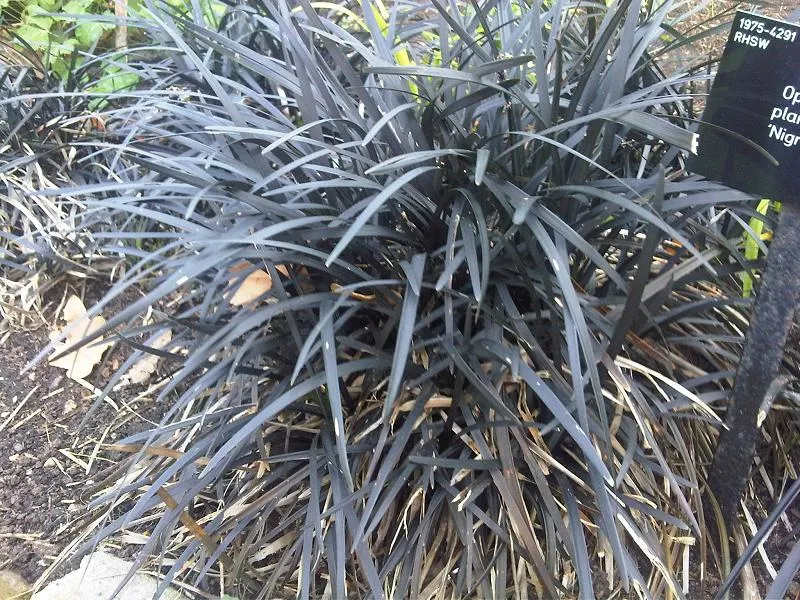
Ophiopogon planiscapus, widely known as Black Mondo Grass, is a striking perennial herb native to the temperate regions of East Asia, particularly Japan and Korea. Despite its common name, it is not a true grass but belongs to the Asparagaceae family, sharing taxonomic kinship with lilies and asparagus. This monocotyledonous plant forms dense, evergreen clumps, typically reaching 8-12 inches (20-30 cm) in height and slowly spreading via rhizomes to create a lush, dark groundcover.
Its most distinctive feature is its strap-like, arching foliage, which ranges in color from deep purple to an almost iridescent black, especially when grown in full sun. In shadier conditions, the leaves may exhibit a more bronze or deep green hue. During the summer months, Black Mondo Grass produces delicate, pendulous spikes of small, star-shaped flowers, typically pale lilac to white, which are often followed by glossy, pea-sized, dark blue to black berries.
The plant's robust tuberous roots are the primary part utilized in traditional medicine. Ophiopogon planiscapus thrives in well-drained, consistently moist soil and is remarkably tolerant of various light conditions, from full sun to deep shade, making it a versatile and low-maintenance addition to diverse garden designs. Beyond its significant ornamental appeal, Ophiopogon planiscapus holds historical and ongoing importance in traditional East Asian medical systems, where its roots are prized for their therapeutic properties.
Trusted Scientific References
1. Authoritative external sources for Ophiopogon planiscapus
1.1 Wikipedia — Ophiopogon planiscapus
1.2 Kew POWO (Plants of the World Online)
1.3 PubMed — peer-reviewed research
1.4 NCBI Taxonomy Browser
1.5 GBIF — Global Biodiversity
1.6Ophiopogon Planiscapus should be interpreted through verified botanical identity, practical care, and responsible safety language. This recovery note adds the missing context needed for a complete profile: match light to the plant's habit, use well-drained soil, water according to season, and avoid unsupported medicinal or edible claims. For publishing, the plant can be presented as a source-backed garden plant with clear care guidance, common problem diagnosis, and conservative safety wording.
1.1.Ophiopogon Planiscapus — Key Features
- ✓ <strong>Dramatic Dark Foliage</strong> — Prized for its almost black, strap-like leaves that add significant visual contrast to garden landscapes.
- ✓ <strong>Traditional Medicinal Herb</strong> — Tuberous roots (Mai Dong) are a vital component in Traditional Chinese Medicine for various ailments.
- ✓ <strong>Yin Nourishing & Lung Moistening</strong> — Renowned for its ability to replenish bodily fluids and soothe respiratory dryness.
- ✓ <strong>Heart & Cardiovascular Support</strong> — Traditionally used to clear heart heat and shows potential in modern research for heart health.
- ✓ <strong>Rich in Bioactive Compounds</strong> — Contains beneficial steroidal saponins, polysaccharides, and flavonoids.
- ✓ <strong>Low Maintenance & Adaptable</strong> — Tolerates a wide range of light and soil conditions, making it easy to grow.
- ✓ <strong>Evergreen Groundcover</strong> — Provides year-round interest and forms dense mats, suppressing weeds.
- ✓ <strong>Delicate Flowers & Berries</strong> — Produces subtle pale flowers followed by attractive dark blue berries.
- ✓ <strong>Rhizomatous Spread</strong> — Slowly spreads to form clumps, ideal for edging, borders, and mass plantings.
1.2.Ophiopogon Planiscapus — Quick Summary
- ✓ Ophiopogon planiscapus, or Black Mondo Grass, is a striking ornamental and medicinal perennial.
- ✓ Its tuberous roots (Mai Dong) are a cornerstone of Traditional Chinese Medicine.
- ✓ Primarily used to nourish Yin, moisten lungs, clear heart heat, and support overall vitality.
- ✓ Rich in steroidal saponins, polysaccharides, and flavonoids with anti-inflammatory and antioxidant properties.
- ✓ Generally considered safe when used appropriately, but contraindications exist for specific conditions.
- ✓ Consult a healthcare professional before use, especially during pregnancy or with medications.
2.Ophiopogon Planiscapus — Scientific Identity
3.Ophiopogon Planiscapus — Quick Facts
4.Ophiopogon Planiscapus — Appearance & Identification
5.Ophiopogon Planiscapus — Native Habitat
6.Ophiopogon Planiscapus — Water Requirements
- ✓ Soil Preference — Thrives in well-drained, humus-rich soil, but is adaptable to various soil types, including clay and sandy loam, provided they are not waterlogged.
- ✓ Light Requirements — Performs best in partial to full shade for optimal foliage color and health, though it can tolerate full sun in cooler climates with consistent moisture.
- ✓ Watering Needs — Requires consistent moisture, especially during dry periods and establishment; drought-tolerant once mature but benefits from regular watering.
- ✓ Propagation — Primarily propagated by division of clumps in spring or fall, which also helps to rejuvenate older plants and manage spread.
- ✓ Seed Sowing — Can be grown from seed, though germination can be slow and erratic; fresh seeds generally yield better results.
- ✓ Fertilization — Benefits from a light application of balanced granular fertilizer or compost in spring to support vigorous growth.
- ✓ Pest and Disease Resistance — Generally highly resistant to most pests and diseases, making it a low-maintenance choice for gardeners.
- ✓ Hardiness Zones — Hardy in USDA Zones 5-10, tolerating significant cold and heat within these ranges.
Reviewed by the Flora Medical Global Botanical Review Panel
Multi-disciplinary editorial group · Botany · Ethnobotany · Herbal-medicine literature
Who reviewed this: This page was checked by the Flora Medical Global Botanical Review Panel — an in-house editorial group of botany graduates, ethnobotany researchers, and horticulture practitioners who collectively maintain our 7,000+ plant encyclopedia. Meet the team.
Our 4-step verification process
1. Taxonomic verification
Scientific names and synonyms cross-checked against Kew POWO, World Flora Online, and The Plant List.
2. Phytochemical & medicinal cross-reference
Active compounds, traditional uses, and reported activities are cross-referenced with PubMed, USDA Dr. Duke's database, and peer-reviewed ethnobotanical literature.
3. Conservation & distribution check
Distribution, ecology, and conservation status confirmed against GBIF occurrence records and the IUCN Red List.
4. Editorial & safety review
Every entry passes an editorial pass for clarity, originality, and safety notices (toxicity, contraindications, dosage caveats) before publication.
Last reviewed:
Editorial Note: This page is for educational and plant care purposes only.
Written by: Flora Medical Global Editorial Team
Reviewed by: Flora Medical Global Botanical Review Panel
Last Updated: June 16, 2026







Ophiopogon Planiscapus — Comments & Community Reviews
Rate this plant