
Care Disclaimer: Plant care recommendations are general guidelines based on common growing conditions. Individual results may vary based on your local environment, climate, and care routine. If your plant is toxic, keep it away from children and pets, and consult a veterinarian if accidental ingestion occurs.
1.Ornamental Grass Fountain — Overview
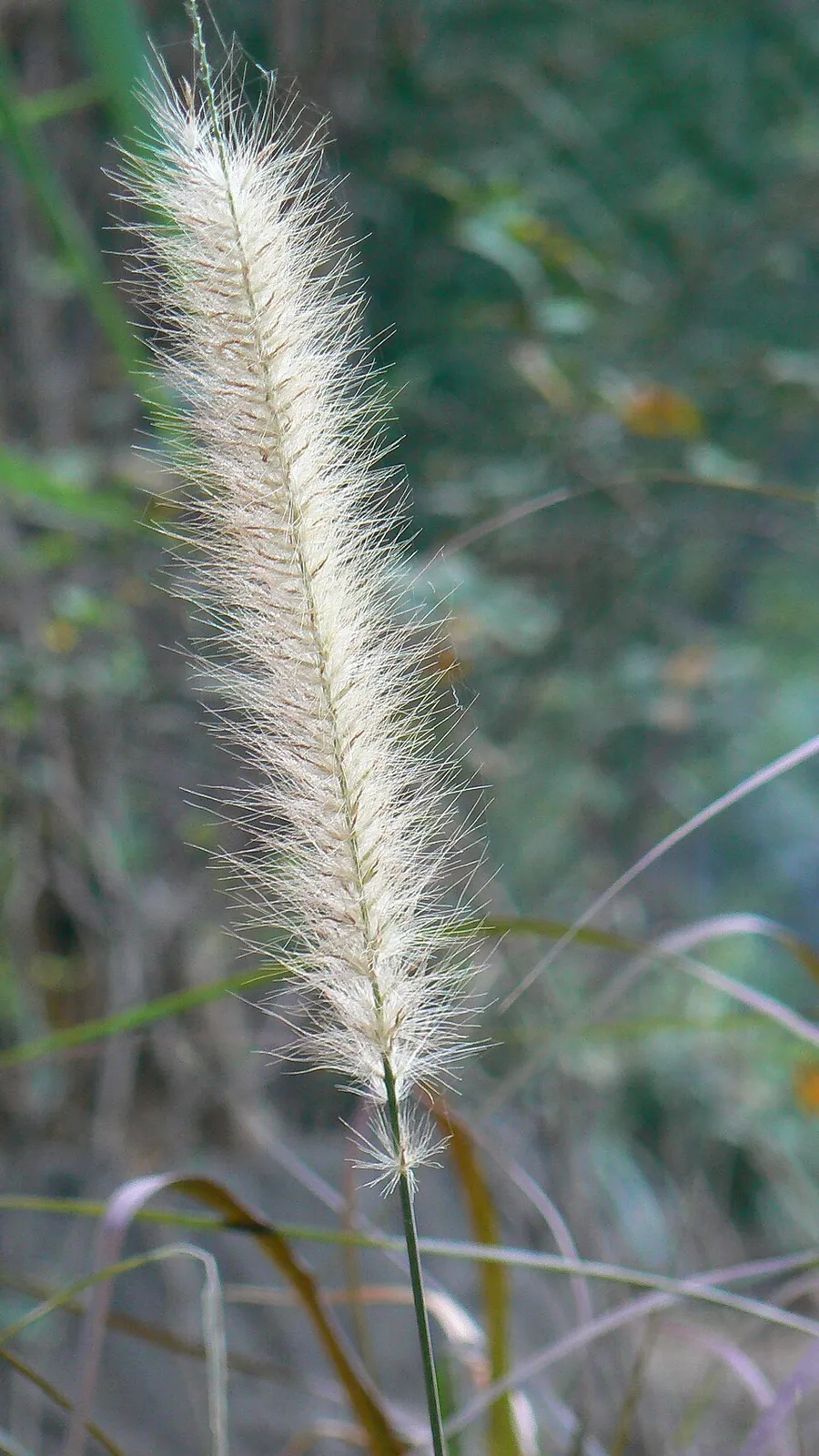
Pennisetum setaceum, commonly known as Fountain Grass, is an elegant perennial grass within the Poaceae family, native to the arid and semi-arid regions of North Africa, the Middle East, and southwestern Asia. This robust species forms dense, upright to arching clumps, typically reaching a height of 0.6 to 1.5 meters (2 to 5 feet) with an equivalent spread. Its linear, narrow leaves emerge in a vibrant green, often transitioning to striking purplish-bronze or burgundy hues in cooler temperatures or with specific cultivars, providing year-round aesthetic appeal.
The root system is fibrous and extensive, contributing to its remarkable drought tolerance and ability to stabilize soil. The most distinguishing feature of Fountain Grass is its spectacular inflorescences—soft, feathery, bottlebrush-like plumes that emerge in late summer and persist well into winter. These flower spikes, ranging in color from creamy white to pink, rose, or reddish-purple, are borne on slender, arching stems, creating a graceful, fountain-like display that gives the plant its common name.
The seeds are small and numerous, facilitating prolific reproduction, which, while beneficial for naturalization in its native range, can render it invasive in warmer, non-native climates where it readily escapes cultivation. Pennisetum setaceum thrives in full sun and well-drained soils, making it a popular choice for xeriscaping, borders, mass plantings, and container gardens globally. Its taxonomic classification places it within the genus Pennisetum, which includes many other ornamental and agricultural grasses, reflecting its adaptability and widespread presence.
Trusted Scientific References
1. Authoritative external sources for Pennisetum setaceum
1.1 Wikipedia — Pennisetum setaceum
1.2 Kew POWO (Plants of the World Online)
1.3 PubMed — peer-reviewed research
1.4 NCBI Taxonomy Browser
1.5 GBIF — Global Biodiversity
1.6Ornamental Grass Fountain should be interpreted through verified botanical identity, practical care, and responsible safety language. This recovery note adds the missing context needed for a complete profile: match light to the plant's habit, use well-drained soil, water according to season, and avoid unsupported medicinal or edible claims. For publishing, the plant can be presented as a source-backed garden plant with clear care guidance, common problem diagnosis, and conservative safety wording.
1.1.Ornamental Grass Fountain — Key Features
- ✓ <strong>Botanical Name</strong> — Pennisetum setaceum (Fountain Grass).
- ✓ <strong>Family</strong> — Poaceae (Grass Family).
- ✓ <strong>Habitat</strong> — Native to North Africa, Middle East, and Southwest Asia.
- ✓ <strong>Growth Habit</strong> — Perennial, clumping grass with arching foliage.
- ✓ <strong>Distinctive Feature</strong> — Feathery, bottlebrush-like flower plumes.
- ✓ <strong>Medicinal Uses</strong> — Diuretic, anti-inflammatory, antioxidant, digestive aid.
- ✓ <strong>Chemical Profile</strong> — Rich in flavonoids, phenolic acids, and saponins.
- ✓ <strong>Cultivation</strong> — Drought-tolerant, thrives in full sun, well-drained soil.
- ✓ <strong>Environmental Concern</strong> — Can be invasive in warmer climates.
- ✓ <strong>Traditional Applications</strong> — Used in folk medicine for various ailments.
1.2.Ornamental Grass Fountain — Quick Summary
- ✓ Pennisetum setaceum is an ornamental grass with traditional medicinal uses.
- ✓ Known for diuretic, anti-inflammatory, and antioxidant properties.
- ✓ Contains beneficial flavonoids, phenolic acids, and saponins.
- ✓ Requires full sun and well-drained soil for cultivation.
- ✓ Traditionally prepared as infusions, decoctions, or topical applications.
- ✓ Caution advised for allergies, pregnancy, and drug interactions.
2.Ornamental Grass Fountain — Scientific Identity
3.Ornamental Grass Fountain — Quick Facts
4.Ornamental Grass Fountain — Appearance & Identification
5.Ornamental Grass Fountain — Native Habitat
6.Ornamental Grass Fountain — Water Requirements
- ✓ Site Selection — Choose a location with full sun exposure, ideally receiving at least 6-8 hours of direct sunlight daily, to ensure vigorous growth and abundant flowering.
- ✓ Soil Requirements — Plant in well-drained soil; Fountain Grass tolerates a range of soil types from sandy to clay, but prefers moderately fertile, loamy soils.
- ✓ Propagation — Can be propagated by seed (though often invasive) or by division of mature clumps in spring, which helps rejuvenate the plant and maintain vigor.
- ✓ Watering — Once established, Pennisetum setaceum is remarkably drought-tolerant, requiring minimal supplemental irrigation; water deeply but infrequently.
- ✓ Fertilization — Generally, this grass does not require heavy fertilization; a light application of a balanced slow-release fertilizer in spring can promote lush growth.
- ✓ Pruning — Cut back the entire plant to about 4-6 inches above the ground in late winter or early spring before new growth emerges to maintain tidiness and encourage fresh foliage.
- ✓ Pest and Disease Management — Fountain Grass is generally resistant to most pests and diseases, but monitor for common grass issues like rust or aphids, treating organically if necessary.
- ✓ Invasive Potential — Be mindful of its invasive nature in warmer climates; consider sterile cultivars or manage seed production by removing spent plumes before they disperse seeds.
Reviewed by the Flora Medical Global Botanical Review Panel
Multi-disciplinary editorial group · Botany · Ethnobotany · Herbal-medicine literature
Who reviewed this: This page was checked by the Flora Medical Global Botanical Review Panel — an in-house editorial group of botany graduates, ethnobotany researchers, and horticulture practitioners who collectively maintain our 7,000+ plant encyclopedia. Meet the team.
Our 4-step verification process
1. Taxonomic verification
Scientific names and synonyms cross-checked against Kew POWO, World Flora Online, and The Plant List.
2. Phytochemical & medicinal cross-reference
Active compounds, traditional uses, and reported activities are cross-referenced with PubMed, USDA Dr. Duke's database, and peer-reviewed ethnobotanical literature.
3. Conservation & distribution check
Distribution, ecology, and conservation status confirmed against GBIF occurrence records and the IUCN Red List.
4. Editorial & safety review
Every entry passes an editorial pass for clarity, originality, and safety notices (toxicity, contraindications, dosage caveats) before publication.
Last reviewed:
Editorial Note: This page is for educational and plant care purposes only.
Written by: Flora Medical Global Editorial Team
Reviewed by: Flora Medical Global Botanical Review Panel
Last Updated: June 16, 2026







Ornamental Grass Fountain — Comments & Community Reviews
Rate this plant