
Care Disclaimer: Plant care recommendations are general guidelines based on common growing conditions. Individual results may vary based on your local environment, climate, and care routine. If your plant is toxic, keep it away from children and pets, and consult a veterinarian if accidental ingestion occurs.
1.Peony Bowl of Beauty — Overview
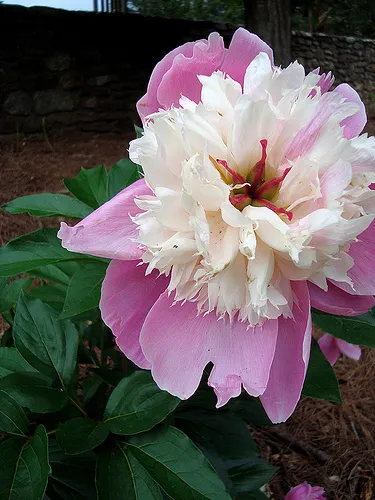
Paeonia lactiflora 'Bowl of Beauty', affectionately known as Peony 'Bowl of Beauty', stands as a magnificent herbaceous perennial celebrated for its distinctive anemone-form flowers. Taxonomically, it is a cultivar of Paeonia lactiflora, belonging to the Paeoniaceae family. This stunning bloom features broad, cupped outer guard petals of a vibrant, rich rose-pink hue, forming a graceful 'bowl'.
Nestled within this elegant structure is a dense, creamy-yellow to almost white central boss of specialized petaloids, creating a striking visual contrast that defines its unique name. These impressive flowers typically span 6-8 inches (15-20 cm) in diameter and grace gardens profusely from late spring to early summer, emitting a light, sweet fragrance. The foliage is equally attractive, comprising deep green, deeply lobed leaves that form a lush, bushy mound, serving as an excellent backdrop for the showy blooms.
'Bowl of Beauty' is a robust and exceptionally long-lived plant, often thriving for decades in a single location once established. While its parent species, Paeonia lactiflora, is native to East Asia, this specific cultivar is widely distributed across temperate regions globally through cultivation, primarily valued for its ornamental beauty and aesthetic appeal in diverse garden settings.
Trusted Scientific References
1. Authoritative external sources for Paeonia Bowl of Beauty
1.1 Wikipedia — Paeonia Bowl of Beauty
1.2 Kew POWO (Plants of the World Online)
1.3 PubMed — peer-reviewed research
1.4 NCBI Taxonomy Browser
1.5 GBIF — Global Biodiversity
1.6Peony Bowl of Beauty should be interpreted through verified botanical identity, practical care, and responsible safety language. This recovery note adds the missing context needed for a complete profile: match light to the plant's habit, use well-drained soil, water according to season, and avoid unsupported medicinal or edible claims. For publishing, the plant can be presented as a source-backed garden plant with clear care guidance, common problem diagnosis, and conservative safety wording.
1.1.Peony Bowl of Beauty — Key Features
- ✓ <strong>Scientific Name</strong> — Paeonia lactiflora 'Bowl of Beauty'.
- ✓ <strong>Family</strong> — Paeoniaceae.
- ✓ <strong>Flower Type</strong> — Distinctive anemone-form with rose-pink guard petals and a creamy-yellow central boss.
- ✓ <strong>Bloom Time</strong> — Profuse flowering from late spring to early summer.
- ✓ <strong>Fragrance</strong> — Emits a light, sweet, and pleasing aroma.
- ✓ <strong>Foliage</strong> — Features deep green, deeply lobed leaves forming an attractive bushy mound.
- ✓ <strong>Growth Habit</strong> — A robust, long-lived, and low-maintenance herbaceous perennial.
- ✓ <strong>Primary Use</strong> — Highly valued as an ornamental garden plant and an excellent cut flower.
- ✓ <strong>Medicinal Heritage</strong> — Derived from Paeonia lactiflora, a species with well-documented traditional medicinal uses.
- ✓ <strong>Longevity</strong> — Known for its ability to thrive and bloom for decades in a single location.
1.2.Peony Bowl of Beauty — Quick Summary
- ✓ Peony 'Bowl of Beauty' is a stunning ornamental cultivar known for its unique rose-pink and creamy-yellow anemone-form flowers.
- ✓ The parent species, Paeonia lactiflora, holds significant value in Traditional Chinese Medicine for its therapeutic properties.
- ✓ Key medicinal compounds in Paeonia lactiflora include monoterpene glycosides like paeoniflorin, flavonoids, and triterpenoids.
- ✓ Traditional uses of Paeonia lactiflora root include anti-inflammatory, analgesic, and antispasmodic applications for various ailments.
- ✓ While 'Bowl of Beauty' is primarily cultivated for its aesthetic appeal in gardens and as a cut flower, its species offers rich medicinal potential.
- ✓ Caution is advised for medicinal use of the species, especially concerning pregnancy, blood thinners, and proper dosage.
2.Peony Bowl of Beauty — Scientific Identity
3.Peony Bowl of Beauty — Quick Facts
4.Peony Bowl of Beauty — Appearance & Identification
5.Peony Bowl of Beauty — Native Habitat
6.Peony Bowl of Beauty — Water Requirements
- Cultivating Peony 'Bowl of Beauty' ensures vibrant blooms and a long-lived garden staple.
- ✓ Planting Time — Plant dormant bare roots in late summer or early fall, allowing ample time for root establishment before winter.
- ✓ Site Selection — Choose a location with full sun exposure, ideally receiving at least 6 hours of direct sunlight daily for optimal flowering.
- ✓ Soil Requirements — Thrives in well-draining, fertile, slightly acidic to neutral soil (pH 6.5-7.0) enriched with organic matter.
- ✓ Planting Depth — Crucially, position the 'eyes' (growth buds) no more than 1-2 inches (2.5-5 cm) below the soil surface; deeper planting can inhibit flowering.
- ✓ Watering — Provide consistent moisture, especially during dry periods and the first year after planting, but ensure excellent drainage to prevent rot.
- ✓ Fertilization — Apply a balanced, low-nitrogen granular fertilizer in early spring, avoiding direct contact with the plant crown.
- ✓ Support — As blooms can be large and heavy, consider using peony rings or stakes to provide support and prevent stems from flopping.
- ✓ Pests and Diseases — Generally robust, but monitor for common issues like botrytis blight in humid conditions and powdery mildew, addressing promptly.
Reviewed by the Flora Medical Global Botanical Review Panel
Multi-disciplinary editorial group · Botany · Ethnobotany · Herbal-medicine literature
Who reviewed this: This page was checked by the Flora Medical Global Botanical Review Panel — an in-house editorial group of botany graduates, ethnobotany researchers, and horticulture practitioners who collectively maintain our 7,000+ plant encyclopedia. Meet the team.
Our 4-step verification process
1. Taxonomic verification
Scientific names and synonyms cross-checked against Kew POWO, World Flora Online, and The Plant List.
2. Phytochemical & medicinal cross-reference
Active compounds, traditional uses, and reported activities are cross-referenced with PubMed, USDA Dr. Duke's database, and peer-reviewed ethnobotanical literature.
3. Conservation & distribution check
Distribution, ecology, and conservation status confirmed against GBIF occurrence records and the IUCN Red List.
4. Editorial & safety review
Every entry passes an editorial pass for clarity, originality, and safety notices (toxicity, contraindications, dosage caveats) before publication.
Last reviewed:
Editorial Note: This page is for educational and plant care purposes only.
Written by: Flora Medical Global Editorial Team
Reviewed by: Flora Medical Global Botanical Review Panel
Last Updated: June 16, 2026







Peony Bowl of Beauty — Comments & Community Reviews
Rate this plant