

Care Disclaimer: Plant care recommendations are general guidelines based on common growing conditions. Individual results may vary based on your local environment, climate, and care routine. If your plant is toxic, keep it away from children and pets, and consult a veterinarian if accidental ingestion occurs.
1.Petunia Wave — Overview
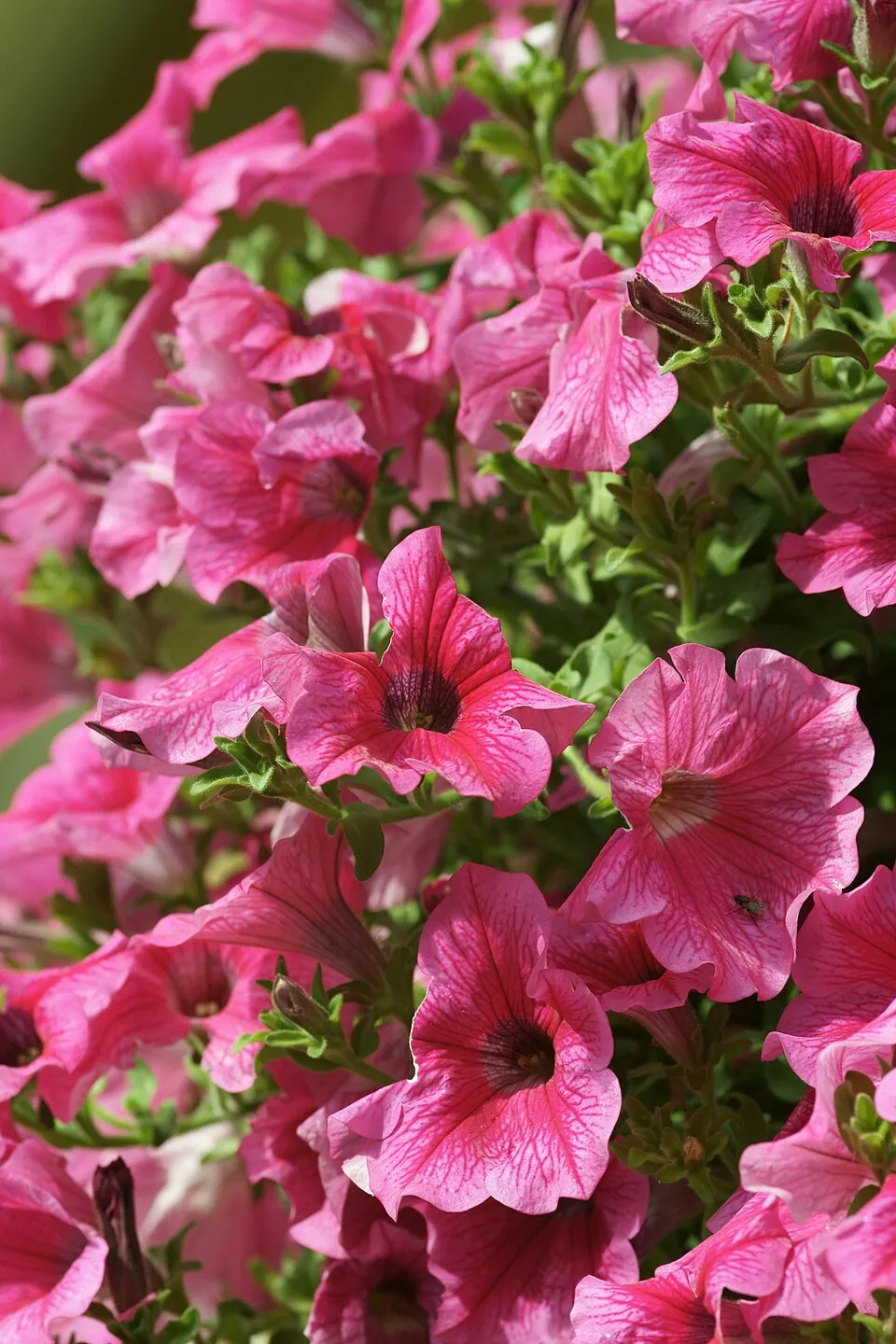
Petunia Wave, formally recognized as the Petunia x hybrida 'Wave' series, represents a highly successful and widely cultivated group of hybrid petunias celebrated for its distinctive vigorous, spreading, and trailing growth habit. This cultivar group is a product of sophisticated horticultural breeding, primarily derived from species like Petunia axillaris and Petunia integrifolia, which are native to South America. Unlike the more traditional upright petunia forms, Wave petunias develop long, flexible stems that can rapidly spread up to 90-120 cm (3-4 feet) in a single growing season, creating a lush, dense carpet of foliage and flowers.
The abundant, trumpet-shaped flowers are a hallmark of this series, presenting an extensive palette of vibrant colors including myriad shades of pink, purple, red, white, yellow, and various captivating bi-color combinations, often adorned with intricate veining or contrasting 'eyes'. These prolific bloomers provide a continuous display of color from late spring through the first hard frost of autumn. The foliage is typically ovate to elliptic, medium green, and possesses a somewhat sticky texture due to glandular trichomes.
Due to their low-growing, sprawling nature, Petunia Wave varieties are exceptionally versatile, making them ideal for groundcovers, cascading gracefully from hanging baskets, window boxes, and large containers where their abundant blooms can truly create a spectacular visual impact. While generally cultivated as annuals in most temperate climates, they can persist as tender perennials in frost-free regions, typically within USDA hardiness zones 10a to 11b. Taxonomically, they belong to the Solanaceae family, which also includes economically important plants like tomatoes, potatoes, and tobacco.
Trusted Scientific References
1. Authoritative external sources for Petunia x hybrida
1.1 Wikipedia — Petunia x hybrida
1.2 Kew POWO (Plants of the World Online)
1.3 PubMed — peer-reviewed research
1.4 NCBI Taxonomy Browser
1.5 GBIF — Global Biodiversity
1.1.Petunia Wave — Key Features
- ✓ <strong>Botanical Name</strong> — Petunia x hybrida 'Wave' series, a prominent hybrid cultivar group.
- ✓ <strong>Family</strong> — Solanaceae, commonly known as the Nightshade Family.
- ✓ <strong>Growth Habit</strong> — Vigorous, spreading, and trailing, forming a dense, low-growing carpet or cascade.
- ✓ <strong>Flower Type</strong> — Prolific, trumpet-shaped blooms with a wide open face.
- ✓ <strong>Flower Colors</strong> — A vast array of vibrant colors including pink, purple, red, white, yellow, and various bi-colors.
- ✓ <strong>Bloom Period</strong> — Extended and continuous flowering from late spring through the first frost in autumn.
- ✓ <strong>Landscape Use</strong> — Exceptionally versatile for hanging baskets, containers, window boxes, and as an effective groundcover.
- ✓ <strong>Pollinator Attraction</strong> — Actively attracts beneficial pollinators such as bees, butterflies, and hummingbirds.
- ✓ <strong>Noteworthy Trait</strong> — Characterized by exceptionally long, flexible stems that can spread up to 3-4 feet.
- ✓ <strong>Medicinal Status</strong> — Primarily ornamental; no direct human medicinal uses or traditional applications are documented.
1.2.Petunia Wave — Quick Summary
- ✓ Petunia Wave is a popular ornamental hybrid petunia (Petunia x hybrida 'Wave' series) renowned for its vigorous, spreading, and trailing growth habit.
- ✓ It produces an abundance of vibrant, trumpet-shaped flowers continuously from late spring through fall, offering a diverse color palette.
- ✓ Primarily cultivated for its aesthetic appeal in hanging baskets, containers, window boxes, and as a colorful groundcover, significantly enhancing landscape beauty.
- ✓ The plant contains various natural compounds including anthocyanins, flavonoids, and volatile organic compounds, responsible for its striking colors and characteristic fragrance.
- ✓ Crucially, Petunia Wave offers no known direct medicinal benefits for human consumption or traditional remedies, serving purely ornamental and ecological roles.
- ✓ Optimal cultivation requires full sun, light, well-drained soil, and consistent moisture, with regular deadheading promoting extended bloom.
2.Petunia Wave — Scientific Identity
3.Petunia Wave — Quick Facts
4.Petunia Wave — Appearance & Identification
5.Petunia Wave — Native Habitat
6.Petunia Wave — Water Requirements
- ✓ Seed Propagation — Sow Petunia x hybrida seeds indoors 8-10 weeks before the last expected frost, requiring a consistent germination temperature of 22-24°C (72-75°F) for optimal sprouting.
- ✓ Planting Location — Transplant young plants outdoors into a site receiving full sun to partial shade; full sun promotes the most abundant flowering and vigorous growth.
- ✓ Soil Requirements — Thrives in light, well-drained soils with a pH of 6.0-7.0, tolerating a range of soil types including poorer soils, provided drainage is excellent to prevent root rot.
- ✓ Watering & Fertilization — Maintain consistently moist soil, especially during establishment and peak blooming periods; regular feeding with a balanced liquid fertilizer (e.g., every 2-4 weeks) encourages continuous flower production.
- ✓ Maintenance & Pruning — Pinch back young plants to encourage a bushier habit, and deadhead spent flowers regularly to stimulate new blooms and prevent seed formation, thereby extending the flowering season.
- ✓ Spacing & Growth Habit — Space plants according to the specific cultivar's mature spread, typically 30-45 cm (12-18 inches) for groundcover, allowing for its vigorous spreading and trailing nature.
- ✓ Overwintering (Optional) — In frost-free regions or indoors, Petunia Wave can be overwintered in a bright, cool location away from direct heat, though it is primarily grown as an annual in most temperate climates.
Reviewed by the Flora Medical Global Botanical Review Panel
Multi-disciplinary editorial group · Botany · Ethnobotany · Herbal-medicine literature
Who reviewed this: This page was checked by the Flora Medical Global Botanical Review Panel — an in-house editorial group of botany graduates, ethnobotany researchers, and horticulture practitioners who collectively maintain our 7,000+ plant encyclopedia. Meet the team.
Our 4-step verification process
1. Taxonomic verification
Scientific names and synonyms cross-checked against Kew POWO, World Flora Online, and The Plant List.
2. Phytochemical & medicinal cross-reference
Active compounds, traditional uses, and reported activities are cross-referenced with PubMed, USDA Dr. Duke's database, and peer-reviewed ethnobotanical literature.
3. Conservation & distribution check
Distribution, ecology, and conservation status confirmed against GBIF occurrence records and the IUCN Red List.
4. Editorial & safety review
Every entry passes an editorial pass for clarity, originality, and safety notices (toxicity, contraindications, dosage caveats) before publication.
Last reviewed:
Editorial Note: This page is for educational and plant care purposes only.
Written by: Flora Medical Global Editorial Team
Reviewed by: Flora Medical Global Botanical Review Panel
Last Updated: June 16, 2026







Petunia Wave — Comments & Community Reviews
Rate this plant