
Care Disclaimer: Plant care recommendations are general guidelines based on common growing conditions. Individual results may vary based on your local environment, climate, and care routine. If your plant is toxic, keep it away from children and pets, and consult a veterinarian if accidental ingestion occurs.
1.Portulaca Grandiflora — Overview
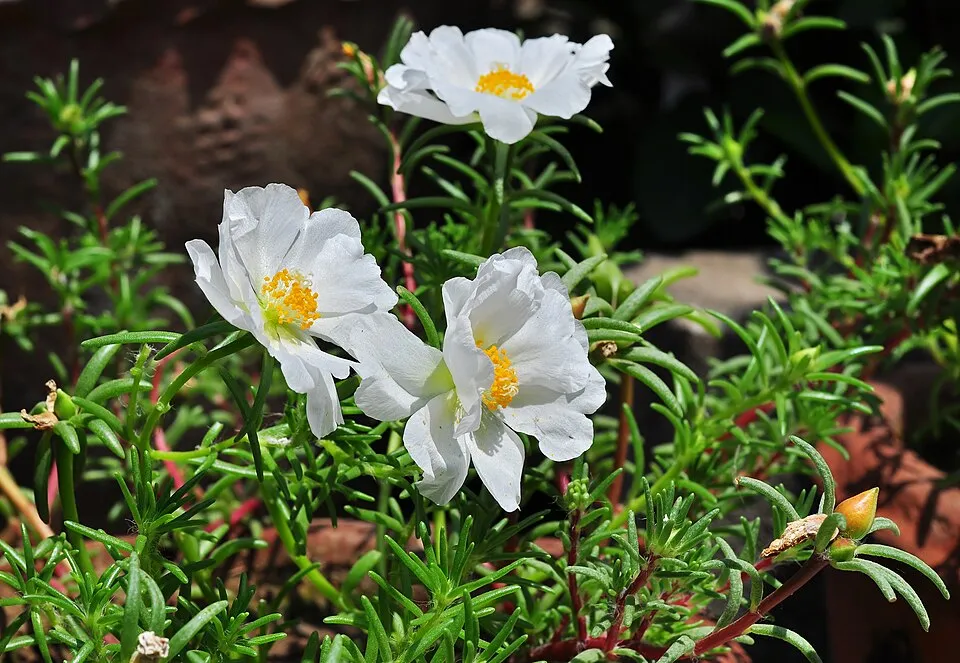
Portulaca grandiflora, commonly known as moss rose, rose moss, or eleven o'clock, is a captivating succulent annual or short-lived perennial native to the arid and semi-arid regions of southern Brazil, Uruguay, and Argentina. This resilient member of the Portulacaceae family is characterized by its low-growing, spreading habit, forming dense mats typically 8 inches tall and up to a foot wide. Its fleshy, cylindrical leaves, usually 1-2 cm long and often tinged with red, are perfectly adapted for water retention, enabling the plant to thrive in drought-prone environments and poor, sandy, or rocky soils.
The most striking feature of Portulaca grandiflora is its abundant and vibrant flowers, measuring 2-5 cm in diameter. These blooms exhibit a remarkable spectrum of colors, including hot pink, red, orange, yellow, white, and various bicolors, often with ruffled, rose-like petals, despite being botanically unrelated to true roses. A fascinating characteristic is their diurnal opening and closing; they unfurl in morning sunlight, typically reaching full bloom around 11 AM (hence 'eleven o'clock'), and close in the afternoon or on cloudy days, a heliotropic adaptation maximizing pollination efficiency.
Its ease of cultivation, prolific flowering, and ability to self-seed without becoming invasive make it a popular choice for rock gardens, borders, ground cover, hanging baskets, and container plantings worldwide. While primarily ornamental, emerging research highlights its ethnobotanical uses and potential medicinal properties, distinguishing it from its close relative, Portulaca oleracea (common purslane), which is more widely recognized for its edible and medicinal value.
Trusted Scientific References
1. Authoritative external sources for Portulaca grandiflora
1.1 Wikipedia — Portulaca grandiflora
1.2 Kew POWO (Plants of the World Online)
1.3 PubMed — peer-reviewed research
1.4 NCBI Taxonomy Browser
1.5 GBIF — Global Biodiversity
1.6Portulaca Grandiflora should be interpreted through verified botanical identity, practical care, and responsible safety language. This recovery note adds the missing context needed for a complete profile: match light to the plant's habit, use well-drained soil, water according to season, and avoid unsupported medicinal or edible claims. For publishing, the plant can be presented as a source-backed garden plant with clear care guidance, common problem diagnosis, and conservative safety wording.
1.1.Portulaca Grandiflora — Key Features
- ✓ <strong>Low</strong> — growing, spreading succulent annual or short-lived perennial.
- ✓ <strong>Fleshy, cylindrical leaves</strong> — Fleshy, cylindrical leaves adapted for water retention.
- ✓ <strong>Spectacular, vibrant flowers</strong> — Spectacular, vibrant flowers in a wide range of colors (pink, red, orange, yellow, white).
- ✓ <strong>Diurnal flowers open</strong> — Diurnal flowers open in sun, close in afternoon/cloudy weather.
- ✓ <strong>High drought and</strong> — High drought and heat tolerance, thrives in poor, sandy soils.
- ✓ <strong>Excellent for rock</strong> — Excellent for rock gardens, borders, ground cover, and containers.
- ✓ <strong>Self</strong> — seeds readily but rarely invasive.
- ✓ <strong>Rich in flavonoids,</strong> — Rich in flavonoids, phenolic acids, and other bioactive compounds.
- ✓ <strong>Potential antioxidant, anti</strong> — inflammatory, and antimicrobial properties.
- ✓ <strong>Native to southern</strong> — Native to southern Brazil, Uruguay, and Argentina.
1.2.Portulaca Grandiflora — Quick Summary
- ✓ Vibrant ornamental succulent with diverse potential medicinal benefits.
- ✓ Rich in antioxidants, anti-inflammatory compounds, and essential nutrients.
- ✓ Traditionally used for wound healing, inflammation, and as an antimicrobial.
- ✓ Thrives in full sun and well-drained soil, highly drought-tolerant.
- ✓ Easy to cultivate from seeds or cuttings, low maintenance.
- ✓ Caution advised for pregnant/lactating women and individuals with kidney issues.
2.Portulaca Grandiflora — Scientific Identity
3.Portulaca Grandiflora — Quick Facts
4.Portulaca Grandiflora — Appearance & Identification
5.Portulaca Grandiflora — Native Habitat
6.Portulaca Grandiflora — Water Requirements
- ✓ Soil Preference — Requires very well-drained, sandy, or rocky soil; poor drainage can lead to root rot.
- ✓ Sun Exposure — Thrives in full sun, needing at least 6-8 hours of direct sunlight daily for optimal flowering.
- ✓ Watering — Highly drought-tolerant; water sparingly once established, allowing soil to dry out completely between waterings.
- ✓ Temperature — Prefers warm temperatures and is sensitive to frost; typically grown as an annual in temperate climates.
- ✓ Propagation — Easily propagated from seeds or stem cuttings; seeds can be sown directly after the last frost.
- ✓ Fertilization — Generally low-maintenance; a light application of balanced fertilizer once or twice during the growing season is sufficient.
- ✓ Pests and Diseases — Relatively pest-free, but watch for aphids and slugs; susceptible to crown rot in overly wet conditions.
- ✓ Maintenance — Deadheading spent flowers is not strictly necessary but can encourage more blooms and prevent excessive self-seeding.
Reviewed by the Flora Medical Global Botanical Review Panel
Multi-disciplinary editorial group · Botany · Ethnobotany · Herbal-medicine literature
Who reviewed this: This page was checked by the Flora Medical Global Botanical Review Panel — an in-house editorial group of botany graduates, ethnobotany researchers, and horticulture practitioners who collectively maintain our 7,000+ plant encyclopedia. Meet the team.
Our 4-step verification process
1. Taxonomic verification
Scientific names and synonyms cross-checked against Kew POWO, World Flora Online, and The Plant List.
2. Phytochemical & medicinal cross-reference
Active compounds, traditional uses, and reported activities are cross-referenced with PubMed, USDA Dr. Duke's database, and peer-reviewed ethnobotanical literature.
3. Conservation & distribution check
Distribution, ecology, and conservation status confirmed against GBIF occurrence records and the IUCN Red List.
4. Editorial & safety review
Every entry passes an editorial pass for clarity, originality, and safety notices (toxicity, contraindications, dosage caveats) before publication.
Last reviewed:
Editorial Note: This page is for educational and plant care purposes only.
Written by: Flora Medical Global Editorial Team
Reviewed by: Flora Medical Global Botanical Review Panel
Last Updated: June 16, 2026







Portulaca Grandiflora — Comments & Community Reviews
Rate this plant