


Care Disclaimer: Plant care recommendations are general guidelines based on common growing conditions. Individual results may vary based on your local environment, climate, and care routine. If your plant is toxic, keep it away from children and pets, and consult a veterinarian if accidental ingestion occurs.
1.Potato — Overview
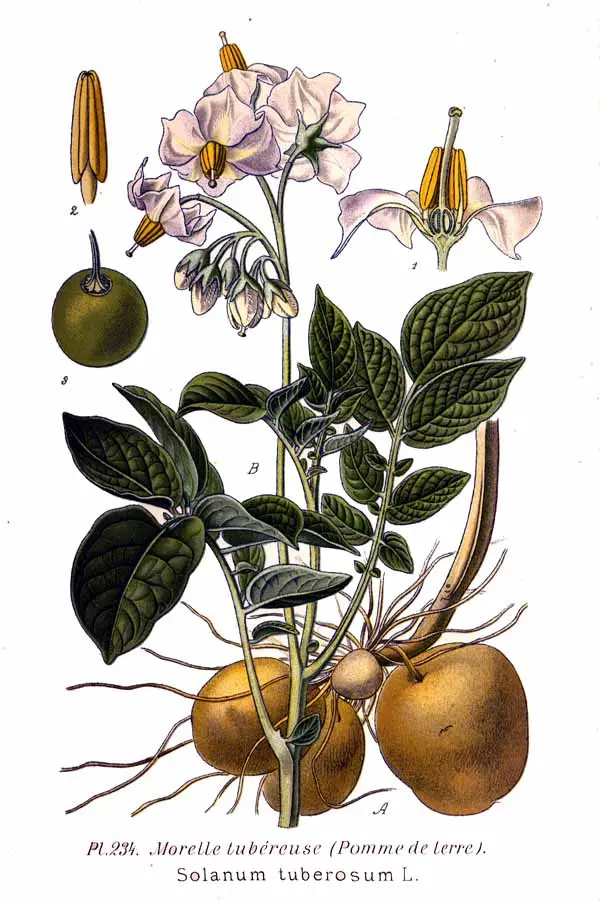
Solanum tuberosum, globally recognized as the potato, is a herbaceous perennial within the Solanaceae family, cultivated extensively for its edible tubers. Originating in the Andean highlands of South America over 7,000 years ago, it has adapted to diverse global climates, becoming a fundamental food crop. The plant typically reaches heights of 0.5 to 1.5 meters, characterized by pinnately compound leaves composed of ovate leaflets.
Its flowers, which can be white, pink, or purple, are arranged in clusters and may yield small, berry-like fruits. These fruits, along with green parts of the plant, contain toxic glycoalkaloids like solanine, making them generally unsuitable for consumption. The primary economic and nutritional value lies in the subterranean tubers—swollen storage organs that are botanically modified stems.
These tubers exhibit remarkable variability in size, shape, skin and flesh color (ranging from white and yellow to red and purple), and texture, influenced by cultivar and growing conditions. This vegetative propagation method facilitates the efficient multiplication of desirable traits. Through centuries of traditional selection and modern genetic breeding, countless potato varieties have been developed, each possessing unique culinary applications, disease resistance profiles, and growth characteristics, cementing its role as one of the world's most critical food sources.
Trusted Scientific References
1. Authoritative external sources for Solanum tuberosum
1.1 Wikipedia — Solanum tuberosum
1.2 Kew POWO (Plants of the World Online)
1.3 PubMed — peer-reviewed research
1.4 NCBI Taxonomy Browser
1.5 GBIF — Global Biodiversity
1.6Potato should be interpreted through verified botanical identity, practical care, and responsible safety language. This recovery note adds the missing context needed for a complete profile: match light to the plant's habit, use well-drained soil, water according to season, and avoid unsupported medicinal or edible claims. For publishing, the plant can be presented as a source-backed garden plant with clear care guidance, common problem diagnosis, and conservative safety wording.
1.1.Potato — Key Features
- ✓ <strong>Global staple food</strong> — One of the world's most important and widely cultivated crops.
- ✓ <strong>High carbohydrate source</strong> — Provides significant energy through its starchy tubers.
- ✓ <strong>Nutrient</strong> — dense — Rich in Vitamin C, Vitamin B6, potassium, and dietary fiber.
- ✓ <strong>Antioxidant properties</strong> — Contains anthocyanins, carotenoids, and phenolics, especially in colored varieties.
- ✓ <strong>Anti</strong> — inflammatory potential — Certain compounds may help reduce inflammation.
- ✓ <strong>Digestive health support</strong> — Resistant starch acts as a prebiotic.
- ✓ <strong>Versatile culinary applications</strong> — Can be prepared in numerous ways.
- ✓ <strong>Traditional medicinal uses</strong> — Applied topically for skin issues and consumed for general health.
- ✓ <strong>Solanine content</strong> — Green parts and sprouts are toxic and must be avoided.
- ✓ <strong>Adaptable crop</strong> — Thrives in diverse climates and soil types.
1.2.Potato — Quick Summary
- ✓ Solanum tuberosum, the potato, is a global staple food.
- ✓ Rich in carbohydrates, vitamins (C, B6), and minerals (potassium).
- ✓ Possesses antioxidant, anti-inflammatory, and digestive benefits.
- ✓ All green parts and sprouts contain toxic solanine; avoid consumption.
- ✓ Versatile in culinary uses and traditional topical remedies.
- ✓ Requires careful storage to prevent toxicity and spoilage.
2.Potato — Scientific Identity
3.Potato — Quick Facts
4.Potato — Appearance & Identification
5.Potato — Native Habitat
6.Potato — Water Requirements
- ✓ Site Selection — Prefers full sun exposure and well-drained, fertile soil with a pH of 5.0-6.0.
- ✓ Planting — Use certified seed potatoes, planting them 10-15 cm deep and 30-45 cm apart in rows, typically in early spring.
- ✓ Hilling — Mound soil around the growing plants as they emerge to protect developing tubers from sunlight (preventing greening) and support stems.
- ✓ Watering — Requires consistent moisture, especially during tuber formation; avoid waterlogging.
- ✓ Fertilization — Benefits from balanced fertilizers, with emphasis on phosphorus and potassium; avoid excessive nitrogen which promotes foliage over tubers.
- ✓ Pest and Disease Management — Monitor for common pests like Colorado potato beetles and diseases such as late blight; employ crop rotation.
- ✓ Harvesting — Harvest when foliage begins to yellow and die back, typically 70-120 days after planting, depending on the variety.
- ✓ Storage — Store tubers in a cool, dark, well-ventilated area (4-10°C, high humidity) to prevent sprouting and greening.
Reviewed by the Flora Medical Global Botanical Review Panel
Multi-disciplinary editorial group · Botany · Ethnobotany · Herbal-medicine literature
Who reviewed this: This page was checked by the Flora Medical Global Botanical Review Panel — an in-house editorial group of botany graduates, ethnobotany researchers, and horticulture practitioners who collectively maintain our 7,000+ plant encyclopedia. Meet the team.
Our 4-step verification process
1. Taxonomic verification
Scientific names and synonyms cross-checked against Kew POWO, World Flora Online, and The Plant List.
2. Phytochemical & medicinal cross-reference
Active compounds, traditional uses, and reported activities are cross-referenced with PubMed, USDA Dr. Duke's database, and peer-reviewed ethnobotanical literature.
3. Conservation & distribution check
Distribution, ecology, and conservation status confirmed against GBIF occurrence records and the IUCN Red List.
4. Editorial & safety review
Every entry passes an editorial pass for clarity, originality, and safety notices (toxicity, contraindications, dosage caveats) before publication.
Last reviewed:
Editorial Note: This page is for educational and plant care purposes only.
Written by: Flora Medical Global Editorial Team
Reviewed by: Flora Medical Global Botanical Review Panel
Last Updated: June 16, 2026







Potato — Comments & Community Reviews
Rate this plant