
Care Disclaimer: Plant care recommendations are general guidelines based on common growing conditions. Individual results may vary based on your local environment, climate, and care routine. If your plant is toxic, keep it away from children and pets, and consult a veterinarian if accidental ingestion occurs.
1.Rozanne Geranium — Overview
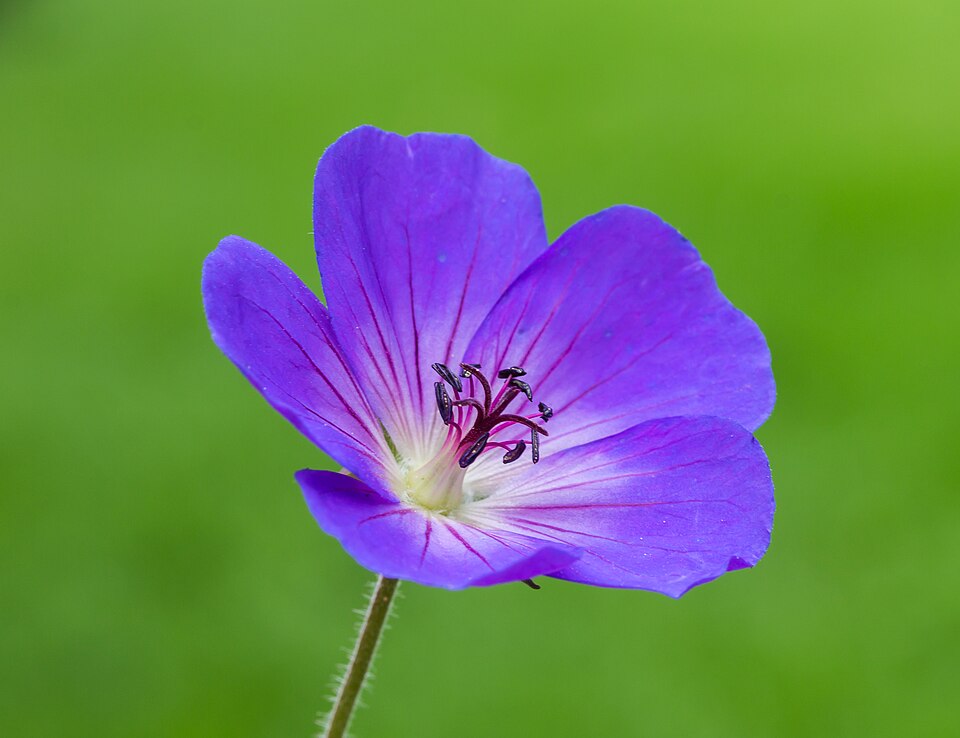
Geranium 'Rozanne', scientifically known as Geranium Rozanne, is a distinguished, award-winning herbaceous perennial celebrated globally for its exceptional ornamental value. This hybrid cultivar is believed to be a cross between Geranium himalayense and Geranium wallichianum, inheriting robust vigor and an extraordinarily long flowering season. Morphologically, it presents large, captivating violet-blue flowers, typically 5-7 cm in diameter, adorned with prominent dark purple veining radiating from a striking white or near-white center.
The petals often exhibit a delicate, crinkled texture, enhancing their visual appeal. Its deeply lobed, palmate foliage forms a lush, spreading mound, providing excellent groundcover or a beautiful cascading effect in containers and over walls. The leaves maintain a rich green color through summer, often developing attractive reddish or bronze tints as autumn progresses, adding seasonal interest.
Geranium 'Rozanne' is primarily cultivated in temperate gardens worldwide, thriving in a range of conditions from full sun to partial shade. Its vigorous, spreading habit can reach up to 60 cm (24 inches) or more in spread while maintaining a height of 30-40 cm (12-16 inches). This plant is a cornerstone for continuous garden color from late spring until the first hard frost, making it a highly valued addition to borders, rock gardens, and mixed perennial plantings.
Trusted Scientific References
1. Authoritative external sources for Geranium Rozanne
1.1 Wikipedia — Geranium Rozanne
1.2 Kew POWO (Plants of the World Online)
1.3 PubMed — peer-reviewed research
1.4 NCBI Taxonomy Browser
1.5 GBIF — Global Biodiversity
1.6Rozanne Geranium should be interpreted through verified botanical identity, practical care, and responsible safety language. This recovery note adds the missing context needed for a complete profile: match light to the plant's habit, use well-drained soil, water according to season, and avoid unsupported medicinal or edible claims. For publishing, the plant can be presented as a source-backed garden plant with clear care guidance, common problem diagnosis, and conservative safety wording.
1.1.Rozanne Geranium — Key Features
- ✓ <strong>Scientific Name</strong> — Geranium Rozanne
- ✓ <strong>Common Names</strong> — Rozanne Geranium, Cranesbill
- ✓ <strong>Family</strong> — Geraniaceae
- ✓ <strong>Plant Type</strong> — Herbaceous Perennial
- ✓ <strong>Flower Color</strong> — Vibrant violet-blue with white center and dark veining
- ✓ <strong>Bloom Time</strong> — Exceptionally long, from late spring through first frost
- ✓ <strong>Growth Habit</strong> — Spreading, mounding, vigorous; typically 30-40 cm high, 60+ cm spread
- ✓ <strong>Hardiness Zones</strong> — USDA 3-8 (or 3-9)
- ✓ <strong>Primary Use</strong> — Ornamental garden plant, groundcover, border plant, container plant
- ✓ <strong>Notable Trait</strong> — Award-winning for its continuous flowering and robust performance
1.2.Rozanne Geranium — Quick Summary
- ✓ Geranium 'Rozanne' is an award-winning, vigorous herbaceous perennial.
- ✓ Features stunning violet-blue flowers with white centers and a remarkably long bloom season.
- ✓ Primarily cultivated as an ornamental plant, ideal for groundcover, borders, and containers.
- ✓ While the Geranium genus has traditional medicinal uses, 'Rozanne' itself is not typically used medicinally.
- ✓ Contains tannins, flavonoids, and phenolic acids, contributing to generic genus benefits like antioxidant activity.
- ✓ Requires well-drained soil, full sun to partial shade, and is relatively drought-tolerant once established.
2.Rozanne Geranium — Scientific Identity
3.Rozanne Geranium — Quick Facts
4.Rozanne Geranium — Appearance & Identification
5.Rozanne Geranium — Native Habitat
6.Rozanne Geranium — Water Requirements
- ✓ Sunlight — Thrives in full sun to partial shade, requiring at least 6 hours of direct sunlight daily for optimal flowering; afternoon shade is beneficial in hotter climates.
- ✓ Soil Requirements — Prefers well-drained, moderately fertile soil with a neutral to slightly acidic pH (6.0-7.0); tolerant of a range from sandy to loamy but avoids waterlogged conditions.
- ✓ Watering — Water regularly during establishment and dry spells to maintain consistent moisture; once mature, it exhibits remarkable drought tolerance, requiring less frequent watering.
- ✓ Propagation — Primarily propagated by division of established clumps in early spring or autumn; stem cuttings can also be taken in late spring to early summer for rooting.
- ✓ Fertilization — Benefits from a light application of a balanced granular fertilizer in early spring to support vigorous growth and continuous blooming throughout the season.
- ✓ Pruning — Deadhead spent flowers to encourage continuous blooming and prevent self-seeding; cut back hard (to about a third of its size) after the first major flush of flowers to rejuvenate growth and promote rebloom.
- ✓ Pest and Disease Control — Generally robust with good resistance; occasional issues might include powdery mildew in humid conditions or slug damage, which are typically manageable with good air circulation and organic controls.
- ✓ Hardiness — A hardy herbaceous perennial suitable for USDA hardiness zones 3 through 8 (some sources indicate 3-9), tolerating winter temperatures well and returning reliably each spring.
Reviewed by the Flora Medical Global Botanical Review Panel
Multi-disciplinary editorial group · Botany · Ethnobotany · Herbal-medicine literature
Who reviewed this: This page was checked by the Flora Medical Global Botanical Review Panel — an in-house editorial group of botany graduates, ethnobotany researchers, and horticulture practitioners who collectively maintain our 7,000+ plant encyclopedia. Meet the team.
Our 4-step verification process
1. Taxonomic verification
Scientific names and synonyms cross-checked against Kew POWO, World Flora Online, and The Plant List.
2. Phytochemical & medicinal cross-reference
Active compounds, traditional uses, and reported activities are cross-referenced with PubMed, USDA Dr. Duke's database, and peer-reviewed ethnobotanical literature.
3. Conservation & distribution check
Distribution, ecology, and conservation status confirmed against GBIF occurrence records and the IUCN Red List.
4. Editorial & safety review
Every entry passes an editorial pass for clarity, originality, and safety notices (toxicity, contraindications, dosage caveats) before publication.
Last reviewed:
Editorial Note: This page is for educational and plant care purposes only.
Written by: Flora Medical Global Editorial Team
Reviewed by: Flora Medical Global Botanical Review Panel
Last Updated: June 16, 2026







Rozanne Geranium — Comments & Community Reviews
Rate this plant