

Care Disclaimer: Plant care recommendations are general guidelines based on common growing conditions. Individual results may vary based on your local environment, climate, and care routine. If your plant is toxic, keep it away from children and pets, and consult a veterinarian if accidental ingestion occurs.
1.Spinach — Overview
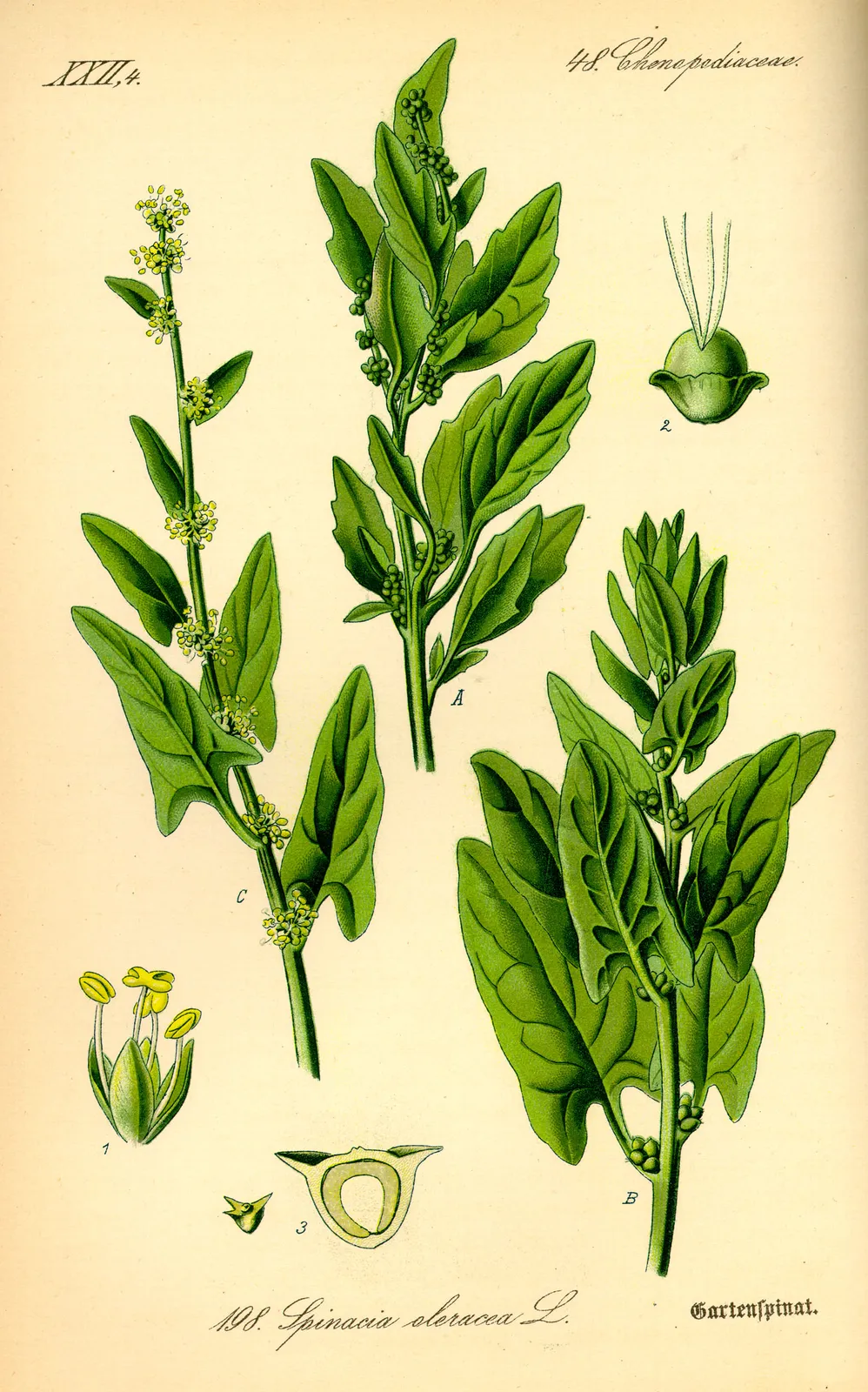
Spinach, botanically known as Spinacia oleracea, is a highly valued leafy green flowering plant belonging to the Amaranthaceae family. Originating from central and western Asia, it is primarily cultivated as an annual vegetable, though it can occasionally exhibit biennial characteristics. The plant typically reaches a height of up to 30 cm.
Its leaves are simple, alternate, and can vary significantly in shape from ovate to triangular, with dimensions ranging from 2-30 cm in length and 1-15 cm in width. Larger leaves are typically found at the base, with smaller ones ascending the flowering stem. The flowers are inconspicuous, small (3-4 mm in diameter), and possess a subtle yellow-green hue.
These mature into a characteristic small, hard, dry, and lumpy fruit cluster, each containing several seeds. Spinacia oleracea is widely recognized and cultivated globally for its highly nutritious and edible leaves, which are a staple in diverse culinary traditions, consumed raw in salads, cooked as a versatile vegetable, or integrated into an array of dishes. It thrives as a cool-season crop, performing best in well-drained, fertile soil and can tolerate partial shade, making it a popular choice for home gardens and commercial agriculture.
Trusted Scientific References
1. Authoritative external sources for Spinacia oleracea
1.1 Wikipedia — Spinacia oleracea
1.2 Kew POWO (Plants of the World Online)
1.3 PubMed — peer-reviewed research
1.4 NCBI Taxonomy Browser
1.5 GBIF — Global Biodiversity
1.6Spinach should be interpreted through verified botanical identity, practical care, and responsible safety language. This recovery note adds the missing context needed for a complete profile: match light to the plant's habit, use well-drained soil, water according to season, and avoid unsupported medicinal or edible claims. For publishing, the plant can be presented as a source-backed garden plant with clear care guidance, common problem diagnosis, and conservative safety wording.
1.1.Spinach — Key Features
- ✓ <strong>Exceptional Nutritional Density</strong> — Packed with vitamins, minerals, and phytonutrients.
- ✓ <strong>High in Vitamin K1</strong> — Crucial for blood coagulation and bone metabolism.
- ✓ <strong>Abundant in Antioxidants</strong> — Lutein, zeaxanthin, beta-carotene, and flavonoids protect against oxidative stress.
- ✓ <strong>Rich Source of Iron and Folate</strong> — Supports healthy blood and prevents anemia.
- ✓ <strong>Cardiovascular Health Promoter</strong> — Dietary nitrates aid in blood pressure regulation.
- ✓ <strong>Digestive System Support</strong> — High fiber content facilitates healthy digestion.
- ✓ <strong>Cool</strong> — Season Crop — Thrives in cooler temperatures, making it suitable for spring and fall planting.
- ✓ <strong>Versatile Culinary Ingredient</strong> — Can be enjoyed raw in salads or cooked in various dishes.
- ✓ <strong>Contains Oxalates</strong> — A natural compound requiring consideration for certain health conditions.
- ✓ <strong>Low in Calories</strong> — An excellent food choice for weight management and overall health.
1.2.Spinach — Quick Summary
- ✓ Nutrient-dense leafy green, excellent source of vitamins and minerals.
- ✓ Rich in Vitamin K, Vitamin A, Folate, Iron, Magnesium, and various antioxidants.
- ✓ Supports bone health, vision, cardiovascular function, and immune system.
- ✓ Contains oxalates, which can affect mineral absorption and kidney stone risk.
- ✓ Highly versatile in culinary applications, consumed raw or cooked.
2.Spinach — Scientific Identity
3.Spinach — Quick Facts
4.Spinach — Appearance & Identification
5.Spinach — Native Habitat
6.Spinach — Water Requirements
- ✓ Soil Preparation — Spinach thrives in fertile, well-drained soil with a pH between 6.0 and 7.5; enrich with compost or aged manure.
- ✓ Planting Time — Sow seeds directly in early spring (as soon as soil can be worked) or late summer/early fall for a fall/winter harvest in cool climates.
- ✓ Seeding Depth and Spacing — Plant seeds 1/2 inch deep and 2-4 inches apart within rows, with rows spaced 12-18 inches apart.
- ✓ Sunlight Requirements — Prefers full sun to partial shade; in warmer climates, some afternoon shade can prevent bolting.
- ✓ Watering — Keep soil consistently moist but not waterlogged; regular watering is crucial for tender leaves and to prevent bitterness.
- ✓ Fertilization — Provide a balanced fertilizer or compost tea during the growing season, especially if leaves appear pale.
- ✓ Pest and Disease Management — Monitor for common pests like aphids and leaf miners, and diseases such as downy mildew; use organic controls if necessary.
- ✓ Harvesting — Harvest outer leaves when they are young and tender for continuous production, or cut the entire plant at the base when desired size is reached.
Reviewed by the Flora Medical Global Botanical Review Panel
Multi-disciplinary editorial group · Botany · Ethnobotany · Herbal-medicine literature
Who reviewed this: This page was checked by the Flora Medical Global Botanical Review Panel — an in-house editorial group of botany graduates, ethnobotany researchers, and horticulture practitioners who collectively maintain our 7,000+ plant encyclopedia. Meet the team.
Our 4-step verification process
1. Taxonomic verification
Scientific names and synonyms cross-checked against Kew POWO, World Flora Online, and The Plant List.
2. Phytochemical & medicinal cross-reference
Active compounds, traditional uses, and reported activities are cross-referenced with PubMed, USDA Dr. Duke's database, and peer-reviewed ethnobotanical literature.
3. Conservation & distribution check
Distribution, ecology, and conservation status confirmed against GBIF occurrence records and the IUCN Red List.
4. Editorial & safety review
Every entry passes an editorial pass for clarity, originality, and safety notices (toxicity, contraindications, dosage caveats) before publication.
Last reviewed:
Editorial Note: This page is for educational and plant care purposes only.
Written by: Flora Medical Global Editorial Team
Reviewed by: Flora Medical Global Botanical Review Panel
Last Updated: June 16, 2026







Spinach — Comments & Community Reviews
Rate this plant