
Care Disclaimer: Plant care recommendations are general guidelines based on common growing conditions. Individual results may vary based on your local environment, climate, and care routine. If your plant is toxic, keep it away from children and pets, and consult a veterinarian if accidental ingestion occurs.
1.Sporobolus — Overview
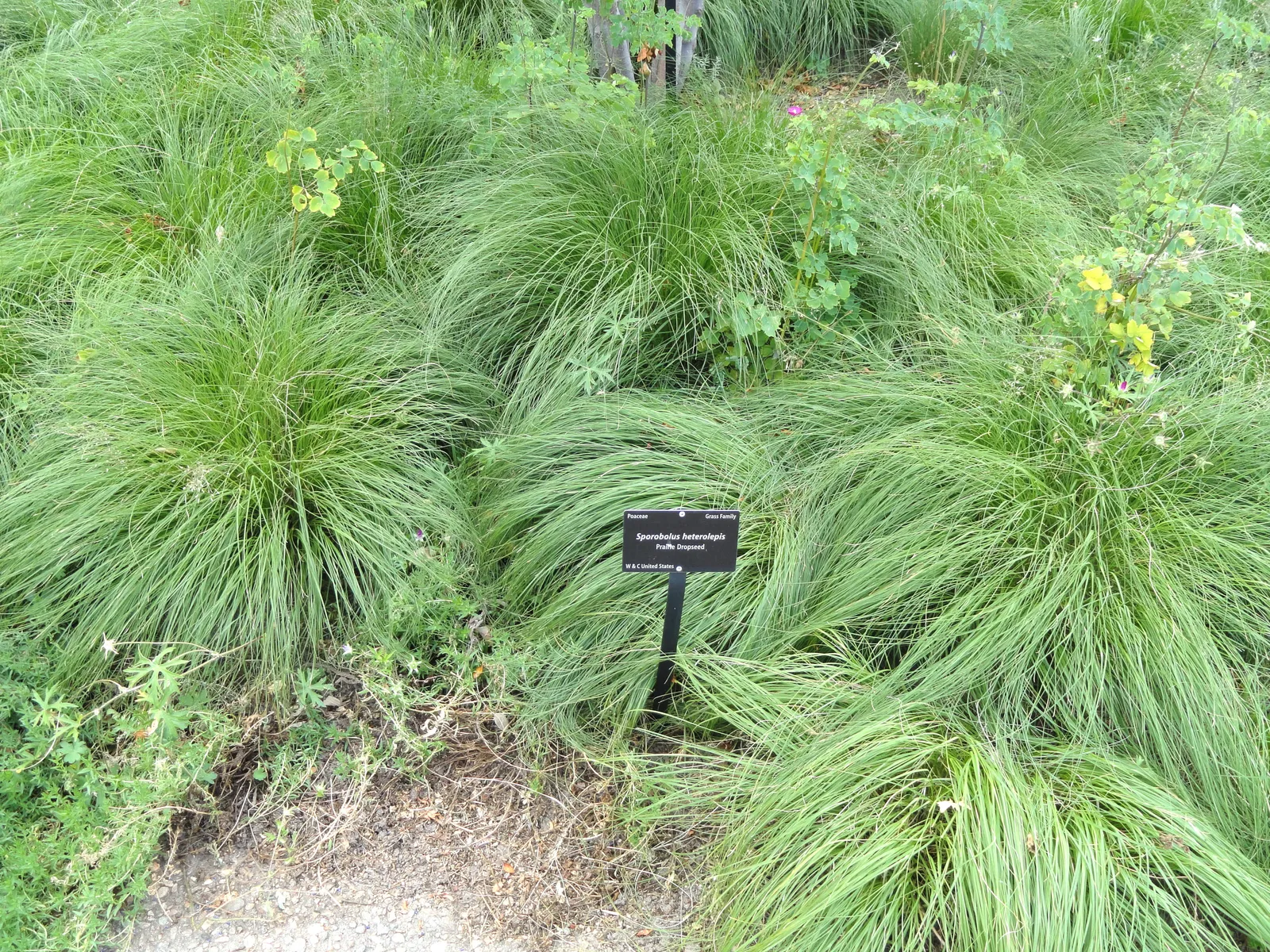
Sporobolus heterolepis, widely recognized as Prairie Dropseed, is an elegant and structurally distinctive perennial bunchgrass indigenous to the vast prairies and open woodlands across North America. This species is highly valued for its exquisitely fine-textured, arching foliage that naturally forms a dense, fountain-like clump, typically achieving a height and spread of 2 to 3 feet. Its leaves are slender, linear, and maintain a vibrant green hue throughout the growing season, transitioning to a rich golden-bronze in the autumn, offering exceptional visual appeal well into winter.
From late summer to early fall, Prairie Dropseed produces delicate, ethereal inflorescences that gracefully extend above the foliage. These flower stalks bear diminutive, inconspicuous spikelets that mature into tiny, seed-like fruits, which gives the grass its characteristic common name. Notably, the inflorescences are frequently described as emitting a sweet, distinctive popcorn-like fragrance, particularly noticeable on warm, humid days.
Ecologically robust, Sporobolus heterolepis is remarkably drought-tolerant once established and thrives in conditions ranging from full sun to partial shade, showing a preference for well-drained soils, including sandy, loamy, or clay types. Its adaptability and aesthetic qualities make it a highly desirable ornamental grass in landscape design, perfectly suited for mass plantings, defining borders, enhancing rock gardens, and integrating into naturalistic settings. Furthermore, it plays a vital ecological role, providing essential habitat and food sources for diverse wildlife, including various insect species and birds.
Trusted Scientific References
1. Authoritative external sources for Sporobolus heterolepis
1.1 Wikipedia — Sporobolus heterolepis
1.2 Kew POWO (Plants of the World Online)
1.3 PubMed — peer-reviewed research
1.4 NCBI Taxonomy Browser
1.5 GBIF — Global Biodiversity
1.6Sporobolus should be interpreted through verified botanical identity, practical care, and responsible safety language. This recovery note adds the missing context needed for a complete profile: match light to the plant's habit, use well-drained soil, water according to season, and avoid unsupported medicinal or edible claims. For publishing, the plant can be presented as a source-backed garden plant with clear care guidance, common problem diagnosis, and conservative safety wording.
1.1.Sporobolus — Key Features
- ✓ <strong>Botanical Name</strong> — Sporobolus heterolepis (Prairie Dropseed).
- ✓ <strong>Family</strong> — Poaceae (Grass Family).
- ✓ <strong>Native Range</strong> — Central North America, extending into parts of the East, West, and Canada.
- ✓ <strong>Growth Habit</strong> — Graceful perennial warm-season bunchgrass, forming dense, fountain-like clumps.
- ✓ <strong>Foliage</strong> — Fine-textured, linear leaves, vibrant green in summer, turning golden-bronze in fall.
- ✓ <strong>Inflorescence</strong> — Delicate, airy panicles appearing in late summer, emitting a sweet, popcorn-like scent.
- ✓ <strong>Ecological Role</strong> — Provides crucial habitat and food for various wildlife species, aids in erosion control.
- ✓ <strong>Drought Tolerance</strong> — Exceptional once established, making it suitable for dry landscapes.
- ✓ <strong>Soil Preference</strong> — Highly adaptable but thrives best in well-drained soils, from sandy to clay loams.
- ✓ <strong>Medicinal Potential</strong> — Suggested antioxidant, anti-inflammatory, and digestive support due to its phytochemical content.
1.2.Sporobolus — Quick Summary
- ✓ Native North American perennial bunchgrass, prized for its ornamental beauty.
- ✓ Offers significant ecological value, providing habitat and food for wildlife.
- ✓ Possesses potential medicinal properties including antioxidant, anti-inflammatory, and digestive support.
- ✓ Known for its remarkable drought tolerance and low-maintenance cultivation.
- ✓ Emits a distinctive sweet, popcorn-like fragrance from its inflorescences.
- ✓ Medicinal applications require further scientific validation due to limited human research.
2.Sporobolus — Scientific Identity
3.Sporobolus — Quick Facts
4.Sporobolus — Appearance & Identification
5.Sporobolus — Native Habitat
6.Sporobolus — Water Requirements
- ✓ Sunlight Requirements — Prairie Dropseed thrives best in full sun, but can tolerate and grow adequately in part-sun conditions, requiring at least 6 hours of direct sunlight daily.
- ✓ Soil Preference — It adapts well to a range of well-drained soil types, from sandy loam to clay loam or even rocky soils; good drainage is paramount for its health.
- ✓ Moisture Needs — This species is highly drought-tolerant once established, preferring dry to medium-moist soils, making it an excellent choice for xeriscaping.
- ✓ Propagation — Can be grown from seed, though germination rates can be inconsistent and seedlings are notoriously slow to develop; cold-moist stratification may improve success. Division of mature clumps in early spring or fall is also effective.
- ✓ Maintenance — Cut back the previous year's growth to a 2-inch stubble in late winter or very early spring to encourage fresh new growth and maintain an attractive form.
- ✓ Fertilization — Prairie Dropseed generally does not require fertilizer; however, incorporating a handful of compost at planting can aid in successful establishment.
- ✓ Hardiness Zones — It is reliably hardy across USDA Hardiness Zones 3 through 9, demonstrating resilience to a wide range of temperate climates.
- ✓ Pest and Disease Resistance — This grass exhibits strong natural resistance to most common pests and diseases, contributing to its low-maintenance profile.
Reviewed by the Flora Medical Global Botanical Review Panel
Multi-disciplinary editorial group · Botany · Ethnobotany · Herbal-medicine literature
Who reviewed this: This page was checked by the Flora Medical Global Botanical Review Panel — an in-house editorial group of botany graduates, ethnobotany researchers, and horticulture practitioners who collectively maintain our 7,000+ plant encyclopedia. Meet the team.
Our 4-step verification process
1. Taxonomic verification
Scientific names and synonyms cross-checked against Kew POWO, World Flora Online, and The Plant List.
2. Phytochemical & medicinal cross-reference
Active compounds, traditional uses, and reported activities are cross-referenced with PubMed, USDA Dr. Duke's database, and peer-reviewed ethnobotanical literature.
3. Conservation & distribution check
Distribution, ecology, and conservation status confirmed against GBIF occurrence records and the IUCN Red List.
4. Editorial & safety review
Every entry passes an editorial pass for clarity, originality, and safety notices (toxicity, contraindications, dosage caveats) before publication.
Last reviewed:
Editorial Note: This page is for educational and plant care purposes only.
Written by: Flora Medical Global Editorial Team
Reviewed by: Flora Medical Global Botanical Review Panel
Last Updated: June 16, 2026







Sporobolus — Comments & Community Reviews
Rate this plant