
Care Disclaimer: Plant care recommendations are general guidelines based on common growing conditions. Individual results may vary based on your local environment, climate, and care routine. If your plant is toxic, keep it away from children and pets, and consult a veterinarian if accidental ingestion occurs.
1.Stock Flower — Overview
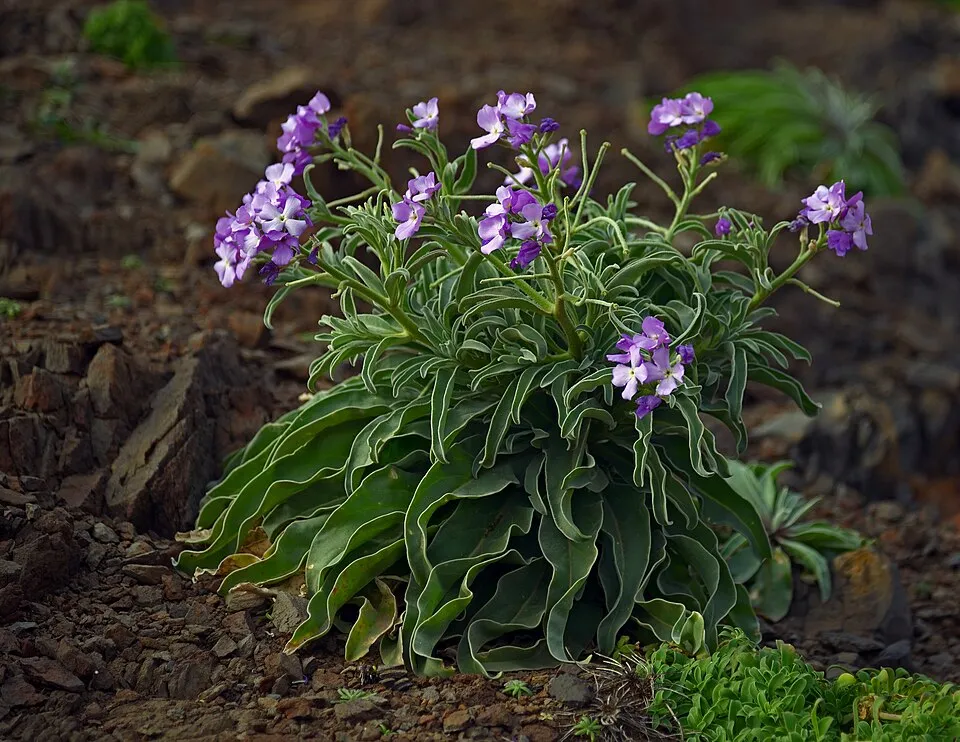
Stock Flower, scientifically designated as Matthiola incana, is a captivating flowering plant native to the Mediterranean basin and parts of Europe, revered for its aesthetic appeal and delightful fragrance. As a member of the Brassicaceae family, it shares botanical kinship with economically important crops like cabbage and broccoli. This species is characterized by its upright growth habit, typically reaching heights of 30 to 70 cm, producing dense, terminal racemes of showy, often ruffled flowers.
The blossoms exhibit a remarkable color palette, encompassing shades of white, cream, yellow, pink, purple, and red, frequently emitting a sweet, clove-like aroma that intensifies during the evening hours. Matthiola incana is predominantly cultivated as an ornamental annual, though in warmer, frost-free climates, it can persist as a biennial or short-lived perennial. Its robust stems and long-lasting blooms make it a highly desirable cut flower, widely utilized in floristry to add both visual elegance and a rich fragrance to bouquets and arrangements.
Beyond its horticultural value, the plant's ease of cultivation and adaptability to various garden settings contribute to its enduring popularity among gardeners. The plant's symbolism of lasting beauty and contentment further enhances its cultural significance.
Trusted Scientific References
1. Authoritative external sources for Matthiola incana
1.1 Wikipedia — Matthiola incana
1.2 Kew POWO (Plants of the World Online)
1.3 PubMed — peer-reviewed research
1.4 NCBI Taxonomy Browser
1.5 GBIF — Global Biodiversity
1.6Stock Flower should be interpreted through verified botanical identity, practical care, and responsible safety language. This recovery note adds the missing context needed for a complete profile: match light to the plant's habit, use well-drained soil, water according to season, and avoid unsupported medicinal or edible claims. For publishing, the plant can be presented as a source-backed garden plant with clear care guidance, common problem diagnosis, and conservative safety wording.
1.1.Stock Flower — Key Features
- ✓ <strong>Botanical Name</strong> — Matthiola incana
- ✓ <strong>Common Name</strong> — Stock Flower
- ✓ <strong>Family</strong> — Brassicaceae
- ✓ <strong>Native Range</strong> — Europe, Mediterranean
- ✓ <strong>Flower Colors</strong> — Pink, purple, white, yellow, red
- ✓ <strong>Fragrance</strong> — Sweet, clove-like, especially at night
- ✓ <strong>Growth Habit</strong> — Upright, annual to short-lived perennial
- ✓ <strong>Medicinal Properties</strong> — Anti-diabetic, antioxidant, cytotoxic, neuroprotective
- ✓ <strong>Key Constituents</strong> — Glucosinolates, flavonoids, anthocyanins
- ✓ <strong>Culinary Uses</strong> — Edible flowers and pods
1.2.Stock Flower — Quick Summary
- ✓ Matthiola incana is an ornamental plant with emerging medicinal potential.
- ✓ Exhibits anti-diabetic, antioxidant, cytotoxic, and neuroprotective activities.
- ✓ Rich in glucosinolates, flavonoids, and anthocyanins.
- ✓ Traditionally used for inflammation and certain cancers.
- ✓ Easy to cultivate and prized for its fragrance and beauty.
- ✓ Further research is needed to fully understand its therapeutic applications.
2.Stock Flower — Scientific Identity
3.Stock Flower — Quick Facts
4.Stock Flower — Appearance & Identification
5.Stock Flower — Native Habitat
6.Stock Flower — Water Requirements
- ✓ Seed Sowing — Start seeds indoors 6-8 weeks before the last expected frost for earlier blooms; surface sow or cover lightly.
- ✓ Soil Requirements — Prefers well-draining, fertile loam or sandy loam soil with a neutral to slightly alkaline pH (6.5-7.5).
- ✓ Light Exposure — Thrives in full sun to partial shade; full sun promotes more abundant flowering and compact growth.
- ✓ Watering Regime — Maintain consistent soil moisture, especially during dry periods, but avoid waterlogging to prevent root rot.
- ✓ Air Circulation — Ensure good air circulation to minimize fungal diseases, particularly in humid environments.
- ✓ Fertilization — Amend soil with compost or balanced organic fertilizer at planting; a liquid feed every 2-4 weeks can boost flowering.
- ✓ Support & Deadheading — Provide support for taller varieties to prevent lodging; deadhead spent flowers to encourage continuous blooming.
- ✓ Pest & Disease Management — Monitor for common pests like aphids and spider mites; ensure proper spacing to deter powdery mildew.
Reviewed by the Flora Medical Global Botanical Review Panel
Multi-disciplinary editorial group · Botany · Ethnobotany · Herbal-medicine literature
Who reviewed this: This page was checked by the Flora Medical Global Botanical Review Panel — an in-house editorial group of botany graduates, ethnobotany researchers, and horticulture practitioners who collectively maintain our 7,000+ plant encyclopedia. Meet the team.
Our 4-step verification process
1. Taxonomic verification
Scientific names and synonyms cross-checked against Kew POWO, World Flora Online, and The Plant List.
2. Phytochemical & medicinal cross-reference
Active compounds, traditional uses, and reported activities are cross-referenced with PubMed, USDA Dr. Duke's database, and peer-reviewed ethnobotanical literature.
3. Conservation & distribution check
Distribution, ecology, and conservation status confirmed against GBIF occurrence records and the IUCN Red List.
4. Editorial & safety review
Every entry passes an editorial pass for clarity, originality, and safety notices (toxicity, contraindications, dosage caveats) before publication.
Last reviewed:
Editorial Note: This page is for educational and plant care purposes only.
Written by: Flora Medical Global Editorial Team
Reviewed by: Flora Medical Global Botanical Review Panel
Last Updated: June 16, 2026







Stock Flower — Comments & Community Reviews
Rate this plant