

Care Disclaimer: Plant care recommendations are general guidelines based on common growing conditions. Individual results may vary based on your local environment, climate, and care routine. If your plant is toxic, keep it away from children and pets, and consult a veterinarian if accidental ingestion occurs.
1.Sweet Pea — Overview
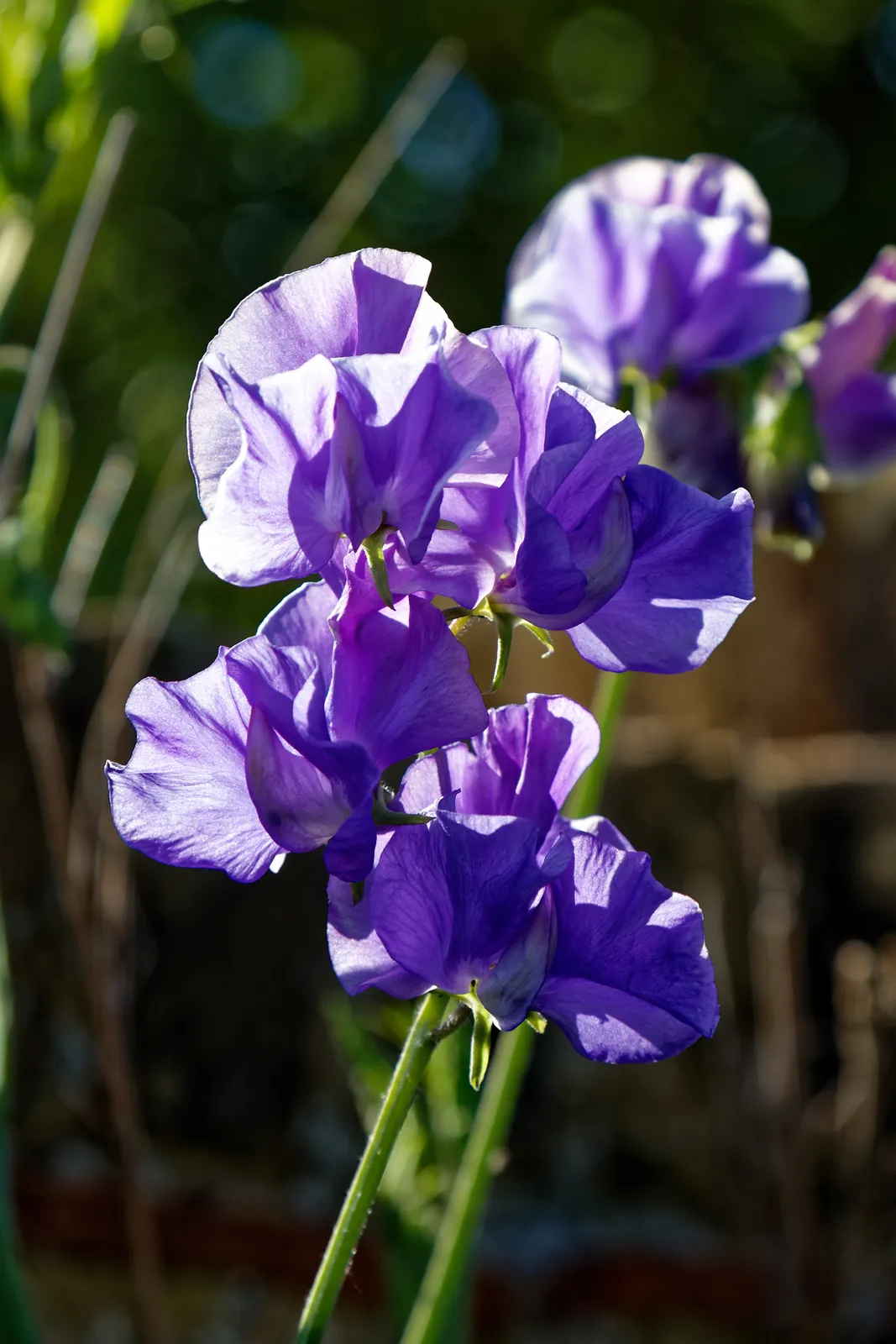
The Sweet Pea, Lathyrus odoratus, is an enchanting annual climbing plant celebrated globally for its exquisitely fragrant and vibrantly colored flowers. Originating from the sun-drenched regions of Sicily, southern Italy, and the Aegean Islands, it is a prominent member of the expansive legume family, Fabaceae. This herbaceous vine typically exhibits pinnately compound leaves, each terminating in delicate tendrils that enable the plant to ascend readily on support structures.
Its characteristic papilionaceous flowers, reminiscent of butterflies, emerge in a remarkable palette encompassing soft pastels, fiery reds, deep blues, rich purples, and striking bi-colors. These blossoms are renowned for their often ruffled petals and distinct, sweet perfume that permeates the air from late spring through summer. Reaching impressive heights of 1.5 to 2.5 meters (5-8 feet), Lathyrus odoratus is a quintessential element of cottage gardens, trellises, and provides an abundance of charming blooms ideal for cut flower arrangements.
While a horticultural favorite, its primary value is purely ornamental, as all parts of the plant, especially the seeds, are toxic if ingested.
Trusted Scientific References
1. Authoritative external sources for Lathyrus odoratus
1.1 Wikipedia — Lathyrus odoratus
1.2 Kew POWO (Plants of the World Online)
1.3 PubMed — peer-reviewed research
1.4 NCBI Taxonomy Browser
1.5 GBIF — Global Biodiversity
1.6Sweet Pea should be interpreted through verified botanical identity, practical care, and responsible safety language. This recovery note adds the missing context needed for a complete profile: match light to the plant's habit, use well-drained soil, water according to season, and avoid unsupported medicinal or edible claims. For publishing, the plant can be presented as a source-backed garden plant with clear care guidance, common problem diagnosis, and conservative safety wording.
1.7Sweet Pea (Lathyrus odoratus) is maintained in this recovery file as a complete garden profile with practical care, safety, and identification context. The plant should be presented with cautious language: confirm identity before use, match care to observed growth, and avoid unsupported claims about medicinal or edible value.
1.1.Sweet Pea — Key Features
- ✓ <strong>Highly Ornamental</strong> — Cherished for its beautiful, diverse, and often ruffled flowers.
- ✓ <strong>Distinctive Fragrance</strong> — Emits a sweet, captivating perfume that enhances garden aesthetics.
- ✓ <strong>Climbing Habit</strong> — A vigorous annual vine that readily ascends trellises and supports with tendrils.
- ✓ <strong>Wide Color Range</strong> — Flowers come in an extensive spectrum of colors, including pastels, brights, and bi-colors.
- ✓ <strong>Neurotoxic Seeds</strong> — Contains harmful compounds like BAPN and ODAP, making all parts, especially seeds, toxic.
- ✓ <strong>Induces Lathyrism</strong> — Ingestion can lead to severe neurological damage and paralysis.
- ✓ <strong>No Medicinal Value</strong> — Lacks any recognized therapeutic uses for human or animal consumption.
- ✓ <strong>Native to Mediterranean</strong> — Originates from Southern Europe and the Aegean Islands.
- ✓ <strong>Easy to Cultivate</strong> — Relatively simple to grow in suitable climates with proper support and care.
- ✓ <strong>Beloved Cut Flower</strong> — Popular choice for bouquets due to its beauty and scent.
1.2.Sweet Pea — Quick Summary
- ✓ Sweet Pea (Lathyrus odoratus) is a highly ornamental, fragrant climbing annual.
- ✓ It is critically important to note that all parts of the plant, especially the seeds, are toxic.
- ✓ Ingestion can lead to lathyrism, a severe neurological disorder characterized by paralysis.
- ✓ Contains potent neurotoxins like beta-aminopropionitrile (BAPN) and ODAP.
- ✓ The plant has no recognized medicinal benefits and should never be consumed.
- ✓ Primarily valued for its aesthetic beauty and delightful perfume in gardens and as cut flowers.
2.Sweet Pea — Scientific Identity
3.Sweet Pea — Quick Facts
4.Sweet Pea — Appearance & Identification
5.Sweet Pea — Native Habitat
6.Sweet Pea — Water Requirements
- ✓ Site Selection — Plant Sweet Pea in a location receiving full sun for at least 6-8 hours daily, though partial afternoon shade is beneficial in hotter climates.
- ✓ Soil Preparation — Ensure well-drained, fertile soil enriched with organic matter, aiming for a slightly alkaline pH (around 7.5) for optimal growth.
- ✓ Seed Scarification — To aid germination, nick the seed coat with a file or razor, or soak seeds in warm water for 12-24 hours before planting.
- ✓ Planting Time and Depth — Sow seeds in early spring after the last frost (or autumn in mild climates), planting them 2.5 cm (1 inch) deep and 15 cm (6 inches) apart.
- ✓ Support Structure — Provide a sturdy climbing support such as a trellis, netting, or stakes for the tendrils to grasp, allowing the plant to reach its full height.
- ✓ Watering Regime — Water regularly and deeply, especially during dry periods, to keep the soil consistently moist but not waterlogged.
- ✓ Fertilization — Feed monthly with a balanced fertilizer or one higher in phosphorus and potassium (like a tomato feed) to encourage abundant blooming, rather than excessive foliage.
- ✓ Pruning and Deadheading — Pinch back growing tips when plants are 10 cm (4 inches) tall to promote bushier growth, and deadhead spent blooms regularly to encourage continuous flowering and prevent seed formation.
Reviewed by the Flora Medical Global Botanical Review Panel
Multi-disciplinary editorial group · Botany · Ethnobotany · Herbal-medicine literature
Who reviewed this: This page was checked by the Flora Medical Global Botanical Review Panel — an in-house editorial group of botany graduates, ethnobotany researchers, and horticulture practitioners who collectively maintain our 7,000+ plant encyclopedia. Meet the team.
Our 4-step verification process
1. Taxonomic verification
Scientific names and synonyms cross-checked against Kew POWO, World Flora Online, and The Plant List.
2. Phytochemical & medicinal cross-reference
Active compounds, traditional uses, and reported activities are cross-referenced with PubMed, USDA Dr. Duke's database, and peer-reviewed ethnobotanical literature.
3. Conservation & distribution check
Distribution, ecology, and conservation status confirmed against GBIF occurrence records and the IUCN Red List.
4. Editorial & safety review
Every entry passes an editorial pass for clarity, originality, and safety notices (toxicity, contraindications, dosage caveats) before publication.
Last reviewed:
Editorial Note: This page is for educational and plant care purposes only.
Written by: Flora Medical Global Editorial Team
Reviewed by: Flora Medical Global Botanical Review Panel
Last Updated: June 16, 2026







Sweet Pea — Comments & Community Reviews
Rate this plant