
Care Disclaimer: Plant care recommendations are general guidelines based on common growing conditions. Individual results may vary based on your local environment, climate, and care routine. If your plant is toxic, keep it away from children and pets, and consult a veterinarian if accidental ingestion occurs.
1.Tulipa Gesneriana — Overview
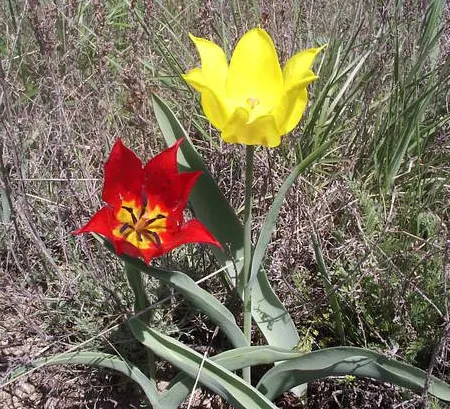
Tulipa gesneriana, widely recognized as the common garden tulip, is a captivating perennial bulbous geophyte belonging to the Liliaceae family. While its precise wild origin remains somewhat obscure, it is believed to have roots in Central Asia, with historical cultivation extensively documented in regions like Turkey before its introduction to Western Europe in the 16th century. This introduction famously ignited 'Tulip Mania' in the Netherlands, cementing its status as a highly prized ornamental.
The species is celebrated as the direct progenitor of the vast majority of modern cultivated tulip varieties, showcasing remarkable genetic diversity. Typically, it produces a single, elegant, cup-shaped flower atop a sturdy, erect stem, blooming vibrantly in spring. Its petals exhibit an astonishing spectrum of colors, including pure white, deep reds, purples, yellows, and intricate bicolors or multi-colored patterns.
Beyond its aesthetic appeal, Tulipa gesneriana is naturalized in various parts of Southwest Europe, often found thriving in and around cultivated land, demonstrating its adaptability. Its robust bulbs are notably hardy, capable of surviving soil temperatures as low as -12°C, contributing to its widespread cultivation in temperate climates as a quintessential symbol of spring and renewal.
Trusted Scientific References
1. Authoritative external sources for Tulipa gesneriana
1.1 Wikipedia — Tulipa gesneriana
1.2 Kew POWO (Plants of the World Online)
1.3 PubMed — peer-reviewed research
1.4 NCBI Taxonomy Browser
1.5 GBIF — Global Biodiversity
1.6Tulipa Gesneriana should be interpreted through verified botanical identity, practical care, and responsible safety language. This recovery note adds the missing context needed for a complete profile: match light to the plant's habit, use well-drained soil, water according to season, and avoid unsupported medicinal or edible claims. For publishing, the plant can be presented as a source-backed garden plant with clear care guidance, common problem diagnosis, and conservative safety wording.
1.1.Tulipa Gesneriana — Key Features
- ✓ <strong>Bulbous Perennial</strong> — Grows from an underground bulb, returning annually.
- ✓ <strong>Iconic Spring Flower</strong> — Renowned for its vibrant and diverse spring blooms.
- ✓ <strong>Progenitor of Cultivated Tulips</strong> — Genetic source for numerous modern varieties.
- ✓ <strong>Wide Color Spectrum</strong> — Flowers display a rich array of colors and patterns.
- ✓ <strong>Liliaceae Family Member</strong> — Belongs to the lily family, characterized by monocot features.
- ✓ <strong>Contains Tuliposides</strong> — Specific compounds linked to its toxic properties.
- ✓ <strong>Ornamental Primarily</strong> — Cultivated almost exclusively for aesthetic purposes.
- ✓ <strong>Air Purifying Qualities</strong> — Demonstrates ability to filter certain indoor air pollutants.
- ✓ <strong>Hardy in Temperate Zones</strong> — Tolerates cold temperatures down to -12°C.
- ✓ <strong>Historical Significance</strong> — Central to 'Tulip Mania' and horticultural history.
1.2.Tulipa Gesneriana — Quick Summary
- ✓ Ornamental beauty: Valued globally for vibrant spring flowers.
- ✓ Progenitor species: Ancestor to most modern cultivated tulips.
- ✓ Contains tuliposides: Responsible for potential skin irritation and toxicity.
- ✓ Not for consumption: Internal use is strongly discouraged due to toxic compounds.
- ✓ Air purification: Can help remove indoor air toxins like formaldehyde.
- ✓ Hardy and adaptable: Thrives in temperate climates with proper care.
2.Tulipa Gesneriana — Scientific Identity
3.Tulipa Gesneriana — Quick Facts
4.Tulipa Gesneriana — Appearance & Identification
5.Tulipa Gesneriana — Native Habitat
6.Tulipa Gesneriana — Water Requirements
- ✓ Soil Preparation — Thrives in sunny positions with well-drained, sandy soil enriched with organic matter like leafmould.
- ✓ Planting Depth — Plant bulbs in late autumn, typically 15-20 cm deep, to protect them from frost and provide stability.
- ✓ Watering Regimen — Requires moderate watering during its active growth phase in spring; reduce watering significantly once foliage begins to yellow and during dormancy.
- ✓ Hardiness Zone — Bulbs are very hardy, tolerating soil temperatures down to approximately -12°C, making them suitable for USDA hardiness zones 4-8.
- ✓ Propagation by Seed — Sow seeds in a shady cold frame in early summer or autumn; spring sowing of stored seeds in a greenhouse can also be successful.
- ✓ Propagation by Division — Divide offsets in July after the plants have become dormant; larger bulbs can be replanted directly, while smaller ones benefit from a year in a cold frame.
- ✓ Dormancy Management — Harvest bulbs in June after foliage dies back, store them in a cool, dry place, and replant in October for the next blooming season.
- ✓ Pest and Disease Control — Monitor for common tulip pests like aphids and diseases such as tulip fire (Botrytis tulipae), ensuring good air circulation and proper sanitation.
Reviewed by the Flora Medical Global Botanical Review Panel
Multi-disciplinary editorial group · Botany · Ethnobotany · Herbal-medicine literature
Who reviewed this: This page was checked by the Flora Medical Global Botanical Review Panel — an in-house editorial group of botany graduates, ethnobotany researchers, and horticulture practitioners who collectively maintain our 7,000+ plant encyclopedia. Meet the team.
Our 4-step verification process
1. Taxonomic verification
Scientific names and synonyms cross-checked against Kew POWO, World Flora Online, and The Plant List.
2. Phytochemical & medicinal cross-reference
Active compounds, traditional uses, and reported activities are cross-referenced with PubMed, USDA Dr. Duke's database, and peer-reviewed ethnobotanical literature.
3. Conservation & distribution check
Distribution, ecology, and conservation status confirmed against GBIF occurrence records and the IUCN Red List.
4. Editorial & safety review
Every entry passes an editorial pass for clarity, originality, and safety notices (toxicity, contraindications, dosage caveats) before publication.
Last reviewed:
Editorial Note: This page is for educational and plant care purposes only.
Written by: Flora Medical Global Editorial Team
Reviewed by: Flora Medical Global Botanical Review Panel
Last Updated: June 16, 2026







Tulipa Gesneriana — Comments & Community Reviews
Rate this plant