
Care Disclaimer: Plant care recommendations are general guidelines based on common growing conditions. Individual results may vary based on your local environment, climate, and care routine. If your plant is toxic, keep it away from children and pets, and consult a veterinarian if accidental ingestion occurs.
1.Vernonia — Overview
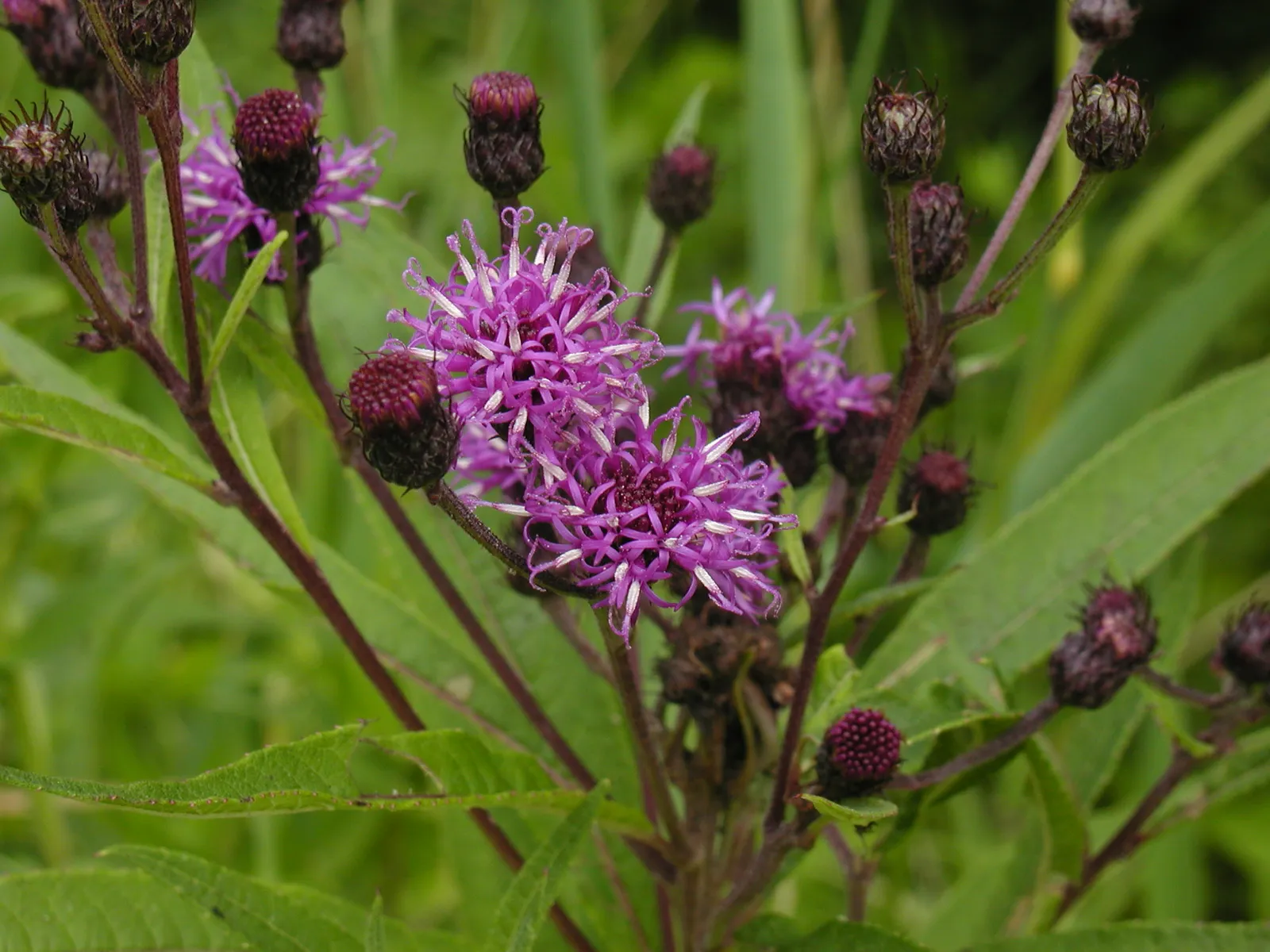
Vernonia noveboracensis, commonly known as New York Ironweed, is a resilient and visually striking perennial herb indigenous to the eastern regions of the United States. This robust member of the Asteraceae family typically achieves heights ranging from 4 to 7 feet, with some specimens soaring up to 9 feet, forming sturdy, upright clumps that command attention in natural landscapes and cultivated gardens alike. Its most distinctive feature is the spectacular display of vibrant, deep purple, thistle-like flowers, which emerge in dense, flat-topped clusters during late summer and early fall, offering a crucial nectar source when many other flowering plants have ceased blooming.
The strong, leafy stems support lance-shaped leaves that are a rich, dark green and finely toothed along their margins. New York Ironweed naturally thrives in moist to wet environments, often found along streambanks, in marshes, wet meadows, and open woodlands, indicating its preference for consistently hydrated, well-drained soils. Beyond its dramatic ornamental appeal, it is highly valued for its ecological prowess, serving as an exceptional attractant for a diverse array of pollinators, including monarch butterflies, various bee species, and other beneficial insects, cementing its role as an ecological cornerstone in native plant gardens and naturalized areas.
Trusted Scientific References
1. Authoritative external sources for Vernonia noveboracensis
1.1 Wikipedia — Vernonia noveboracensis
1.2 Kew POWO (Plants of the World Online)
1.3 PubMed — peer-reviewed research
1.4 NCBI Taxonomy Browser
1.5 GBIF — Global Biodiversity
1.6Vernonia should be interpreted through verified botanical identity, practical care, and responsible safety language. This recovery note adds the missing context needed for a complete profile: match light to the plant's habit, use well-drained soil, water according to season, and avoid unsupported medicinal or edible claims. For publishing, the plant can be presented as a source-backed garden plant with clear care guidance, common problem diagnosis, and conservative safety wording.
1.1.Vernonia — Key Features
- ✓ <strong>Botanical Name</strong> — Vernonia noveboracensis
- ✓ <strong>Common Name</strong> — New York Ironweed
- ✓ <strong>Family</strong> — Asteraceae (Daisy Family)
- ✓ <strong>Native Range</strong> — Eastern United States
- ✓ <strong>Bloom Time</strong> — Late Summer to Early Fall
- ✓ <strong>Flower Color</strong> — Vibrant Deep Purple
- ✓ <strong>Mature Height</strong> — Typically 4-9 feet tall
- ✓ <strong>Ecological Value</strong> — Exceptional pollinator attractor (butterflies, bees, songbirds)
- ✓ <strong>Habitat Preference</strong> — Moist meadows, streambanks, damp open areas
- ✓ <strong>Key Phytochemicals</strong> — Sesquiterpene lactones (vernodalin, vernolepin), flavonoids, tannins
1.2.Vernonia — Quick Summary
- ✓ New York Ironweed (Vernonia noveboracensis) is a tall, robust perennial native to the Eastern US.
- ✓ Primarily valued for its striking deep purple flowers and exceptional ability to attract pollinators.
- ✓ Contains bioactive compounds like sesquiterpene lactones and flavonoids, suggesting medicinal potential.
- ✓ Specific research on V. noveboracensis for human internal consumption is limited; traditional uses often refer to related Vernonia species.
- ✓ Exhibits potential antioxidant, anti-inflammatory, and bitter tonic effects.
- ✓ Internal use requires significant caution due to potential side effects and lack of specific safety data.
2.Vernonia — Scientific Identity
3.Vernonia — Quick Facts
4.Vernonia — Appearance & Identification
5.Vernonia — Native Habitat
6.Vernonia — Water Requirements
- ✓ Light Requirements — Thrives in full sun (at least 6-8 hours direct light daily), but can tolerate light afternoon shade in hotter climates.
- ✓ Soil Preference — Adaptable to various soil types, but prefers consistently moist, well-drained, slightly acidic to neutral soil, mimicking its native damp meadow habitats.
- ✓ Watering — Requires regular watering, especially when establishing; aim for about 1 inch of water per week. Established plants show some drought tolerance.
- ✓ USDA Hardiness Zones — Hardy in USDA Zones 4 through 8, capable of withstanding both cold winters and warm summers.
- ✓ Planting — Can be grown from potted plants after the last spring frost or from seeds; seeds benefit from cold stratification and are best sown outdoors in late fall or in winter greenhouses.
- ✓ Spacing — When planting multiple specimens, space them approximately 2 feet apart to allow for mature growth and air circulation.
- ✓ Fertilization — Generally not required; excess fertilizer can lead to weak, floppy stems. A light layer of compost in spring or fall can provide adequate nutrients.
- ✓ Pest and Disease Resistance — Naturally robust and resistant to most common garden pests and diseases; deer and rabbits typically avoid its bitter-tasting foliage.
Reviewed by the Flora Medical Global Botanical Review Panel
Multi-disciplinary editorial group · Botany · Ethnobotany · Herbal-medicine literature
Who reviewed this: This page was checked by the Flora Medical Global Botanical Review Panel — an in-house editorial group of botany graduates, ethnobotany researchers, and horticulture practitioners who collectively maintain our 7,000+ plant encyclopedia. Meet the team.
Our 4-step verification process
1. Taxonomic verification
Scientific names and synonyms cross-checked against Kew POWO, World Flora Online, and The Plant List.
2. Phytochemical & medicinal cross-reference
Active compounds, traditional uses, and reported activities are cross-referenced with PubMed, USDA Dr. Duke's database, and peer-reviewed ethnobotanical literature.
3. Conservation & distribution check
Distribution, ecology, and conservation status confirmed against GBIF occurrence records and the IUCN Red List.
4. Editorial & safety review
Every entry passes an editorial pass for clarity, originality, and safety notices (toxicity, contraindications, dosage caveats) before publication.
Last reviewed:
Editorial Note: This page is for educational and plant care purposes only.
Written by: Flora Medical Global Editorial Team
Reviewed by: Flora Medical Global Botanical Review Panel
Last Updated: June 16, 2026







Vernonia — Comments & Community Reviews
Rate this plant