
Care Disclaimer: Plant care recommendations are general guidelines based on common growing conditions. Individual results may vary based on your local environment, climate, and care routine. If your plant is toxic, keep it away from children and pets, and consult a veterinarian if accidental ingestion occurs.
1.Veronica Spicata — Overview
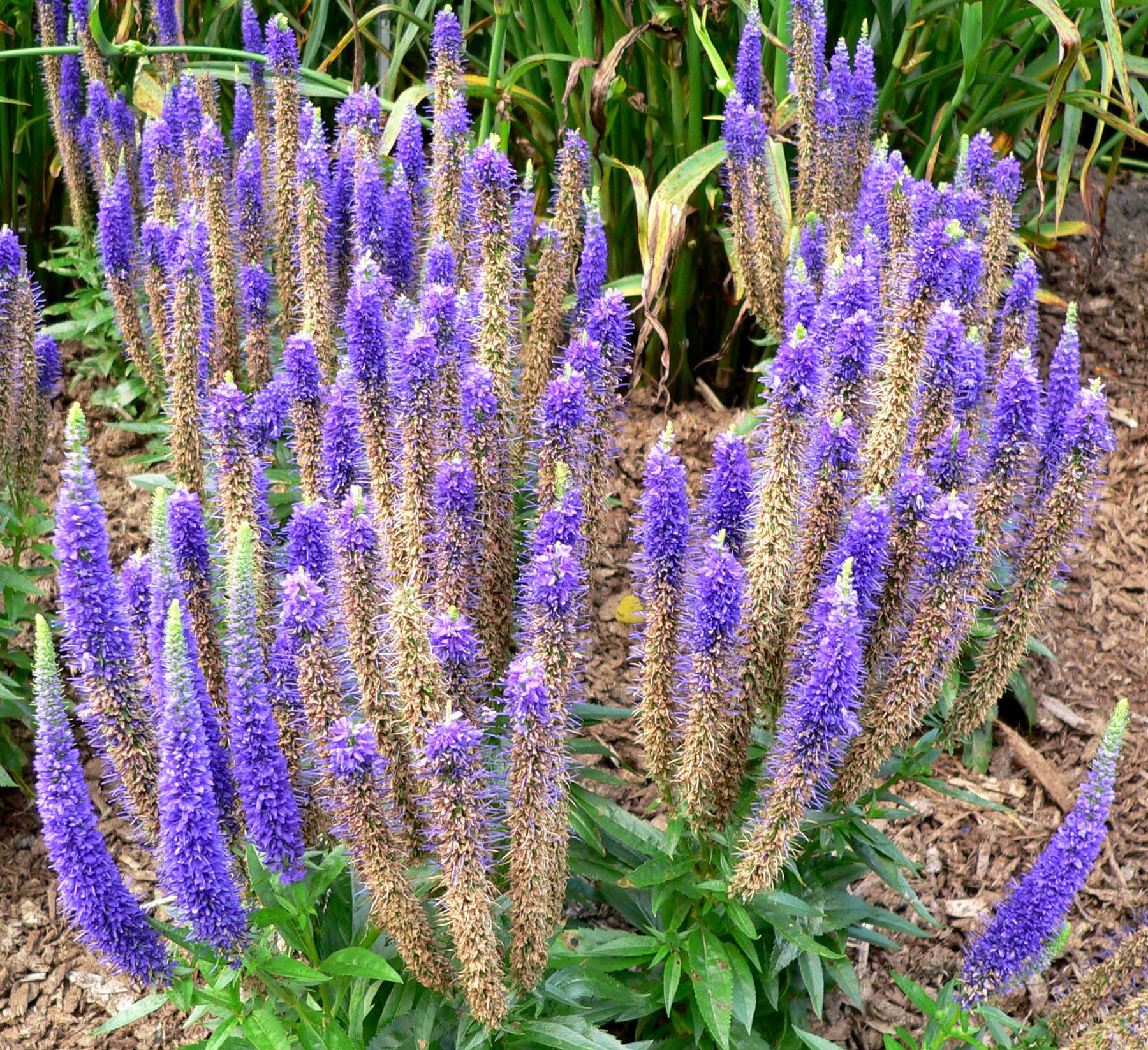
Veronica spicata, commonly known as Spiked Speedwell or Royal Candle, is a captivating herbaceous perennial belonging to the Plantaginaceae family, a diverse group encompassing over 500 species of Veronica. This resilient plant is indigenous to a broad expanse of Europe and Asia, flourishing in various temperate climates. Morphologically, it presents with an upright, clumping growth habit, typically reaching heights of 1 to 2 feet and a similar spread. Its foliage consists of lance-shaped to oval leaves, subtly serrated along the margins, arranged oppositely on slender, often unbranched stems.
The leaves are generally a vibrant green, though some cultivars exhibit a grayish or bronze tint, forming dense basal mounds from which the striking inflorescences emerge. The distinguishing feature of Veronica spicata is its dense, terminal flower spikes, resembling miniature candles, which bloom profusely from early to late summer. Each spike is composed of numerous small, four-petaled flowers, tightly packed to create a bottlebrush effect. Flower colors span a spectrum from deep blues and purples to soft pinks and pure whites, depending on the specific cultivar.
Beyond its ornamental appeal, Veronica spicata is highly valued for its extended blooming period, its ecological role in attracting a wide array of pollinators such as bees and butterflies, and its remarkably low-maintenance nature. Its architectural form and vibrant hues make it a standout choice for adding vertical interest to perennial borders, rock gardens, cottage gardens, and container plantings, thriving in full sun to partial shade and adaptable to a range of well-draining soil conditions.
Trusted Scientific References
1. Authoritative external sources for Veronica spicata
1.1 Wikipedia — Veronica spicata
1.2 Kew POWO (Plants of the World Online)
1.3 PubMed — peer-reviewed research
1.4 NCBI Taxonomy Browser
1.5 GBIF — Global Biodiversity
1.6Veronica Spicata should be interpreted through verified botanical identity, practical care, and responsible safety language. This recovery note adds the missing context needed for a complete profile: match light to the plant's habit, use well-drained soil, water according to season, and avoid unsupported medicinal or edible claims. For publishing, the plant can be presented as a source-backed garden plant with clear care guidance, common problem diagnosis, and conservative safety wording.
1.1.Veronica Spicata — Key Features
- ✓ <strong>Botanical Name</strong> — Veronica spicata (Spiked Speedwell, Royal Candle).
- ✓ <strong>Plant Family</strong> — Plantaginaceae.
- ✓ <strong>Native Origin</strong> — Indigenous to regions of Europe and Asia.
- ✓ <strong>Floral Characteristics</strong> — Upright, dense flower spikes in shades of blue, purple, pink, and white.
- ✓ <strong>Bloom Period</strong> — Flowers profusely from early to late summer, offering long-lasting color.
- ✓ <strong>Medicinal Properties</strong> — Traditionally valued for diuretic, anti-inflammatory, antioxidant, and digestive support.
- ✓ <strong>Key Phytochemicals</strong> — Contains iridoid glycosides (e.g., aucubin), flavonoids, and phenolic acids.
- ✓ <strong>Garden Use</strong> — Excellent for borders, rock gardens, containers, and mass plantings due to its vertical interest.
- ✓ <strong>Pollinator Attraction</strong> — Highly attractive to bees, butterflies, and other beneficial pollinators.
- ✓ <strong>Deer Resistance</strong> — Generally considered deer-resistant, making it a reliable garden choice.
1.2.Veronica Spicata — Quick Summary
- ✓ Veronica spicata is a popular herbaceous perennial known for its striking flower spikes.
- ✓ Native to Europe and Asia, it's valued for both ornamental beauty and traditional medicinal uses.
- ✓ Key traditional benefits include diuretic, anti-inflammatory, antioxidant, and digestive support.
- ✓ Rich in iridoid glycosides, flavonoids, and phenolic acids, contributing to its therapeutic actions.
- ✓ Generally low-maintenance in gardens and attracts important pollinators.
- ✓ Consult a healthcare professional before medicinal use, especially for specific health conditions or during pregnancy.
2.Veronica Spicata — Scientific Identity
3.Veronica Spicata — Quick Facts
4.Veronica Spicata — Appearance & Identification
5.Veronica Spicata — Native Habitat
6.Veronica Spicata — Water Requirements
- ✓ Hardiness Zones — Thrives in USDA hardiness zones 3 through 9, demonstrating robust cold tolerance.
- ✓ Light Requirements — Best performance is achieved with at least 6 hours of full sun daily, though it can tolerate partial shade, which may result in fewer blooms.
- ✓ Soil Preferences — Prefers rich, well-draining soil but is highly adaptable to a wide range of soil conditions, including clay or sand, and tolerant of neutral, alkaline, or acidic pH levels.
- ✓ Planting Time — Transplanting is best done during cooler months in spring or fall to minimize heat stress; seeds can be started indoors 4-6 weeks before the last frost or sown directly outdoors in mid-to-late spring.
- ✓ Watering — Requires moderate watering, typically once a week during summer, but becomes quite drought-tolerant once established, needing less frequent irrigation.
- ✓ Pruning and Maintenance — Deadhead spent flower spikes just below the base to encourage repeat blooming; taller varieties may benefit from staking, and clumps can be divided every few years in spring or fall to maintain vigor.
- ✓ Fertilization — Amend soil with a thin layer of compost in spring, followed by 2 inches of mulch to suppress weeds and conserve moisture, avoiding covering the crown.
Reviewed by the Flora Medical Global Botanical Review Panel
Multi-disciplinary editorial group · Botany · Ethnobotany · Herbal-medicine literature
Who reviewed this: This page was checked by the Flora Medical Global Botanical Review Panel — an in-house editorial group of botany graduates, ethnobotany researchers, and horticulture practitioners who collectively maintain our 7,000+ plant encyclopedia. Meet the team.
Our 4-step verification process
1. Taxonomic verification
Scientific names and synonyms cross-checked against Kew POWO, World Flora Online, and The Plant List.
2. Phytochemical & medicinal cross-reference
Active compounds, traditional uses, and reported activities are cross-referenced with PubMed, USDA Dr. Duke's database, and peer-reviewed ethnobotanical literature.
3. Conservation & distribution check
Distribution, ecology, and conservation status confirmed against GBIF occurrence records and the IUCN Red List.
4. Editorial & safety review
Every entry passes an editorial pass for clarity, originality, and safety notices (toxicity, contraindications, dosage caveats) before publication.
Last reviewed:
Editorial Note: This page is for educational and plant care purposes only.
Written by: Flora Medical Global Editorial Team
Reviewed by: Flora Medical Global Botanical Review Panel
Last Updated: June 16, 2026







Veronica Spicata — Comments & Community Reviews
Rate this plant