
Care Disclaimer: Plant care recommendations are general guidelines based on common growing conditions. Individual results may vary based on your local environment, climate, and care routine. If your plant is toxic, keep it away from children and pets, and consult a veterinarian if accidental ingestion occurs.
1.Waldsteinia — Overview
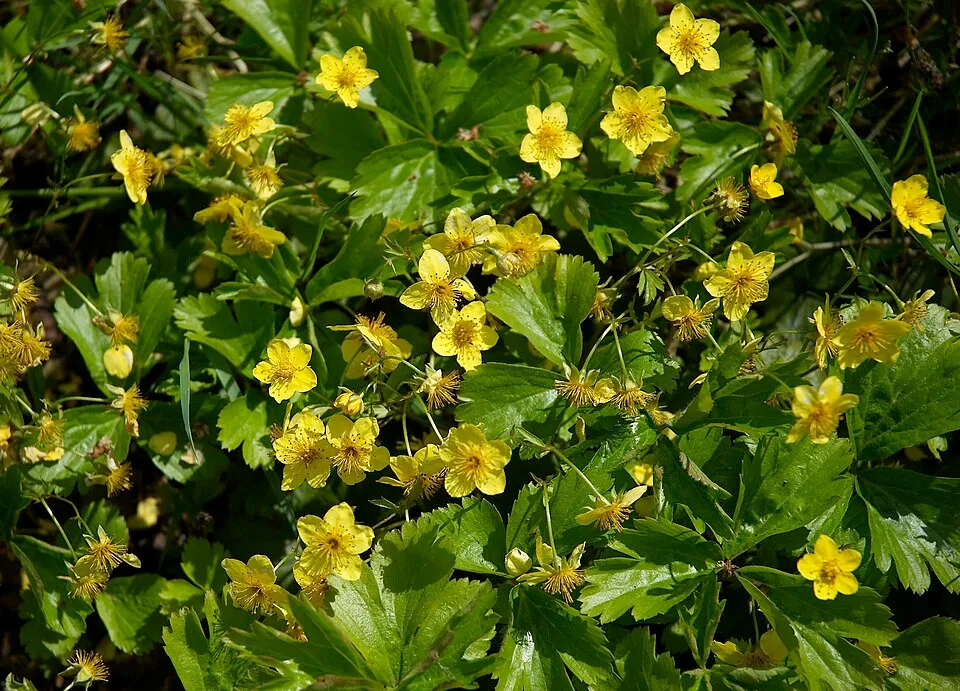
Waldsteinia ternata, commonly known as barren strawberry or Siberian barren strawberry, is a resilient herbaceous perennial belonging to the Rosaceae family. Native to the cool, temperate woodlands and mountainous regions across a disjunct range in Eastern Europe and Eastern Asia, including the Changbai Mountains of China, Sakhalin, Siberia, and Japan, this plant exhibits a low-growing, mat-forming habit. Its attractive trifoliate leaves, resembling those of true strawberries, emerge a vibrant green in spring, deepening to a rich emerald through summer, and often acquiring striking bronze or reddish hues in cooler autumn and winter temperatures, providing year-round visual interest as an evergreen or semi-evergreen groundcover.
In late spring to early summer, Waldsteinia ternata produces an abundance of bright yellow, five-petaled flowers, which, despite their resemblance to wild strawberry blossoms, do not yield edible fruits, hence its common name. The plant spreads effectively through both above-ground stolons and subterranean rhizomes, forming a dense, weed-suppressing carpet over time. Its robust nature makes it highly adaptable to various growing conditions, thriving in partial to full shade, and demonstrating considerable drought tolerance once established.
It is an excellent choice for challenging areas like shady borders, beneath trees and shrubs where turf struggles, or in rockeries, offering a low-maintenance, aesthetically pleasing alternative to traditional lawns in low-light environments. Taxonomically, it is classified within the genus Waldsteinia, which is distinct from Fragaria (true strawberries) and Sibbaldia.
Trusted Scientific References
1. Authoritative external sources for Waldsteinia ternata
1.1 Wikipedia — Waldsteinia ternata
1.2 Kew POWO (Plants of the World Online)
1.3 PubMed — peer-reviewed research
1.4 NCBI Taxonomy Browser
1.5 GBIF — Global Biodiversity
1.6Waldsteinia should be interpreted through verified botanical identity, practical care, and responsible safety language. This recovery note adds the missing context needed for a complete profile: match light to the plant's habit, use well-drained soil, water according to season, and avoid unsupported medicinal or edible claims. For publishing, the plant can be presented as a source-backed garden plant with clear care guidance, common problem diagnosis, and conservative safety wording.
1.1.Waldsteinia — Key Features
- ✓ <strong>Botanical Name</strong> — Waldsteinia ternata, a perennial in the Rosaceae family.
- ✓ <strong>Common Name</strong> — Barren strawberry, Siberian barren strawberry.
- ✓ <strong>Distinctive Foliage</strong> — Trifoliate, strawberry-like leaves that change color seasonally.
- ✓ <strong>Non</strong> — Edible Fruit — Produces bright yellow flowers but no edible berries.
- ✓ <strong>Growth Habit</strong> — Dense, mat-forming groundcover spreading via stolons and rhizomes.
- ✓ <strong>Shade Tolerance</strong> — Excellent for partial to full shade garden areas.
- ✓ <strong>Medicinal Properties</strong> — Known for astringent, anti-inflammatory, and wound-healing actions.
- ✓ <strong>Primary Constituents</strong> — Rich in tannins, flavonoids, and phenolic acids.
- ✓ <strong>Traditional Uses</strong> — Historically used for diarrhea, dysentery, and topical wound care.
- ✓ <strong>Low Maintenance</strong> — Drought-tolerant once established and generally pest-free.
1.2.Waldsteinia — Quick Summary
- ✓ Barren strawberry is a versatile Rosaceae groundcover with unique medicinal value.
- ✓ Rich in tannins, it offers significant astringent and anti-inflammatory benefits.
- ✓ Traditionally used for diarrhea, dysentery, and topical wound healing.
- ✓ Thrives in shade, low maintenance, and spreads effectively.
- ✓ Caution advised for pregnant/lactating individuals and those with iron deficiency.
- ✓ A natural remedy with applications in digestive health and skin care.
2.Waldsteinia — Scientific Identity
3.Waldsteinia — Quick Facts
4.Waldsteinia — Appearance & Identification
5.Waldsteinia — Native Habitat
6.Waldsteinia — Water Requirements
- ✓ Site Selection — Thrives in partial to full shade, especially in hotter climates; tolerates some sun in cooler regions.
- ✓ Soil Requirements — Prefers fertile, well-draining soil enriched with organic matter; adaptable to various soil types from sandy to clay, as long as drainage is adequate.
- ✓ Watering — Requires consistent moisture, particularly during dry spells and establishment; established plants show good drought tolerance but perform best with regular watering.
- ✓ Temperature & Hardiness — Hardy in USDA Zones 9-12, tolerating minimum temperatures down to -3°C (27°F); optimal growth occurs between 10-28°C (50-82°F).
- ✓ Fertilization — Benefits from a balanced, general-purpose liquid fertilizer applied monthly during the active growing season (spring through early autumn).
- ✓ Propagation — Easily propagated by division of its rhizomes and stolons in spring or autumn; can also be grown from seeds, which may require stratification.
- ✓ Maintenance — Low maintenance; prune as needed to control spread or remove any damaged foliage; mulching helps retain soil moisture and suppress weeds.
Reviewed by the Flora Medical Global Botanical Review Panel
Multi-disciplinary editorial group · Botany · Ethnobotany · Herbal-medicine literature
Who reviewed this: This page was checked by the Flora Medical Global Botanical Review Panel — an in-house editorial group of botany graduates, ethnobotany researchers, and horticulture practitioners who collectively maintain our 7,000+ plant encyclopedia. Meet the team.
Our 4-step verification process
1. Taxonomic verification
Scientific names and synonyms cross-checked against Kew POWO, World Flora Online, and The Plant List.
2. Phytochemical & medicinal cross-reference
Active compounds, traditional uses, and reported activities are cross-referenced with PubMed, USDA Dr. Duke's database, and peer-reviewed ethnobotanical literature.
3. Conservation & distribution check
Distribution, ecology, and conservation status confirmed against GBIF occurrence records and the IUCN Red List.
4. Editorial & safety review
Every entry passes an editorial pass for clarity, originality, and safety notices (toxicity, contraindications, dosage caveats) before publication.
Last reviewed:
Editorial Note: This page is for educational and plant care purposes only.
Written by: Flora Medical Global Editorial Team
Reviewed by: Flora Medical Global Botanical Review Panel
Last Updated: June 16, 2026







Waldsteinia — Comments & Community Reviews
Rate this plant