

Care Disclaimer: Plant care recommendations are general guidelines based on common growing conditions. Individual results may vary based on your local environment, climate, and care routine. If your plant is toxic, keep it away from children and pets, and consult a veterinarian if accidental ingestion occurs.
1.Acacia Baileyana — Overview
Acacia baileyana, widely recognized as Cootamundra Wattle, Bailey's Wattle, or Golden Mimosa, is a striking species of shrub or small tree belonging to the Fabaceae family. Typically reaching heights of 3 to 10 meters, this plant features smooth, grey or brown bark and distinctive glaucous, somewhat leathery bipinnate leaves. Each leaf is composed of mostly two to four pairs of oblong to narrowly oblong pinnae, measuring between 5–8mm in length and 0.7–1.0mm in width.
From June to September, Cootamundra Wattle produces a spectacular display of bright yellow to golden, spherical flower heads. These heads, each containing 11 to 25 individual flowers, are arranged in prominent racemes (30–100mm long) in the leaf axils. Following flowering, the plant develops straight, leathery, and more or less flat pods, ranging from 30–100mm long and 7.5–15mm wide.
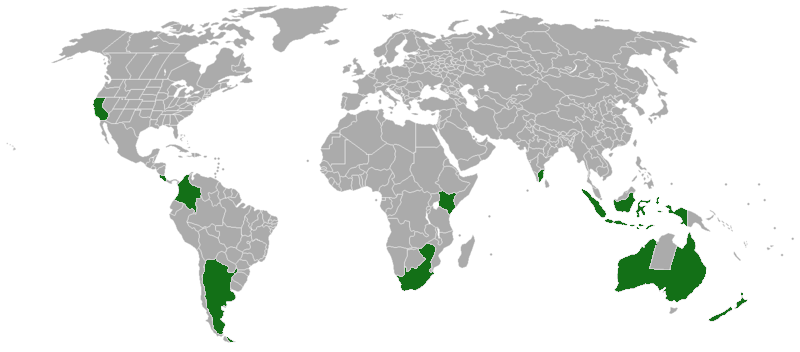
Native to a restricted area within the Temora-Cootamundra district of New South Wales, Australia, Acacia baileyana thrives in open forests, woodlands, and mallee environments, preferring stony soils on creek flats and hilly terrain. Despite its limited native range, it has become naturalized across various disturbed bushlands, roadsides, and urban areas in other mainland Australian states, sometimes acting as an environmental weed due to its adaptability and prolific growth. Taxonomically, it was formally described by Ferdinand von Mueller in 1888, honoring Frederick Manson Bailey.
Trusted Scientific References
1. Authoritative external sources for Acacia baileyana
1.1 Wikipedia — Acacia baileyana
1.2 Kew POWO (Plants of the World Online)
1.3 PubMed — peer-reviewed research
1.4 NCBI Taxonomy Browser
1.5 GBIF — Global Biodiversity
1.6Acacia Baileyana should be interpreted through verified botanical identity, practical care, and responsible safety language. This recovery note adds the missing context needed for a complete profile: match light to the plant's habit, use well-drained soil, water according to season, and avoid unsupported medicinal or edible claims. For publishing, the plant can be presented as a source-backed garden plant with clear care guidance, common problem diagnosis, and conservative safety wording.
1.1.Acacia Baileyana — Key Features
- ✓ <strong>Botanical Name</strong> — *Acacia baileyana*
- ✓ <strong>Common Names</strong> — Cootamundra Wattle, Bailey's Wattle, Golden Mimosa
- ✓ <strong>Plant Family</strong> — Fabaceae (Pea family)
- ✓ <strong>Distinctive Flowers</strong> — Bright yellow to golden, spherical flower heads blooming in late winter/early spring
- ✓ <strong>Foliage</strong> — Glaucous, delicate bipinnate leaves with a silvery-grey appearance
- ✓ <strong>Growth Habit</strong> — Shrub or small tree, typically 3-10 meters tall, with adaptable forms including prostrate varieties
- ✓ <strong>Native Range</strong> — Endemic to a specific region of New South Wales, Australia
- ✓ <strong>Adaptability</strong> — Exceptionally hardy, drought-resistant, and tolerant of various soil conditions
- ✓ <strong>Ornamental Value</strong> — Highly prized in horticulture, recognized with the RHS Award of Garden Merit
- ✓ <strong>Ecological Impact</strong> — Can be an environmental weed, naturalizing readily and hybridizing with other *Acacia* species
1.2.Acacia Baileyana — Quick Summary
- ✓ *Acacia baileyana*, or Cootamundra Wattle, is an Australian native shrub/tree.
- ✓ Celebrated for its vibrant golden-yellow, spherical flowers and glaucous bipinnate foliage.
- ✓ Highly adaptable, drought-resistant, and popular ornamental plant.
- ✓ Contains general *Acacia* phytochemicals like tannins and flavonoids, suggesting antioxidant and astringent properties.
- ✓ Can become an environmental weed in some regions, hybridizing with other wattles.
- ✓ Used in horticulture, cut flower industry, and as a food source for bees.
2.Acacia Baileyana — Scientific Identity
3.Acacia Baileyana — Quick Facts
4.Acacia Baileyana — Appearance & Identification
5.Acacia Baileyana — Native Habitat
6.Acacia Baileyana — Water Requirements
- ✓ Site Selection — Prefers full sun but can tolerate semi-shade; thrives in well-draining, stony soils, including creek flats and hilly country.
- ✓ Soil Requirements — Adaptable to various soil types, but ideally moist, well-draining, with a neutral to slightly acidic pH.
- ✓ Watering — Highly drought-resistant once established, requiring minimal supplemental irrigation, making it suitable for xeriscaping.
- ✓ Propagation — Easily propagated from seeds, which may benefit from scarification or hot water treatment to encourage germination.
- ✓ Growth Habit — Can be cultivated as a shrub or small tree, reaching 3–10 meters; prostrate and weeping forms are also available for diverse landscape designs.
- ✓ Maintenance — Generally low-maintenance; prune after flowering to maintain shape and promote bushiness; monitor for self-seeding, as it can become naturalized.
- ✓ Environmental Consideration — Be aware of its potential to become an environmental weed and to hybridize with other native wattles, particularly in Australian bushland.
- ✓ Ornamental Value — Valued for its early and prolific flowering, often planted for its aesthetic appeal and recognized with awards like the RHS Award of Garden Merit.
Reviewed by the Flora Medical Global Botanical Review Panel
Multi-disciplinary editorial group · Botany · Ethnobotany · Herbal-medicine literature
Who reviewed this: This page was checked by the Flora Medical Global Botanical Review Panel — an in-house editorial group of botany graduates, ethnobotany researchers, and horticulture practitioners who collectively maintain our 7,000+ plant encyclopedia. Meet the team.
Our 4-step verification process
1. Taxonomic verification
Scientific names and synonyms cross-checked against Kew POWO, World Flora Online, and The Plant List.
2. Phytochemical & medicinal cross-reference
Active compounds, traditional uses, and reported activities are cross-referenced with PubMed, USDA Dr. Duke's database, and peer-reviewed ethnobotanical literature.
3. Conservation & distribution check
Distribution, ecology, and conservation status confirmed against GBIF occurrence records and the IUCN Red List.
4. Editorial & safety review
Every entry passes an editorial pass for clarity, originality, and safety notices (toxicity, contraindications, dosage caveats) before publication.
Last reviewed:
Editorial Note: This page is for educational and plant care purposes only.
Written by: Flora Medical Global Editorial Team
Reviewed by: Flora Medical Global Botanical Review Panel
Last Updated: June 15, 2026







Acacia Baileyana — Comments & Community Reviews
Rate this plant