

Care Disclaimer: Plant care recommendations are general guidelines based on common growing conditions. Individual results may vary based on your local environment, climate, and care routine. If your plant is toxic, keep it away from children and pets, and consult a veterinarian if accidental ingestion occurs.
1.Acacia Dealbata — Overview
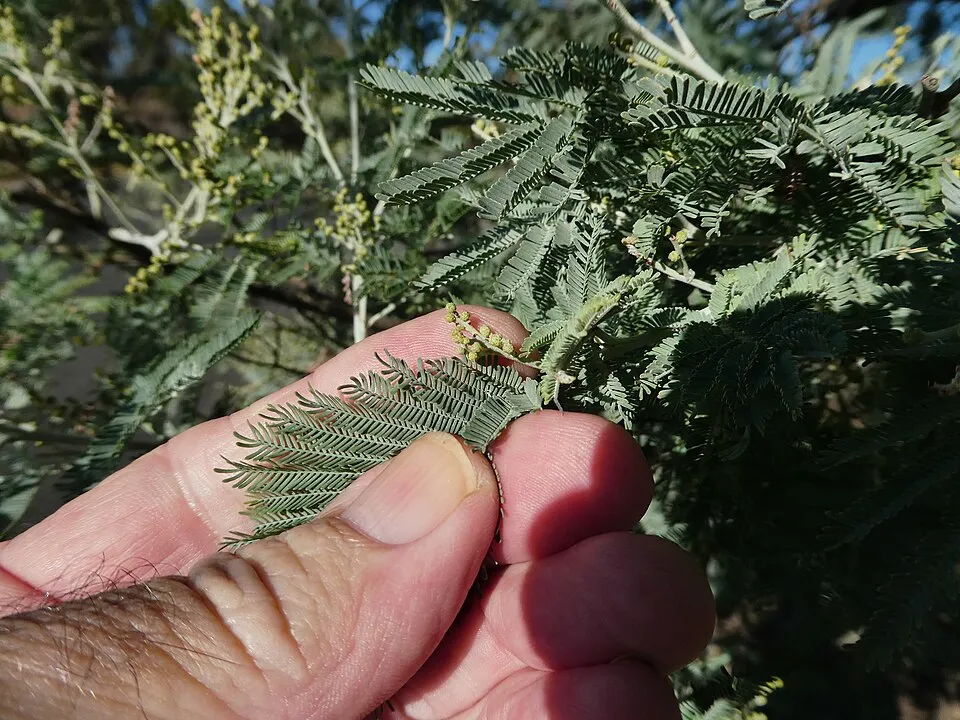
Acacia dealbata, commonly known as Silver Wattle, Blue Wattle, or Mimosa, is a striking species of flowering plant belonging to the Fabaceae family. Native to southeastern mainland Australia, particularly New South Wales, Victoria, Tasmania, and the Australian Capital Territory, it thrives in a variety of soils within forest and woodland ecosystems, often found on slopes and alongside creek banks. This adaptable plant typically manifests as an erect, bushy shrub or a spreading tree, capable of reaching heights of up to 30 meters.
Its distinctive features include smooth, grey, brown, or dark brown bark which becomes deeply corrugated with age, and characteristic bluish-grey or silvery, glaucous bipinnate leaves. The specific epithet 'dealbata' aptly describes its 'white-washed' or powdery appearance. From July to November, the Silver Wattle adorns itself with abundant spherical heads of vibrant yellow to bright yellow flowers, borne in racemes or panicle-like clusters.
Following flowering, it produces straight to slightly curved pods, often flat and sometimes slightly constricted between seeds, presenting a blue or purplish hue with a white, powdery bloom. While cherished in its native range, Acacia dealbata has been widely introduced across Mediterranean, warm temperate, and highland tropical landscapes, where it can sometimes become an invasive species, requiring control in certain regions like South Africa, New Zealand, and parts of Europe.
Trusted Scientific References
1. Authoritative external sources for Acacia dealbata
1.1 Wikipedia — Acacia dealbata
1.2 Kew POWO (Plants of the World Online)
1.3 PubMed — peer-reviewed research
1.4 NCBI Taxonomy Browser
1.5 GBIF — Global Biodiversity
1.6Acacia Dealbata should be interpreted through verified botanical identity, practical care, and responsible safety language. This recovery note adds the missing context needed for a complete profile: match light to the plant's habit, use well-drained soil, water according to season, and avoid unsupported medicinal or edible claims. For publishing, the plant can be presented as a source-backed garden plant with clear care guidance, common problem diagnosis, and conservative safety wording.
1.1.Acacia Dealbata — Key Features
- ✓ <strong>Distinctive silvery</strong> — grey, glaucous bipinnate foliage.
- ✓ <strong>Abundant spherical clusters</strong> — Abundant spherical clusters of bright yellow, fragrant flowers.
- ✓ <strong>Native to southeastern</strong> — Native to southeastern Australia, thriving in diverse woodland habitats.
- ✓ <strong>Member of the</strong> — Member of the Fabaceae (legume) family, known for nitrogen fixation.
- ✓ <strong>Rich in polyphenols,</strong> — Rich in polyphenols, including flavonoids and condensed tannins.
- ✓ <strong>Traditional uses span anti</strong> — inflammatory, antioxidant, and antiseptic applications.
- ✓ <strong>Its pollen is</strong> — Its pollen is a common allergen for sensitive individuals.
- ✓ <strong>Considered an invasive species in several non</strong> — native regions globally.
- ✓ <strong>Fast</strong> — growing shrub or tree, often planted for ornamental value.
- ✓ <strong>Bark changes from</strong> — Bark changes from smooth grey to deeply corrugated with age.
1.2.Acacia Dealbata — Quick Summary
- ✓ Acacia dealbata, or Silver Wattle, is an Australian native known for its silvery foliage and bright yellow flowers.
- ✓ It is traditionally valued for its anti-inflammatory, antioxidant, and antiseptic properties.
- ✓ Rich in flavonoids, tannins, and triterpenoids, supporting various health benefits.
- ✓ Used historically for skin irritations, respiratory ailments, and digestive support.
- ✓ Caution is advised for individuals with allergies, and during pregnancy or lactation.
- ✓ Cultivation is straightforward, preferring full sun and well-drained soil.
2.Acacia Dealbata — Scientific Identity
3.Acacia Dealbata — Quick Facts
4.Acacia Dealbata — Appearance & Identification
5.Acacia Dealbata — Native Habitat
6.Acacia Dealbata — Water Requirements
- ✓ Soil Preference — Acacia dealbata thrives in well-drained, loamy soil that is rich in organic matter, but it can tolerate a range of soil types, including sandy and clay soils, provided drainage is adequate.
- ✓ Watering Requirements — This plant requires moderate watering; allow the soil to dry slightly between waterings to prevent root rot. Established plants are relatively drought-tolerant.
- ✓ Light Exposure — For optimal growth and flowering, Silver Wattle should be placed in a location that receives full sun to partial shade, with full sun generally promoting more prolific blooms.
- ✓ Pruning and Maintenance — Regular trimming helps maintain its desired shape, encourages bushier growth, and can prevent it from becoming too leggy. Prune after flowering to shape and remove spent blooms.
- ✓ Fertilization — Fertilization with a balanced, slow-release fertilizer, particularly one suitable for native plants or low in phosphorus, can enhance flowering and overall plant vigor.
- ✓ Propagation — Silver Wattle can be propagated from seeds, which often require scarification or hot water treatment to break dormancy, or from semi-hardwood cuttings for genetic consistency.
- ✓ Hardiness — It is relatively hardy to cold, typically tolerating temperatures down to -7°C (19°F), making it suitable for temperate climates.
Reviewed by the Flora Medical Global Botanical Review Panel
Multi-disciplinary editorial group · Botany · Ethnobotany · Herbal-medicine literature
Who reviewed this: This page was checked by the Flora Medical Global Botanical Review Panel — an in-house editorial group of botany graduates, ethnobotany researchers, and horticulture practitioners who collectively maintain our 7,000+ plant encyclopedia. Meet the team.
Our 4-step verification process
1. Taxonomic verification
Scientific names and synonyms cross-checked against Kew POWO, World Flora Online, and The Plant List.
2. Phytochemical & medicinal cross-reference
Active compounds, traditional uses, and reported activities are cross-referenced with PubMed, USDA Dr. Duke's database, and peer-reviewed ethnobotanical literature.
3. Conservation & distribution check
Distribution, ecology, and conservation status confirmed against GBIF occurrence records and the IUCN Red List.
4. Editorial & safety review
Every entry passes an editorial pass for clarity, originality, and safety notices (toxicity, contraindications, dosage caveats) before publication.
Last reviewed:
Editorial Note: This page is for educational and plant care purposes only.
Written by: Flora Medical Global Editorial Team
Reviewed by: Flora Medical Global Botanical Review Panel
Last Updated: June 15, 2026







Acacia Dealbata — Comments & Community Reviews
Rate this plant