
Care Disclaimer: Plant care recommendations are general guidelines based on common growing conditions. Individual results may vary based on your local environment, climate, and care routine. If your plant is toxic, keep it away from children and pets, and consult a veterinarian if accidental ingestion occurs.
1.Acanthus Hungaricus — Overview
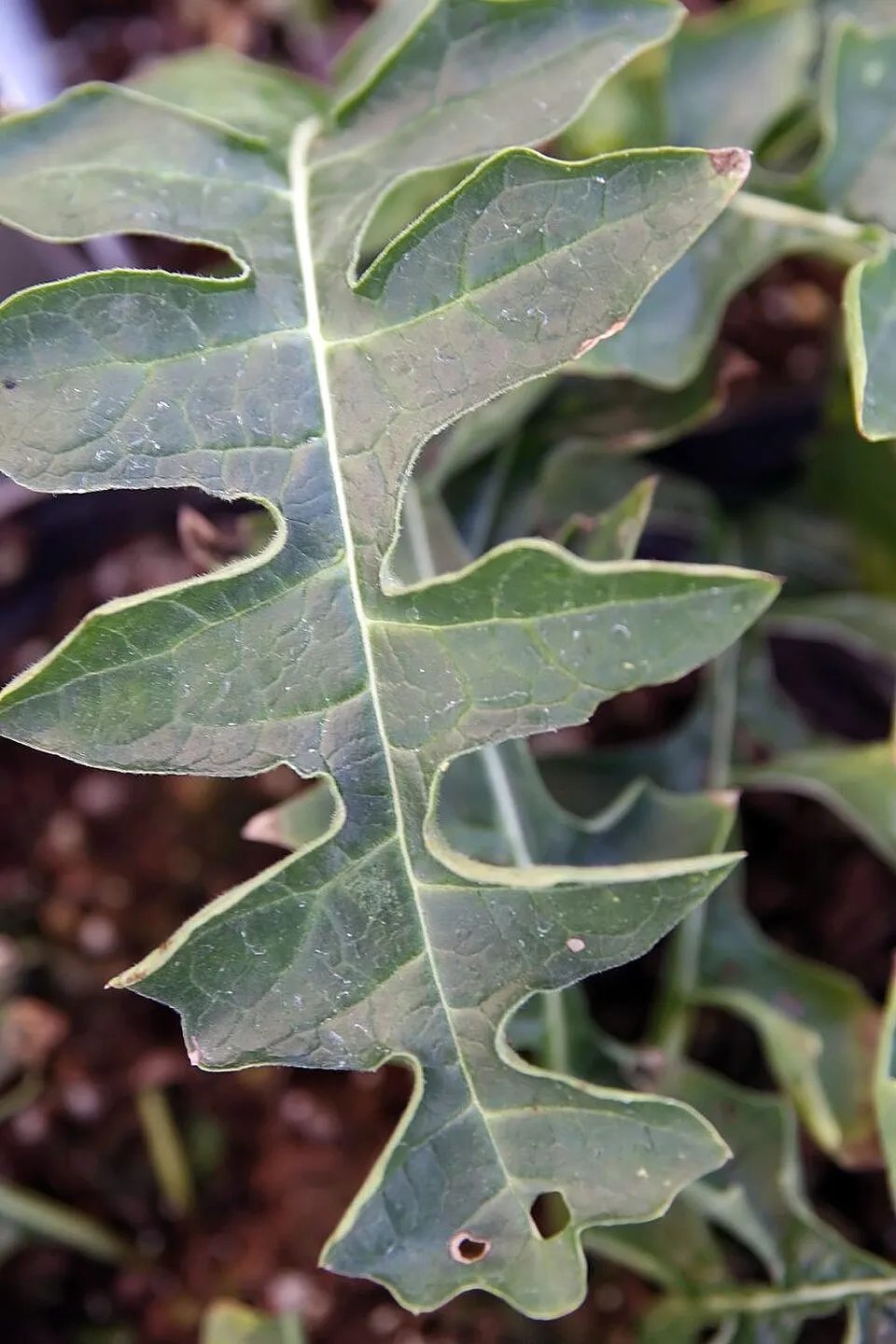
Acanthus Hungaricus, commonly known as Hungarian Acanthus or Balkan Bear's Breeches, is a striking herbaceous perennial belonging to the Acanthaceae family, native to southeastern Europe, particularly the Balkan Peninsula and Hungary. This architectural plant is characterized by its dramatic, deeply lobed, and often spiny dark green foliage that forms a basal rosette, providing year-round interest. Individual leaves can measure up to 60 cm in length, featuring distinctive sinuate-pinnatifid margins that give them a bold, sculptural quality.
In late spring to early summer, Acanthus Hungaricus sends up tall, impressive flower spikes, reaching heights of 1 to 1.5 meters. These racemes are adorned with numerous tubular flowers, typically white or pale pink, each partially enclosed by prominent, often purplish or greenish-white, spiny bracts. The overall inflorescence creates a majestic display, attracting various pollinators, including bees.
Acanthus Hungaricus thrives in well-drained, fertile soil and prefers full sun to partial shade, demonstrating remarkable drought tolerance once established. Its natural habitat includes open woodlands, rocky slopes, and disturbed areas, making it a resilient and adaptable species. The plant's robust nature and distinctive aesthetic make it a popular choice for ornamental gardening, while its traditional uses hint at its broader ecological and ethnobotanical significance.
Trusted Scientific References
1. Authoritative external sources for Acanthus Hungaricus
1.1 Wikipedia — Acanthus Hungaricus
1.2 Kew POWO (Plants of the World Online)
1.3 PubMed — peer-reviewed research
1.4 NCBI Taxonomy Browser
1.5 GBIF — Global Biodiversity
1.6Acanthus Hungaricus should be interpreted through verified botanical identity, practical care, and responsible safety language. This recovery note adds the missing context needed for a complete profile: match light to the plant's habit, use well-drained soil, water according to season, and avoid unsupported medicinal or edible claims. For publishing, the plant can be presented as a source-backed garden plant with clear care guidance, common problem diagnosis, and conservative safety wording.
1.1.Acanthus Hungaricus — Key Features
- ✓ <strong>Architectural Foliage</strong> — Large, deeply lobed, spiny dark green leaves create a dramatic visual impact.
- ✓ <strong>Striking Flower Spikes</strong> — Tall racemes of white to pale pink flowers with prominent spiny bracts.
- ✓ <strong>Drought Tolerant</strong> — Highly resilient to dry conditions once established, making it low-maintenance.
- ✓ <strong>Pollinator Friendly</strong> — Flowers attract bees and other beneficial insects, supporting biodiversity.
- ✓ <strong>Native to Southeastern Europe</strong> — Well-adapted to rocky slopes and woodlands of its indigenous range.
- ✓ <strong>Medicinal Heritage</strong> — Valued in traditional medicine for anti-inflammatory and digestive support.
- ✓ <strong>Deer Resistant</strong> — Generally not favored by deer due to its spiny foliage.
- ✓ <strong>Long</strong> — lived Perennial — A hardy plant that returns year after year with minimal care.
- ✓ <strong>Versatile Use</strong> — Suitable for ornamental gardens, borders, and as a specimen plant.
- ✓ <strong>Resilient Nature</strong> — Tolerates various soil types and conditions, though preferring well-drained.
1.2.Acanthus Hungaricus — Quick Summary
- ✓ Acanthus Hungaricus is a striking perennial known for its architectural foliage and tall flower spikes.
- ✓ Traditionally used for its anti-inflammatory, digestive, and wound-healing properties.
- ✓ Rich in iridoids, flavonoids, and phenolic compounds contributing to its medicinal actions.
- ✓ Thrives in well-drained soil and sun, exhibiting excellent drought tolerance.
- ✓ Caution advised for pregnant/lactating individuals, children, and those with pre-existing conditions.
- ✓ Primarily used in decoctions, infusions, and topical applications for various ailments.
2.Acanthus Hungaricus — Scientific Identity
3.Acanthus Hungaricus — Quick Facts
4.Acanthus Hungaricus — Appearance & Identification
5.Acanthus Hungaricus — Native Habitat
6.Acanthus Hungaricus — Water Requirements
- ✓ Site Selection — Plant Acanthus Hungaricus in a location receiving full sun to partial shade, ideally with some afternoon shade in hot climates.
- ✓ Soil Requirements — It thrives in well-drained, fertile, humus-rich soil, tolerating a range of soil types from sandy to clay, but not waterlogging.
- ✓ Watering Regimen — Water regularly during the first growing season to establish roots; once established, it is highly drought-tolerant and requires minimal watering.
- ✓ Fertilization — Apply a balanced, slow-release granular fertilizer in early spring, or amend soil with compost to provide nutrients.
- ✓ Pruning — Remove spent flower stalks after blooming to encourage basal growth and prevent self-seeding, and trim any dead or damaged foliage as needed.
- ✓ Propagation — Propagate primarily by division in spring or autumn, or by root cuttings; it can also be grown from seed, though germination may be slow.
- ✓ Pest and Disease Management — Generally pest-free, but watch for slugs and snails on young foliage; powdery mildew can occur in humid conditions.
Reviewed by the Flora Medical Global Botanical Review Panel
Multi-disciplinary editorial group · Botany · Ethnobotany · Herbal-medicine literature
Who reviewed this: This page was checked by the Flora Medical Global Botanical Review Panel — an in-house editorial group of botany graduates, ethnobotany researchers, and horticulture practitioners who collectively maintain our 7,000+ plant encyclopedia. Meet the team.
Our 4-step verification process
1. Taxonomic verification
Scientific names and synonyms cross-checked against Kew POWO, World Flora Online, and The Plant List.
2. Phytochemical & medicinal cross-reference
Active compounds, traditional uses, and reported activities are cross-referenced with PubMed, USDA Dr. Duke's database, and peer-reviewed ethnobotanical literature.
3. Conservation & distribution check
Distribution, ecology, and conservation status confirmed against GBIF occurrence records and the IUCN Red List.
4. Editorial & safety review
Every entry passes an editorial pass for clarity, originality, and safety notices (toxicity, contraindications, dosage caveats) before publication.
Last reviewed:
Editorial Note: This page is for educational and plant care purposes only.
Written by: Flora Medical Global Editorial Team
Reviewed by: Flora Medical Global Botanical Review Panel
Last Updated: June 15, 2026







Acanthus Hungaricus — Comments & Community Reviews
Rate this plant