

Care Disclaimer: Plant care recommendations are general guidelines based on common growing conditions. Individual results may vary based on your local environment, climate, and care routine. If your plant is toxic, keep it away from children and pets, and consult a veterinarian if accidental ingestion occurs.
1.Acanthus Mollis — Overview
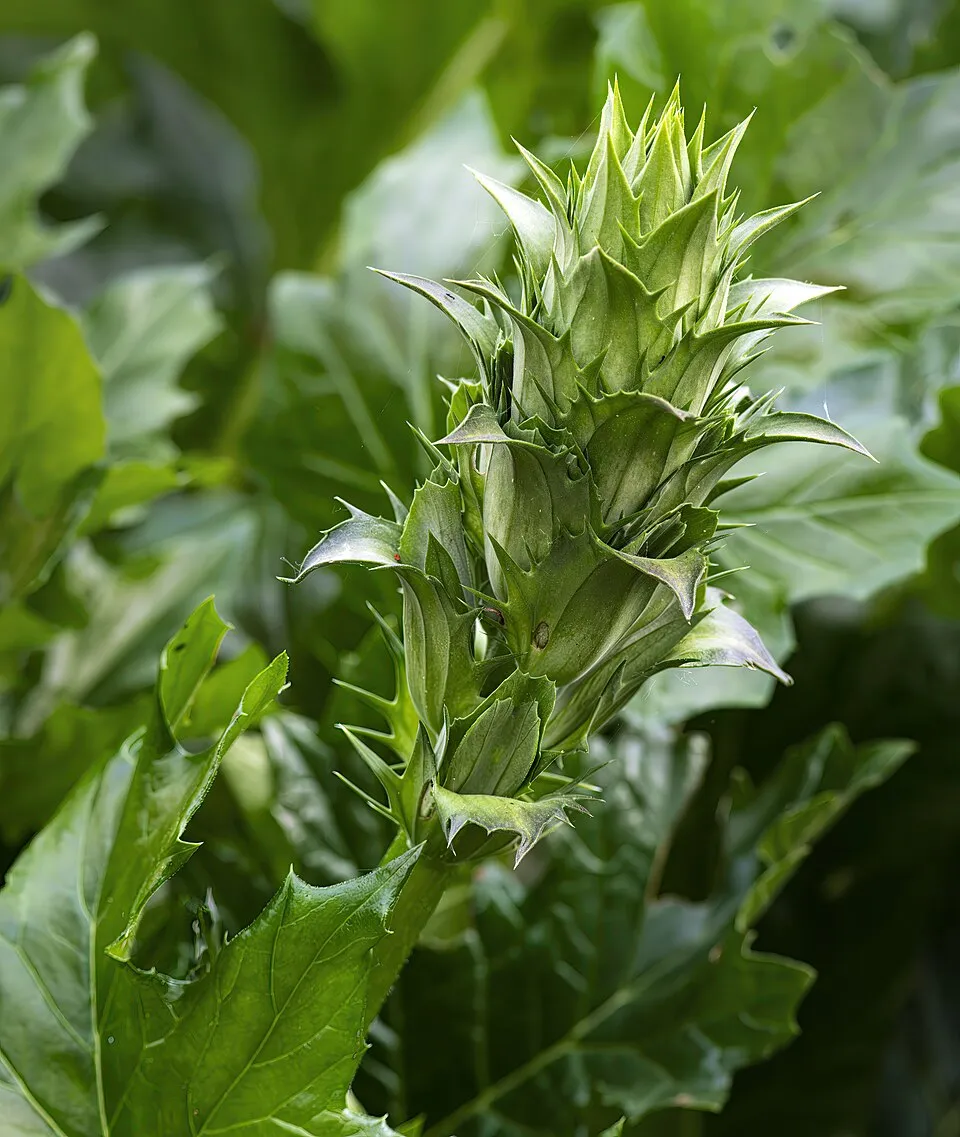
Acanthus Mollis, commonly known as Bear's Breeches or Sea Holly, is a striking perennial herbaceous plant native to the Mediterranean region, including Southern Europe and Northwest Africa. It belongs to the Acanthaceae family, a correction from earlier classifications. This robust species is characterized by its large, glossy, dark green, deeply lobed basal leaves that form an attractive mound.
From late spring to mid-summer, Acanthus Mollis produces tall, erect flower spikes, typically reaching heights of 60 to 120 cm. These impressive inflorescences bear numerous tubular flowers, ranging in color from white to pale purple, each subtended by prominent, often spiny, bracts that give the genus its name, derived from the Greek word for 'spiny'.
Historically, Acanthus Mollis has held significant cultural and artistic importance, famously inspiring the decorative elements on Corinthian columns in classical architecture. Ecologically, its nectar-rich flowers attract various pollinators, including bees and butterflies, contributing to garden biodiversity. The plant thrives in well-drained, fertile soils and is remarkably adaptable, tolerating both full sun and partial shade.
It is commonly found in woodlands, open fields, and disturbed areas, displaying a resilient growth habit. Its rhizomatous root system allows it to spread effectively, making it a prominent feature in its natural habitats and cultivated landscapes. The plant’s aesthetic appeal, coupled with its ecological benefits and traditional uses, underscores its multifaceted value.
Trusted Scientific References
1. Authoritative external sources for Acanthus Mollis
1.1 Wikipedia — Acanthus Mollis
1.2 Kew POWO (Plants of the World Online)
1.3 PubMed — peer-reviewed research
1.4 NCBI Taxonomy Browser
1.5 GBIF — Global Biodiversity
1.6Acanthus Mollis should be interpreted through verified botanical identity, practical care, and responsible safety language. This recovery note adds the missing context needed for a complete profile: match light to the plant's habit, use well-drained soil, water according to season, and avoid unsupported medicinal or edible claims. For publishing, the plant can be presented as a source-backed garden plant with clear care guidance, common problem diagnosis, and conservative safety wording.
1.1.Acanthus Mollis — Key Features
- ✓ <strong>Botanical Origin</strong> — Native to the Mediterranean basin, including Southern Europe and Northwest Africa.
- ✓ <strong>Architectural Inspiration</strong> — Historically significant as the design motif for Corinthian columns.
- ✓ <strong>Striking Foliage</strong> — Features large, glossy, deeply lobed dark green basal leaves.
- ✓ <strong>Impressive Flower Spikes</strong> — Produces tall, erect spikes of white to purple flowers with spiny bracts.
- ✓ <strong>Rhizomatous Growth</strong> — Spreads via underground rhizomes, making it a robust and persistent plant.
- ✓ <strong>Rich in Phytosterols</strong> — Notably contains beta-sitosterol, a key active compound.
- ✓ <strong>Anti</strong> — inflammatory Action — Demonstrated ability to reduce inflammatory markers like nitric oxide.
- ✓ <strong>Potent Antioxidant</strong> — Scavenges reactive oxygen species and enhances cellular antioxidant enzymes.
- ✓ <strong>Traditional Herbal Use</strong> — Valued in folk medicine for digestive, respiratory, and inflammatory conditions.
- ✓ <strong>Hardy and Adaptable</strong> — Thrives in various conditions, from full sun to partial shade, in USDA zones 5-9.
1.2.Acanthus Mollis — Quick Summary
- Acanthus Mollis is a Mediterranean perennial herb renowned for its architectural beauty and medicinal properties.
- Its rhizomes are rich in phytosterols, particularly beta-sitosterol, driving its anti-inflammatory and antioxidant benefits.
- Traditionally used for digestive, respiratory, and inflammatory conditions.
- Modern research validates its anti-inflammatory potential by reducing nitric oxide production.
- Offers cellular protection through antioxidant enzyme modulation and ROS scavenging.
- Requires caution during pregnancy, lactation, and with certain medications.
2.Acanthus Mollis — Scientific Identity
3.Acanthus Mollis — Quick Facts
4.Acanthus Mollis — Appearance & Identification
5.Acanthus Mollis — Native Habitat
6.Acanthus Mollis — Water Requirements
- ✓ Soil Preference — Acanthus Mollis thrives in well-drained, fertile, loamy soil with a neutral to slightly alkaline pH, ideally between 6.0 and 7.5, ensuring proper nutrient uptake.
- ✓ Light Requirements — This plant is versatile, performing best in full sun to partial shade. In hotter climates, some afternoon shade can prevent leaf scorch and maintain foliage vibrancy.
- ✓ Watering Regimen — It has moderate water requirements; established plants are drought-tolerant but benefit from consistent moisture, especially during dry spells, without becoming waterlogged.
- ✓ Temperature and Hardiness — Acanthus Mollis is remarkably hardy, flourishing in USDA zones 5-9, capable of withstanding both cold winters and warm summers.
- ✓ Propagation Techniques — Can be propagated by seeds, which may take time to germinate, or more commonly and effectively by dividing rhizomes in early spring or fall.
- ✓ Pest and Disease Resistance — Generally robust and resistant to most pests and diseases, though occasional issues with slugs or powdery mildew can occur in overly damp or shaded conditions.
- ✓ Maintenance — Requires minimal maintenance; spent flower stalks can be cut back after blooming, and older leaves can be removed to refresh appearance.
Reviewed by the Flora Medical Global Botanical Review Panel
Multi-disciplinary editorial group · Botany · Ethnobotany · Herbal-medicine literature
Who reviewed this: This page was checked by the Flora Medical Global Botanical Review Panel — an in-house editorial group of botany graduates, ethnobotany researchers, and horticulture practitioners who collectively maintain our 7,000+ plant encyclopedia. Meet the team.
Our 4-step verification process
1. Taxonomic verification
Scientific names and synonyms cross-checked against Kew POWO, World Flora Online, and The Plant List.
2. Phytochemical & medicinal cross-reference
Active compounds, traditional uses, and reported activities are cross-referenced with PubMed, USDA Dr. Duke's database, and peer-reviewed ethnobotanical literature.
3. Conservation & distribution check
Distribution, ecology, and conservation status confirmed against GBIF occurrence records and the IUCN Red List.
4. Editorial & safety review
Every entry passes an editorial pass for clarity, originality, and safety notices (toxicity, contraindications, dosage caveats) before publication.
Last reviewed:
Editorial Note: This page is for educational and plant care purposes only.
Written by: Flora Medical Global Editorial Team
Reviewed by: Flora Medical Global Botanical Review Panel
Last Updated: June 15, 2026







Acanthus Mollis — Comments & Community Reviews
Rate this plant