
Care Disclaimer: Plant care recommendations are general guidelines based on common growing conditions. Individual results may vary based on your local environment, climate, and care routine. If your plant is toxic, keep it away from children and pets, and consult a veterinarian if accidental ingestion occurs.
1.Acanthus — Overview
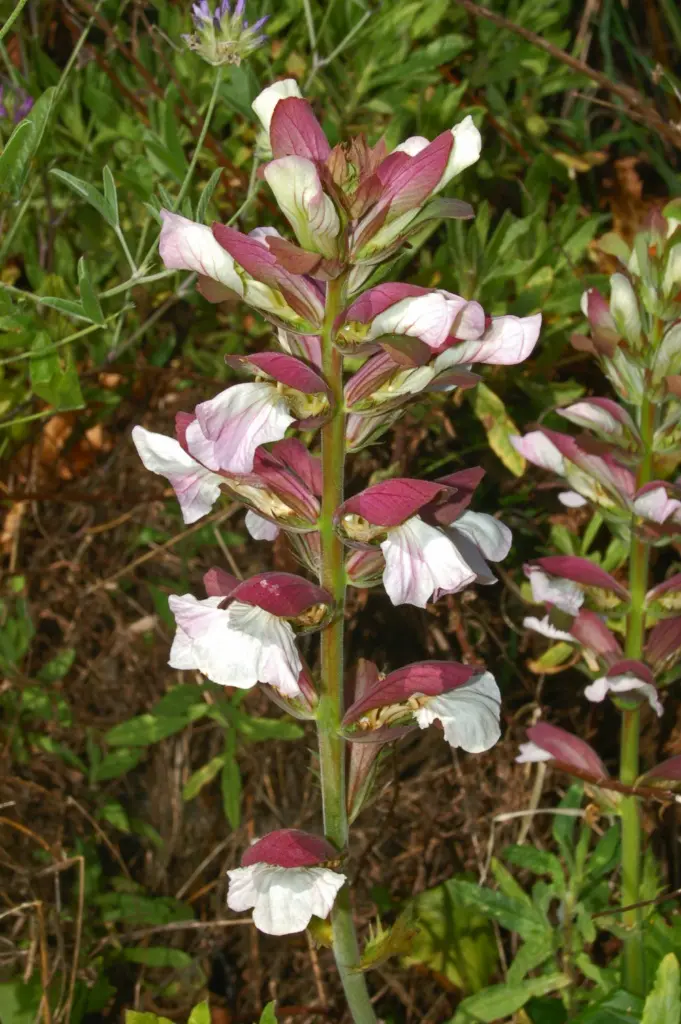
Acanthus mollis, widely recognized as Bear's Breeches or Oyster Plant, is a majestic herbaceous perennial hailing from the sun-drenched Mediterranean basin, encompassing regions from Portugal and North Africa across to the Balkans, including Croatia and Greece. This botanical marvel is celebrated for its striking, architectural foliage and impressive, towering flower spikes, which can ascend to heights of 1.5 to 1.8 meters (5 to 6 feet) during its vibrant bloom period. The leaves of Acanthus mollis are notably large, possessing a glossy sheen and deeply lobed margins, often reaching lengths of up to 60 centimeters (2 feet). Their distinctive morphology, characterized by jagged edges and a remarkably soft texture, is the origin of the species epithet 'mollis', Latin for 'soft'. Conversely, the genus name 'Acanthus' is derived from the ancient Greek word 'akantha', meaning 'thorn', a reference to the spiny attributes found in certain related species within the genus.
Historically, Acanthus mollis holds profound cultural significance, with its iconic leaves serving as the quintessential motif in ancient Greek and Roman art and architecture. The intricate, curling leaf pattern adorning the capitals of Corinthian columns stands as a timeless testament to this plant's enduring influence on classical design, symbolizing fortitude and artistic excellence. Beyond its ornamental allure, Acanthus mollis has been deeply integrated into traditional European folk medicine, where it has been employed for its recognized emollient, anti-inflammatory, and vulnerary properties. Its natural habitat spans diverse environments, from rugged rocky cliffs to the dappled shade of woodlands, where it flourishes in well-drained soils and demonstrates remarkable resilience to drought conditions once firmly established. In cultivation, while generally low-maintenance, its vigorous growth habit, fueled by spreading rhizomes, necessitates thoughtful management to prevent it from outcompeting adjacent flora.
The plant’s dramatic spikes of tubular, two-lipped flowers, predominantly white with purple hoods, bloom from late spring through mid-summer, bearing a resemblance to snapdragons. This inherent hardiness and adaptability further cement its popularity in temperate gardens, making it a favored choice for borders and as a stately specimen plant. Trusted Scientific References Authoritative external sources for Acanthus mollis : Wikipedia — Acanthus mollis Kew POWO (Plants of the World Onl ...[CURRENT TEXT EXISTS: 2585 chars]
1.1.Acanthus — Key Features
- ✓ <strong>Robust herbaceous perennial.</strong> — Robust herbaceous perennial.
- ✓ <strong>Large, deeply lobed,</strong> — Large, deeply lobed, glossy basal leaves.
- ✓ <strong>Tall, dramatic spikes</strong> — Tall, dramatic spikes of white and purple tubular flowers.
- ✓ <strong>Native to the</strong> — Native to the Mediterranean region.
- ✓ <strong>Iconic motif in</strong> — Iconic motif in ancient Greek and Roman architecture.
- ✓ <strong>Traditional uses for</strong> — Traditional uses for skin conditions and inflammation.
- ✓ <strong>Spreads aggressively via</strong> — Spreads aggressively via underground rhizomes.
- ✓ <strong>Drought</strong> — tolerant once established.
- ✓ <strong>Attracts pollinators, particularly</strong> — Attracts pollinators, particularly bees.
- ✓ <strong>Architectural plant suitable</strong> — Architectural plant suitable for back borders or specimen planting.
1.2.Acanthus — Quick Summary
- ✓ Acanthus mollis is a Mediterranean perennial, admired for its striking foliage and tall flower spikes.
- ✓ It holds significant historical value, inspiring classical Greek and Roman architecture.
- ✓ Traditionally used for its emollient, anti-inflammatory, and wound-healing properties.
- ✓ Phytochemically rich in mucilage, tannins, flavonoids, and iridoids.
- ✓ Cultivation requires managing its vigorous, rhizomatous spread.
- ✓ Generally safe for external use, but internal consumption warrants caution and professional advice.
2.Acanthus — Scientific Identity
3.Acanthus — Quick Facts
4.Acanthus — Appearance & Identification
5.Acanthus — Native Habitat
6.Acanthus — Water Requirements
- ✓ Soil Preference — Thrives in fertile, well-drained soils; tolerates various soil types but avoids consistently wet conditions.
- ✓ Light Requirements — Prefers full sun to partial shade; in hotter climates, some afternoon shade is beneficial to prevent leaf scorch.
- ✓ Water Needs — Drought-tolerant once established; however, regular irrigation during prolonged dry spells promotes vigorous growth.
- ✓ Propagation — Easily propagated by root cuttings or division in early spring; seeds can also be sown but may take longer to establish.
- ✓ Aggressive Spreading — Spreads vigorously via rhizomes; consider using root barriers or planting in contained areas to prevent unwanted colonization.
- ✓ Winter Protection — In colder zones, a thick layer of organic mulch over the root crown helps protect against severe winter temperatures.
- ✓ Maintenance — Relatively low maintenance once established; requires occasional deadheading of spent flower spikes for aesthetic appeal.
- ✓ Spacing — Allow ample space, as mature plants can reach 0.6 to 0.9 meters (2-3 feet) wide and up to 1.8 meters (6 feet) tall when in bloom.
Reviewed by the Flora Medical Global Botanical Review Panel
Multi-disciplinary editorial group · Botany · Ethnobotany · Herbal-medicine literature
Who reviewed this: This page was checked by the Flora Medical Global Botanical Review Panel — an in-house editorial group of botany graduates, ethnobotany researchers, and horticulture practitioners who collectively maintain our 7,000+ plant encyclopedia. Meet the team.
Our 4-step verification process
1. Taxonomic verification
Scientific names and synonyms cross-checked against Kew POWO, World Flora Online, and The Plant List.
2. Phytochemical & medicinal cross-reference
Active compounds, traditional uses, and reported activities are cross-referenced with PubMed, USDA Dr. Duke's database, and peer-reviewed ethnobotanical literature.
3. Conservation & distribution check
Distribution, ecology, and conservation status confirmed against GBIF occurrence records and the IUCN Red List.
4. Editorial & safety review
Every entry passes an editorial pass for clarity, originality, and safety notices (toxicity, contraindications, dosage caveats) before publication.
Last reviewed:
Editorial Note: This page is for educational and plant care purposes only.
Written by: Flora Medical Global Editorial Team
Reviewed by: Flora Medical Global Botanical Review Panel
Last Updated: June 15, 2026







Acanthus — Comments & Community Reviews
Rate this plant