

Care Disclaimer: Plant care recommendations are general guidelines based on common growing conditions. Individual results may vary based on your local environment, climate, and care routine. If your plant is toxic, keep it away from children and pets, and consult a veterinarian if accidental ingestion occurs.
1.Acer Campestre — Overview
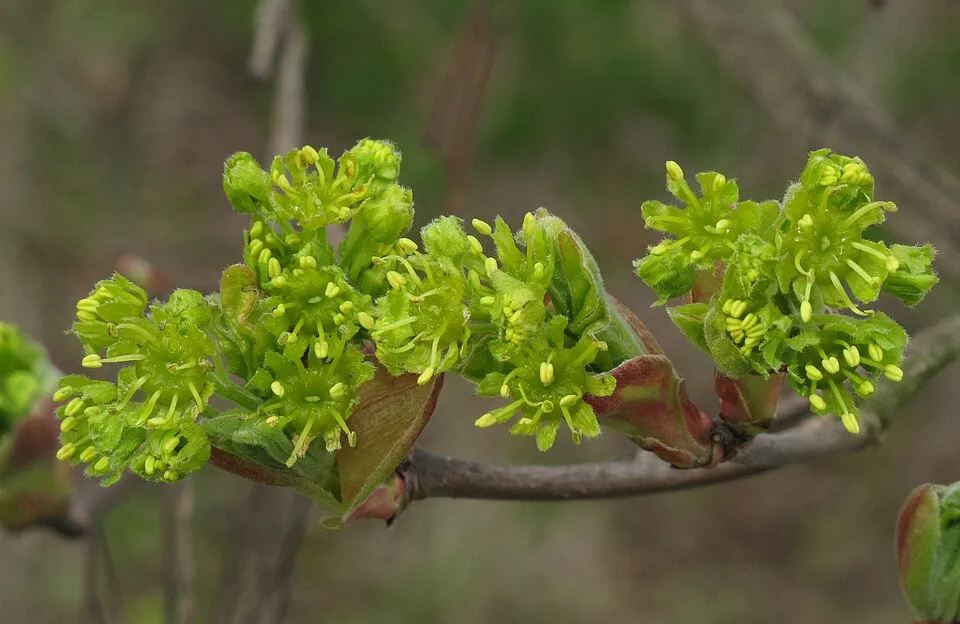
Acer campestre, commonly known as Field Maple, is a deciduous tree or large shrub belonging to the family Sapindaceae (formerly Aceraceae). Native to much of Europe, parts of North Africa, and southwestern Asia, it is the only maple species indigenous to the British Isles.
Typically growing to a height of 15-25 meters, it can also be cultivated as a dense shrub or hedging plant, characterized by its rounded, spreading crown. The leaves are distinctive, palmate with three to five blunt, rounded lobes, dark green in summer, and transforming into a vibrant golden-yellow in autumn, providing significant ornamental value.
Flowering occurs in late spring, usually in April or May, producing small, inconspicuous yellowish-green flowers arranged in erect corymbs, which appear simultaneously with the emerging leaves. These blossoms are a valuable nectar source for bees and other pollinators. The fruit, known as a samara, consists of two winged nutlets joined at the base, with wings that are nearly horizontal, facilitating wind dispersal.
Field Maple is remarkably adaptable, thriving in a wide range of soil types, including heavy clays, and tolerating both full sun and partial shade. It is particularly resilient in urban environments, displaying good resistance to pollution and drought once established, making it a popular choice for street trees, hedges, and woodland edges across temperate regions. Historically and presently, various parts of the Acer genus, including Acer campestre, have been recognized for their diverse medicinal properties in traditional healing systems.
Trusted Scientific References
1. Authoritative external sources for Acer campestre
1.1 Wikipedia — Acer campestre
1.2 Kew POWO (Plants of the World Online)
1.3 PubMed — peer-reviewed research
1.4 NCBI Taxonomy Browser
1.5 GBIF — Global Biodiversity
1.6Acer Campestre should be interpreted through verified botanical identity, practical care, and responsible safety language. This recovery note adds the missing context needed for a complete profile: match light to the plant's habit, use well-drained soil, water according to season, and avoid unsupported medicinal or edible claims. For publishing, the plant can be presented as a source-backed garden plant with clear care guidance, common problem diagnosis, and conservative safety wording.
1.1.Acer Campestre — Key Features
- ✓ <strong>Indigenous to Europe,</strong> — Indigenous to Europe, North Africa, and SW Asia.
- ✓ <strong>Deciduous tree or</strong> — Deciduous tree or large shrub with a rounded crown.
- ✓ <strong>Palmate leaves with 3</strong> — 5 blunt lobes, turning yellow in autumn.
- ✓ <strong>Small, yellowish</strong> — green flowers appear in spring.
- ✓ <strong>Fruits are samaras</strong> — Fruits are samaras with nearly horizontal wings.
- ✓ <strong>Highly adaptable to</strong> — Highly adaptable to various soil types and urban conditions.
- ✓ <strong>Excellent for hedging,</strong> — Excellent for hedging, street planting, and woodland edges.
- ✓ <strong>Contains notable levels</strong> — Contains notable levels of antioxidant flavonoids and tannins.
- ✓ <strong>Valued for traditional anti</strong> — inflammatory and hepatoprotective uses.
- ✓ <strong>Important nectar source</strong> — Important nectar source for pollinators.
1.2.Acer Campestre — Quick Summary
- ✓ Deciduous tree native to Europe and Asia.
- ✓ Known for anti-inflammatory and antioxidant properties.
- ✓ Rich in flavonoids and tannins.
- ✓ Traditionally used for rheumatism, pain, and liver support.
- ✓ Adaptable and pollution-tolerant ornamental.
- ✓ Generally considered low toxicity for human use.
2.Acer Campestre — Scientific Identity
3.Acer Campestre — Quick Facts
4.Acer Campestre — Appearance & Identification
5.Acer Campestre — Native Habitat
6.Acer Campestre — Water Requirements
- ✓ Site Selection — Choose a location with full sun to partial shade; Acer campestre is highly adaptable.
- ✓ Soil Requirements — Thrives in well-drained soils, tolerating a wide pH range and even heavy clay; avoid waterlogged conditions.
- ✓ Planting — Plant bare-root trees in late autumn or early spring; container-grown plants can be planted year-round, ensuring proper root ball depth.
- ✓ Watering — Water regularly during the first growing season to establish; mature trees are drought-tolerant but benefit from occasional deep watering during dry spells.
- ✓ Pruning — Prune in late autumn or winter when dormant to remove dead, damaged, or crossing branches, or to shape for hedging purposes.
- ✓ Pest and Disease Management — Generally resistant to most common pests and diseases; monitor for aphids or powdery mildew in susceptible conditions.
- ✓ Fertilization — Not typically required in fertile soils; an annual application of balanced slow-release fertilizer can benefit young or struggling trees.
- ✓ Propagation — Easily propagated from seeds, which require stratification, or by hardwood cuttings taken in winter.
Reviewed by the Flora Medical Global Botanical Review Panel
Multi-disciplinary editorial group · Botany · Ethnobotany · Herbal-medicine literature
Who reviewed this: This page was checked by the Flora Medical Global Botanical Review Panel — an in-house editorial group of botany graduates, ethnobotany researchers, and horticulture practitioners who collectively maintain our 7,000+ plant encyclopedia. Meet the team.
Our 4-step verification process
1. Taxonomic verification
Scientific names and synonyms cross-checked against Kew POWO, World Flora Online, and The Plant List.
2. Phytochemical & medicinal cross-reference
Active compounds, traditional uses, and reported activities are cross-referenced with PubMed, USDA Dr. Duke's database, and peer-reviewed ethnobotanical literature.
3. Conservation & distribution check
Distribution, ecology, and conservation status confirmed against GBIF occurrence records and the IUCN Red List.
4. Editorial & safety review
Every entry passes an editorial pass for clarity, originality, and safety notices (toxicity, contraindications, dosage caveats) before publication.
Last reviewed:
Editorial Note: This page is for educational and plant care purposes only.
Written by: Flora Medical Global Editorial Team
Reviewed by: Flora Medical Global Botanical Review Panel
Last Updated: June 15, 2026







Acer Campestre — Comments & Community Reviews
Rate this plant