

Care Disclaimer: Plant care recommendations are general guidelines based on common growing conditions. Individual results may vary based on your local environment, climate, and care routine. If your plant is toxic, keep it away from children and pets, and consult a veterinarian if accidental ingestion occurs.
1.Acer Japonicum — Overview
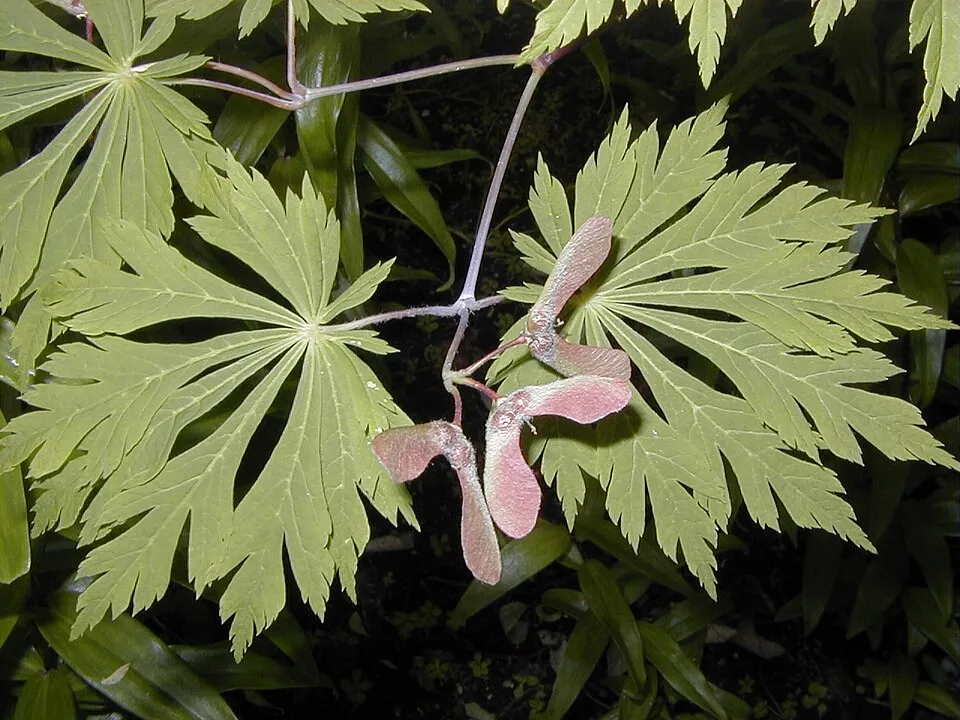
Acer japonicum, commonly known as the Japanese Maple or Fullmoon Maple, is a deciduous tree or large shrub celebrated for its striking ornamental value and emerging medicinal interest. Belonging to the Sapindaceae family, this species typically reaches a height of 5 to 10 meters, though some cultivars can be smaller or larger.
Its most distinctive feature is its foliage: large, palmate leaves with 7 to 11 sharply serrated lobes, ranging in color from vibrant green in summer to spectacular shades of crimson, orange, and gold in autumn. The leaves are arranged oppositely on slender branches.
Native to the mountainous regions of Japan, Korea, and Manchuria, Acer japonicum thrives in cool, temperate climates. It prefers moist, well-drained, slightly acidic soil rich in organic matter, and typically flourishes in partial shade, especially in hotter climates, to protect its delicate leaves from scorch. In late spring to early summer, it produces small, reddish-purple flowers in drooping corymbs, which are followed by characteristic winged seeds called samaras.
These samaras are paired, forming a V-shape, and mature in late summer to early autumn. While primarily cultivated as an ornamental, traditional knowledge and modern research are uncovering the therapeutic potential hidden within this beautiful species, aligning it with other members of the Acer genus known for their diverse biological activities.
Trusted Scientific References
1. Authoritative external sources for Acer japonicum
1.1 Wikipedia — Acer japonicum
1.2 Kew POWO (Plants of the World Online)
1.3 PubMed — peer-reviewed research
1.4 NCBI Taxonomy Browser
1.5 GBIF — Global Biodiversity
1.6Acer Japonicum should be interpreted through verified botanical identity, practical care, and responsible safety language. This recovery note adds the missing context needed for a complete profile: match light to the plant's habit, use well-drained soil, water according to season, and avoid unsupported medicinal or edible claims. For publishing, the plant can be presented as a source-backed garden plant with clear care guidance, common problem diagnosis, and conservative safety wording.
1.1.Acer Japonicum — Key Features
- ✓ <strong>Striking Ornamental Value</strong> — Renowned for its vibrant autumn foliage and elegant form.
- ✓ <strong>Palmate Leaves</strong> — Distinctive leaves with 7-11 deeply cut, serrated lobes.
- ✓ <strong>Native to East Asia</strong> — Indigenous to Japan, Korea, and Manchuria.
- ✓ <strong>Rich Phytochemistry</strong> — Contains beneficial flavonoids, tannins, and unique diarylheptanoids.
- ✓ <strong>Traditional Medicinal Uses</strong> — Historically employed for various ailments in Asian ethnomedicine.
- ✓ <strong>Antioxidant Powerhouse</strong> — High content of compounds that combat oxidative stress.
- ✓ <strong>Anti</strong> — inflammatory Properties — Possesses compounds that may help reduce inflammation.
- ✓ <strong>Adaptable Growth</strong> — Thrives in partial shade with moist, well-drained soil.
- ✓ <strong>Small Reddish</strong> — Purple Flowers — Produced in spring, followed by winged samaras.
- ✓ <strong>Evergreen in some climates</strong> — Deciduous, but valued for winter branch structure in temperate zones.
1.2.Acer Japonicum — Quick Summary
- ✓ Acer japonicum, or Japanese Maple, is a beautiful ornamental tree with emerging medicinal potential.
- ✓ Rich in antioxidants, anti-inflammatory compounds, and other beneficial phytochemicals.
- ✓ Traditionally used for ailments like rheumatism, hepatic disorders, and pain in East Asia.
- ✓ Research indicates potential antidiabetic, hepatoprotective, and anti-obesity activities.
- ✓ Generally considered safe for humans, but with limited specific human toxicity data.
- ✓ Primarily cultivated for its stunning foliage and garden aesthetics.
2.Acer Japonicum — Scientific Identity
3.Acer Japonicum — Quick Facts
4.Acer Japonicum — Appearance & Identification
5.Acer Japonicum — Native Habitat
6.Acer Japonicum — Water Requirements
- ✓ Soil Preference — Thrives in moist, well-drained, slightly acidic soil (pH 5.5-6.5) rich in organic matter.
- ✓ Light Requirements — Prefers partial shade, especially in hot climates, to prevent leaf scorch; tolerates full sun in cooler regions.
- ✓ Watering — Requires consistent moisture, particularly during dry spells; avoid waterlogging.
- ✓ Pruning — Minimal pruning is needed, primarily to remove dead or crossing branches in late winter or early spring before leaf out.
- ✓ Fertilization — Apply a balanced, slow-release granular fertilizer in early spring, or use organic compost.
- ✓ Mulching — A 2-4 inch layer of organic mulch helps retain soil moisture, regulate temperature, and suppress weeds.
- ✓ Pest and Disease Management — Generally resistant, but monitor for aphids, scale, and fungal issues like verticillium wilt.
Reviewed by the Flora Medical Global Botanical Review Panel
Multi-disciplinary editorial group · Botany · Ethnobotany · Herbal-medicine literature
Who reviewed this: This page was checked by the Flora Medical Global Botanical Review Panel — an in-house editorial group of botany graduates, ethnobotany researchers, and horticulture practitioners who collectively maintain our 7,000+ plant encyclopedia. Meet the team.
Our 4-step verification process
1. Taxonomic verification
Scientific names and synonyms cross-checked against Kew POWO, World Flora Online, and The Plant List.
2. Phytochemical & medicinal cross-reference
Active compounds, traditional uses, and reported activities are cross-referenced with PubMed, USDA Dr. Duke's database, and peer-reviewed ethnobotanical literature.
3. Conservation & distribution check
Distribution, ecology, and conservation status confirmed against GBIF occurrence records and the IUCN Red List.
4. Editorial & safety review
Every entry passes an editorial pass for clarity, originality, and safety notices (toxicity, contraindications, dosage caveats) before publication.
Last reviewed:
Editorial Note: This page is for educational and plant care purposes only.
Written by: Flora Medical Global Editorial Team
Reviewed by: Flora Medical Global Botanical Review Panel
Last Updated: June 15, 2026







Acer Japonicum — Comments & Community Reviews
Rate this plant