


Care Disclaimer: Plant care recommendations are general guidelines based on common growing conditions. Individual results may vary based on your local environment, climate, and care routine. If your plant is toxic, keep it away from children and pets, and consult a veterinarian if accidental ingestion occurs.
1.Acer Saccharinum — Overview
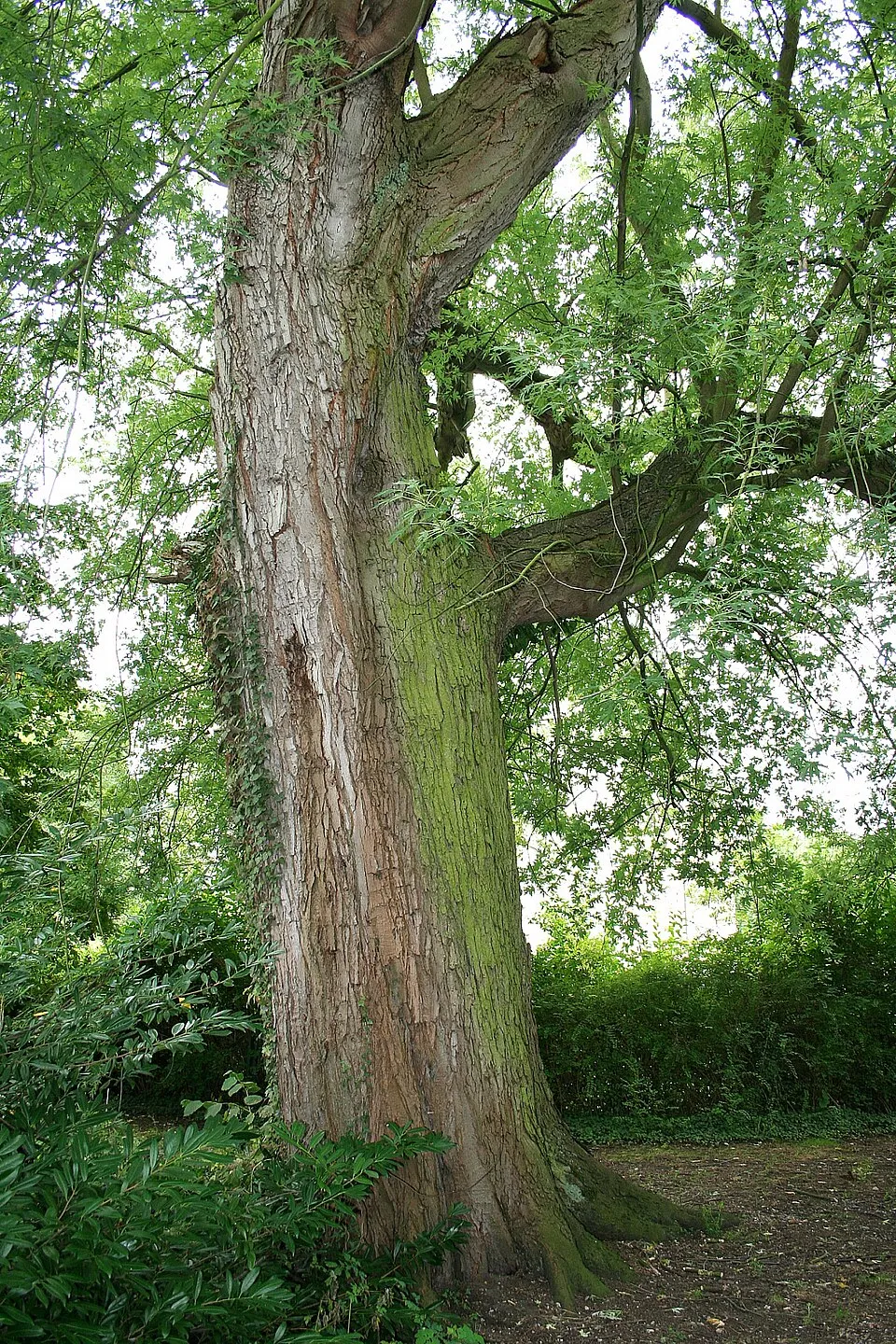
Acer saccharinum, commonly known as the Silver Maple, is a fast-growing deciduous tree native to the eastern and central United States and southeastern Canada. It typically reaches heights of 15-25 meters, with exceptional specimens growing up to 35 meters. Its distinctive foliage features deeply incised, palmately veined leaves, usually 8-16 cm long and 6-12 cm broad, with five prominent lobes and striking silvery-white undersides that shimmer in the wind. The autumn coloration is often a pale yellow, though some trees exhibit more vibrant oranges and reds.
Before the leaves emerge in early spring, dense clusters of small, inconspicuous flowers appear. These are followed by large, winged schizocarp fruits known as samaras, typically 3-5 cm long, which mature and disperse in early summer, a unique characteristic among native North American maples. The bark on young trunks is smooth and silvery-gray, maturing into a shaggy, gray appearance. The Silver Maple thrives in moist environments, frequently found along waterways and in wetlands, earning it the colloquial name 'water maple.' Despite its preference for riparian zones, it is highly adaptable to various soil conditions and urban settings, requiring ample sunlight.
Taxonomically, it belongs to the family Sapindaceae, within the genus Acer, and is classified under the section Rubra. It is distinct from Acer saccharum, the Sugar Maple, despite similar Latin names. The species is currently listed as 'Least Concern' by the IUCN.
Trusted Scientific References
1. Authoritative external sources for Acer saccharinum
1.1 Wikipedia — Acer saccharinum
1.2 Kew POWO (Plants of the World Online)
1.3 PubMed — peer-reviewed research
1.4 NCBI Taxonomy Browser
1.5 GBIF — Global Biodiversity
1.6Acer Saccharinum should be interpreted through verified botanical identity, practical care, and responsible safety language. This recovery note adds the missing context needed for a complete profile: match light to the plant's habit, use well-drained soil, water according to season, and avoid unsupported medicinal or edible claims. For publishing, the plant can be presented as a source-backed garden plant with clear care guidance, common problem diagnosis, and conservative safety wording.
1.1.Acer Saccharinum — Key Features
- ✓ <strong>Rapid Growth Rate</strong> — One of the fastest-growing maple species, quickly establishing in landscapes.
- ✓ <strong>Distinctive Foliage</strong> — Deeply five-lobed leaves with a striking silvery-white underside, creating a shimmering effect in wind.
- ✓ <strong>Early Spring Flowers</strong> — Small, dense clusters of greenish-yellow to reddish flowers emerge before the leaves, providing early nectar.
- ✓ <strong>Samara Fruits</strong> — Produces large, characteristic winged seeds (samaras) in early summer, aiding in wind and water dispersal.
- ✓ <strong>Adaptable Habitat</strong> — Thrives in moist, riparian zones but demonstrates high tolerance to various soils and urban conditions.
- ✓ <strong>Shaggy Bark</strong> — Mature trees develop a gray, shaggy bark that exfoliates in thin strips, while young bark is smooth and silvery.
- ✓ <strong>Wildlife Support</strong> — Provides critical early spring food (buds) for squirrels and seeds for birds and chipmunks, and nesting sites.
- ✓ <strong>Wood Utility</strong> — Its light, easily worked wood is used for furniture, flooring, pulp, and is explored for biofuel potential.
- ✓ <strong>Ornamental Value</strong> — Popular as a shade and street tree due to its fast growth, hardiness, and aesthetic appeal.
- ✓ <strong>Shallow Root System</strong> — Features a shallow, fibrous root system that can be invasive, potentially damaging sidewalks and pipes.
1.2.Acer Saccharinum — Quick Summary
- ✓ Silver Maple (Acer saccharinum) is a fast-growing deciduous tree native to eastern North America.
- ✓ Recognized for its distinctive deeply lobed leaves with silvery undersides and early spring flowering.
- ✓ Historically utilized for its diuretic, anti-inflammatory, antioxidant, and digestive support properties.
- ✓ Rich in beneficial phytochemicals including flavonoids, tannins, saponins, and phenolic acids.
- ✓ Valued ecologically as wildlife habitat and for its wood, also widely planted as an ornamental urban tree.
- ✓ Medicinal use requires caution, especially for pregnant individuals, children, and those on specific medications.
2.Acer Saccharinum — Scientific Identity
3.Acer Saccharinum — Quick Facts
4.Acer Saccharinum — Appearance & Identification
5.Acer Saccharinum — Native Habitat
6.Acer Saccharinum — Water Requirements
- ✓ Soil Preference — Acer saccharinum thrives in moist, well-drained, fertile loams or sandy loams, demonstrating adaptability to a wide range of soil types, including heavy clays.
- ✓ Light Requirements — Prefers full sun exposure for optimal growth and vigor, though it can tolerate partial shade, especially in hotter climates.
- ✓ Water Needs — Requires consistent moisture, particularly during establishment; mature trees are moderately drought-tolerant but flourish in riparian or consistently damp conditions.
- ✓ Propagation — Easily propagated from seeds, which have no dormancy and germinate quickly, or through softwood cuttings for specific cultivars.
- ✓ Climate Adaptability — Hardy in USDA zones 3-9, the Silver Maple is well-suited to temperate climates and can withstand significant temperature fluctuations.
- ✓ Urban Tolerance — Highly tolerant of urban stressors such as air pollution, compacted soils, and roadside conditions, making it a common street and park tree.
- ✓ Maintenance — Benefits from early structural pruning to address its tendency for brittle wood and multiple trunks; mulching around the base helps retain soil moisture and regulate temperature.
Reviewed by the Flora Medical Global Botanical Review Panel
Multi-disciplinary editorial group · Botany · Ethnobotany · Herbal-medicine literature
Who reviewed this: This page was checked by the Flora Medical Global Botanical Review Panel — an in-house editorial group of botany graduates, ethnobotany researchers, and horticulture practitioners who collectively maintain our 7,000+ plant encyclopedia. Meet the team.
Our 4-step verification process
1. Taxonomic verification
Scientific names and synonyms cross-checked against Kew POWO, World Flora Online, and The Plant List.
2. Phytochemical & medicinal cross-reference
Active compounds, traditional uses, and reported activities are cross-referenced with PubMed, USDA Dr. Duke's database, and peer-reviewed ethnobotanical literature.
3. Conservation & distribution check
Distribution, ecology, and conservation status confirmed against GBIF occurrence records and the IUCN Red List.
4. Editorial & safety review
Every entry passes an editorial pass for clarity, originality, and safety notices (toxicity, contraindications, dosage caveats) before publication.
Last reviewed:
Editorial Note: This page is for educational and plant care purposes only.
Written by: Flora Medical Global Editorial Team
Reviewed by: Flora Medical Global Botanical Review Panel
Last Updated: June 15, 2026







Acer Saccharinum — Comments & Community Reviews
Rate this plant