

Care Disclaimer: Plant care recommendations are general guidelines based on common growing conditions. Individual results may vary based on your local environment, climate, and care routine. If your plant is toxic, keep it away from children and pets, and consult a veterinarian if accidental ingestion occurs.
1.Achillea Filipendulina — Overview
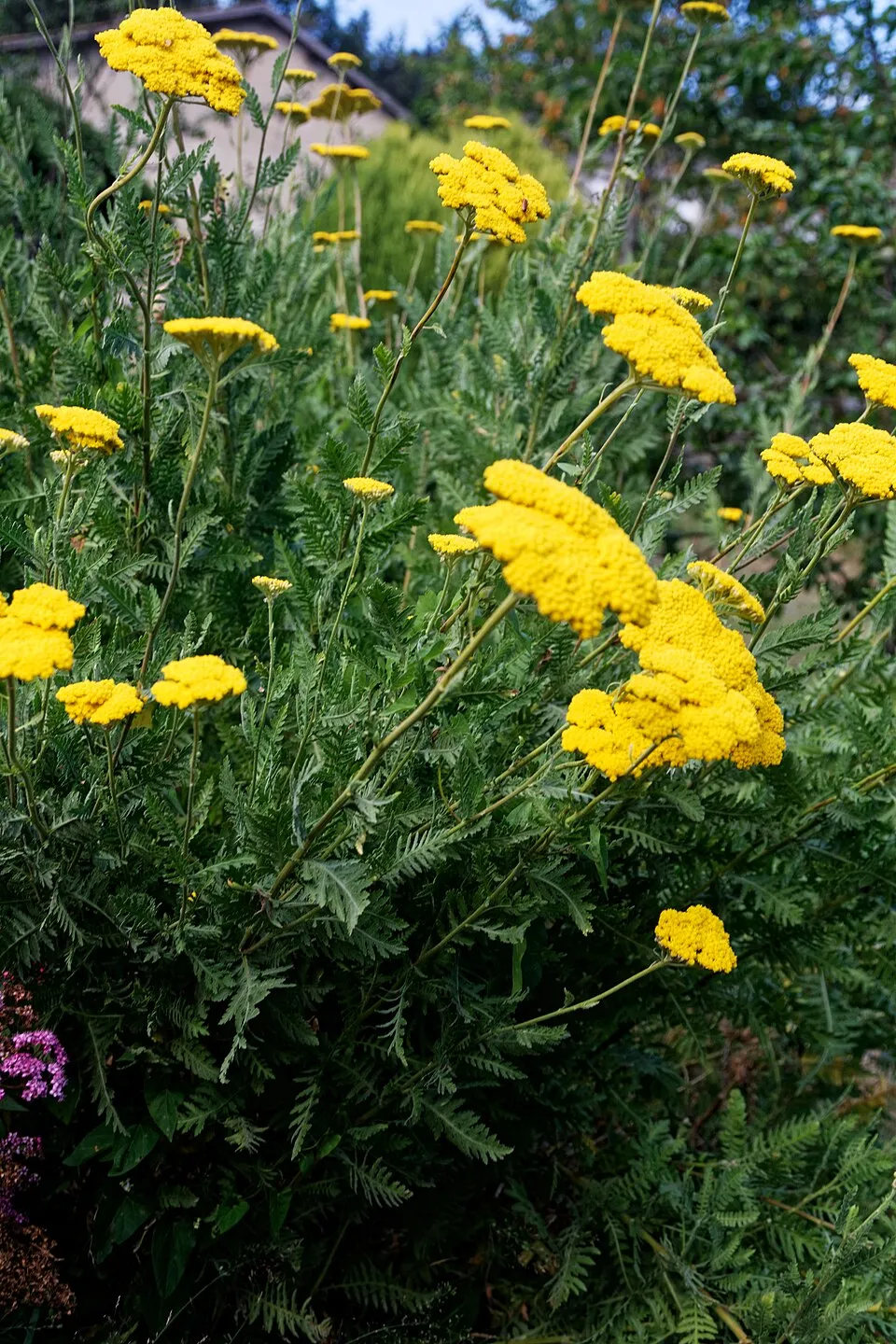
Achillea filipendulina, commonly known as Fernleaf Yarrow or Golden Yarrow, is a striking herbaceous perennial cherished for both its ornamental appeal and its emerging medicinal potential. This robust plant typically forms a dense, upright clump, reaching heights of 90 to 150 centimeters, showcasing a strong, architectural presence in the garden.
Its root system consists of a network of rhizomes, allowing for steady spread and efficient nutrient uptake. The stems are sturdy, often becoming semi-woody at the base, and are clad in distinctive foliage.
The most prominent feature of Achillea filipendulina is its deeply dissected, fern-like leaves, which are a vibrant grey-green and emit a subtle, aromatic scent when crushed. These lanceolate leaves are arranged alternately along the stem, measuring approximately 10 to 20 centimeters in length, contributing to the plant's elegant texture.
The margins are finely serrated, and the pinnate venation is clearly visible.
Flowering occurs profusely from early summer through early autumn, presenting spectacular, flattened corymbs (dense, flat-topped clusters) of numerous tiny, golden-yellow florets. These radiant flower heads, typically 8 to 15 centimeters across, are highly attractive to a diverse array of pollinators, including bees and butterflies, and are excellent for cutting gardens due to their long vase life.
Following successful pollination, small, dry achenes develop, containing minute seeds, which are dispersed by wind.
Trusted Scientific References
1. Authoritative external sources for Achillea filipendulina
1.1 Wikipedia — Achillea filipendulina
1.2 Kew POWO (Plants of the World Online)
1.3 PubMed — peer-reviewed research
1.4 NCBI Taxonomy Browser
1.5 GBIF — Global Biodiversity
1.6Achillea Filipendulina should be interpreted through verified botanical identity, practical care, and responsible safety language. This recovery note adds the missing context needed for a complete profile: match light to the plant's habit, use well-drained soil, water according to season, and avoid unsupported medicinal or edible claims. For publishing, the plant can be presented as a source-backed garden plant with clear care guidance, common problem diagnosis, and conservative safety wording.
1.1.Achillea Filipendulina — Key Features
- ✓ <strong>Botanical Name</strong> — Achillea filipendulina.
- ✓ <strong>Common Names</strong> — Fernleaf Yarrow, Golden Yarrow.
- ✓ <strong>Plant Family</strong> — Asteraceae (Daisy Family).
- ✓ <strong>Native Region</strong> — Central and Southwestern Asia.
- ✓ <strong>Flower Color</strong> — Bright golden yellow, forming dense, flat-topped clusters.
- ✓ <strong>Foliage Characteristics</strong> — Deeply dissected, fern-like, aromatic, grey-green leaves.
- ✓ <strong>Medicinal Properties</strong> — Anti-inflammatory, wound healing, antispasmodic, diuretic, antiseptic.
- ✓ <strong>Key Bioactive Compounds</strong> — Chamazulene, apigenin, luteolin, achilleine.
- ✓ <strong>Growth Habit</strong> — Upright, clump-forming herbaceous perennial, reaching 90-150 cm tall.
- ✓ <strong>Environmental Tolerance</strong> — Highly drought-tolerant once established, thrives in full sun and poor to average soil.
1.2.Achillea Filipendulina — Quick Summary
- ✓ Golden Yarrow (Achillea filipendulina) is a vibrant, aromatic perennial known for its striking golden-yellow flowers.
- ✓ It possesses significant anti-inflammatory, wound-healing, and antispasmodic properties, rooted in its rich phytochemistry.
- ✓ Key chemical constituents include volatile oils (like chamazulene), flavonoids, and sesquiterpene lactones.
- ✓ Traditionally used for digestive issues, skin ailments, and fever reduction across various herbal traditions.
- ✓ Cultivation is straightforward, preferring full sun and well-drained soil, making it a robust garden plant.
- ✓ Critical safety considerations include contraindications in pregnancy, potential allergic reactions, and interactions with certain medications.
2.Achillea Filipendulina — Scientific Identity
3.Achillea Filipendulina — Quick Facts
4.Achillea Filipendulina — Appearance & Identification
5.Achillea Filipendulina — Native Habitat
6.Achillea Filipendulina — Water Requirements
- ✓ Sunlight — Requires full sun exposure for at least 6-8 hours daily to ensure robust growth and prolific flowering.
- ✓ Soil Requirements — Thrives in well-drained, average to poor soil; tolerates various soil types, including sandy or rocky, but dislikes heavy, wet clay.
- ✓ Watering — Drought-tolerant once established, requiring only occasional watering during prolonged dry periods; avoid overwatering.
- ✓ Propagation — Can be propagated by seeds, root division in spring or fall, or by taking stem cuttings in early summer.
- ✓ Maintenance — Deadhead spent flowers regularly to encourage continuous blooming and prevent self-seeding; cut back foliage in late fall or early spring.
- ✓ Fertilization — Generally does not require heavy fertilization; an annual application of compost in spring is usually sufficient.
- ✓ Pests and Diseases — Relatively pest and disease resistant, though powdery mildew can occur in humid conditions or if air circulation is poor.
- ✓ Hardiness Zones — Hardy in USDA Zones 3-9, tolerating a wide range of climates.
Reviewed by the Flora Medical Global Botanical Review Panel
Multi-disciplinary editorial group · Botany · Ethnobotany · Herbal-medicine literature
Who reviewed this: This page was checked by the Flora Medical Global Botanical Review Panel — an in-house editorial group of botany graduates, ethnobotany researchers, and horticulture practitioners who collectively maintain our 7,000+ plant encyclopedia. Meet the team.
Our 4-step verification process
1. Taxonomic verification
Scientific names and synonyms cross-checked against Kew POWO, World Flora Online, and The Plant List.
2. Phytochemical & medicinal cross-reference
Active compounds, traditional uses, and reported activities are cross-referenced with PubMed, USDA Dr. Duke's database, and peer-reviewed ethnobotanical literature.
3. Conservation & distribution check
Distribution, ecology, and conservation status confirmed against GBIF occurrence records and the IUCN Red List.
4. Editorial & safety review
Every entry passes an editorial pass for clarity, originality, and safety notices (toxicity, contraindications, dosage caveats) before publication.
Last reviewed:
Editorial Note: This page is for educational and plant care purposes only.
Written by: Flora Medical Global Editorial Team
Reviewed by: Flora Medical Global Botanical Review Panel
Last Updated: June 15, 2026







Achillea Filipendulina — Comments & Community Reviews
Rate this plant