
Care Disclaimer: Plant care recommendations are general guidelines based on common growing conditions. Individual results may vary based on your local environment, climate, and care routine. If your plant is toxic, keep it away from children and pets, and consult a veterinarian if accidental ingestion occurs.
1.Achillea Ptarmica — Overview
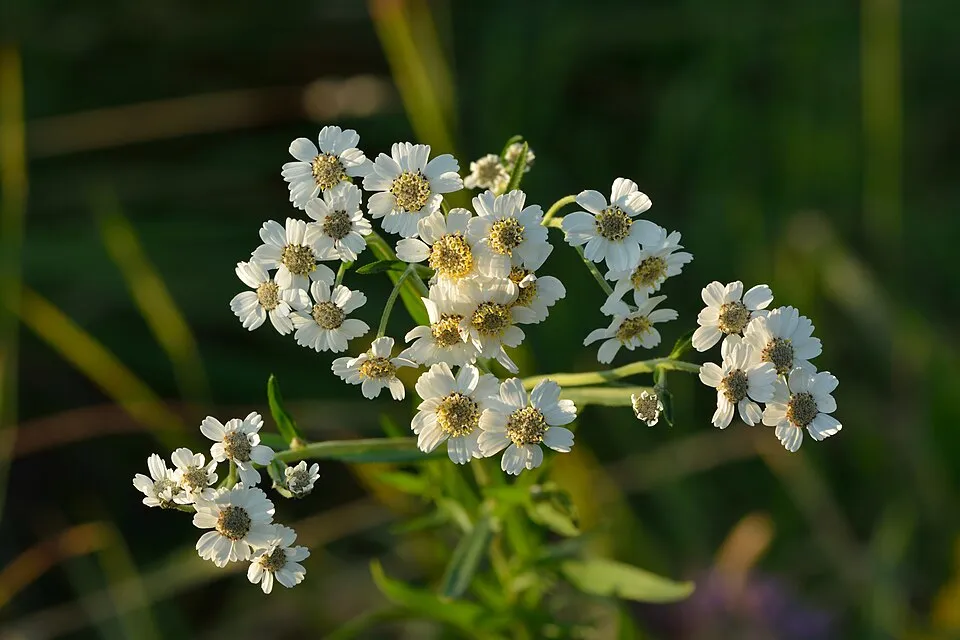
Achillea ptarmica, commonly referred to as Sneezewort, is a distinctive perennial herbaceous plant belonging to the expansive Asteraceae family. This species presents a robust morphology, characterized by its un-dissected, finely serrated leaves that can extend up to 20 cm in length. The foliage possesses a subtly hairy texture, which contributes to its unique tactile and visual appeal. From June through October, the plant produces charming clusters of white, button-like flower heads, each composed of numerous small florets, creating a delicate yet striking display.
Achillea ptarmica typically attains a height of up to 60 cm and exhibits a spreading growth habit, facilitated by its vigorous rhizomatous root system. Native to Europe, Sneezewort flourishes in damp meadows, fens, and along the moist edges of woodlands, preferring areas with consistently moist, well-drained soils. Its natural geographical range extends from the British Isles eastward through Siberia and into Western Asia, predominantly in regions that offer conditions from partial to full sunlight. Taxonomically, Achillea ptarmica is a member of the larger Achillea genus, a name famously derived from the Greek hero Achilles, who was legendary for his use of medicinal plants.
Historically, this plant has played a significant role in various European folk medicinal traditions, where its dried leaves and flowers were notably employed as a sternutatory. This practice involved inducing sneezing to alleviate nasal congestion and headaches, underscoring its cultural importance in traditional European medicine, where it was believed to dispel 'bad humors' and promote respiratory health. Beyond its therapeutic uses, the aesthetic appeal of Achillea ptarmica, combined with its ecological benefits in attracting pollinators like bees and hoverflies, has made it a popular choice in ornamental gardening, bridging traditional herbal practices with modern horticultural applications.
Trusted Scientific References
1. Authoritative external sources for Achillea ptarmica
1.1 Wikipedia — Achillea ptarmica
1.2 Kew POWO (Plants of the World Online)
1.3 PubMed — peer-reviewed research
1.4 NCBI Taxonomy Browser
1.5 GBIF — Global Biodiversity
1.1.Achillea Ptarmica — Key Features
- ✓ <strong>Botanical Name</strong> — Achillea ptarmica
- ✓ <strong>Common Name</strong> — Sneezewort
- ✓ <strong>Family</strong> — Asteraceae
- ✓ <strong>Native Range</strong> — Europe to Siberia and W. Asia
- ✓ <strong>Flower Color</strong> — White
- ✓ <strong>Bloom Time</strong> — June to October
- ✓ <strong>Growth Habit</strong> — Upright, spreading perennial
- ✓ <strong>Hardiness Zones</strong> — USDA 3-9
- ✓ <strong>Primary Traditional Use</strong> — Sternutatory, digestive
- ✓ <strong>Ecological Role</strong> — Attracts pollinators
1.2.Achillea Ptarmica — Quick Summary
- ✓ Traditional European sternutatory and digestive aid.
- ✓ Perennial herb of the Asteraceae family with white, button-like flowers.
- ✓ Key compounds include flavonoids, essential oils, and tannins.
- ✓ Used for toothache, digestive issues, and as a diaphoretic.
- ✓ Requires moist, well-drained soil and full sun to partial shade.
- ✓ Exercise caution during pregnancy and with Asteraceae allergies.
2.Achillea Ptarmica — Scientific Identity
3.Achillea Ptarmica — Quick Facts
4.Achillea Ptarmica — Appearance & Identification
5.Achillea Ptarmica — Native Habitat
6.Achillea Ptarmica — Water Requirements
- ✓ Site Selection — Choose a location with full sun to partial shade, ensuring good air circulation to prevent fungal issues.
- ✓ Soil Requirements — Achillea ptarmica thrives in a variety of soil types, from light sandy to heavy clay, but prefers moist, well-drained conditions; it can tolerate nutritionally poor soils.
- ✓ Watering — Maintain consistent soil moisture, especially during dry periods, as the plant prefers damp environments, but avoid waterlogging.
- ✓ Hardiness — This perennial is remarkably hardy, tolerating temperatures down to -25°C (USDA Zones 3-9, UK Zone 5), making it suitable for temperate climates.
- ✓ Propagation — Propagate readily by seed, division of its rhizomatous root system in spring or autumn, or by taking basal cuttings.
- ✓ Maintenance — Deadhead spent flowers to encourage further blooming and prevent self-seeding; divide established clumps every few years to maintain vigor and control spread.
- ✓ Spacing — Allow adequate space (approx. 60 cm apart) as the plant has a spreading habit and can become invasive if not managed.
- ✓ Pest and Disease — Generally robust, but watch for powdery mildew in humid conditions or aphid infestations; ensure good air circulation to mitigate risks.
Reviewed by the Flora Medical Global Botanical Review Panel
Multi-disciplinary editorial group · Botany · Ethnobotany · Herbal-medicine literature
Who reviewed this: This page was checked by the Flora Medical Global Botanical Review Panel — an in-house editorial group of botany graduates, ethnobotany researchers, and horticulture practitioners who collectively maintain our 7,000+ plant encyclopedia. Meet the team.
Our 4-step verification process
1. Taxonomic verification
Scientific names and synonyms cross-checked against Kew POWO, World Flora Online, and The Plant List.
2. Phytochemical & medicinal cross-reference
Active compounds, traditional uses, and reported activities are cross-referenced with PubMed, USDA Dr. Duke's database, and peer-reviewed ethnobotanical literature.
3. Conservation & distribution check
Distribution, ecology, and conservation status confirmed against GBIF occurrence records and the IUCN Red List.
4. Editorial & safety review
Every entry passes an editorial pass for clarity, originality, and safety notices (toxicity, contraindications, dosage caveats) before publication.
Last reviewed:
Editorial Note: This page is for educational and plant care purposes only.
Written by: Flora Medical Global Editorial Team
Reviewed by: Flora Medical Global Botanical Review Panel
Last Updated: June 15, 2026







Achillea Ptarmica — Comments & Community Reviews
Rate this plant