
Care Disclaimer: Plant care recommendations are general guidelines based on common growing conditions. Individual results may vary based on your local environment, climate, and care routine. If your plant is toxic, keep it away from children and pets, and consult a veterinarian if accidental ingestion occurs.
1.Aquilegia Chrysantha — Overview
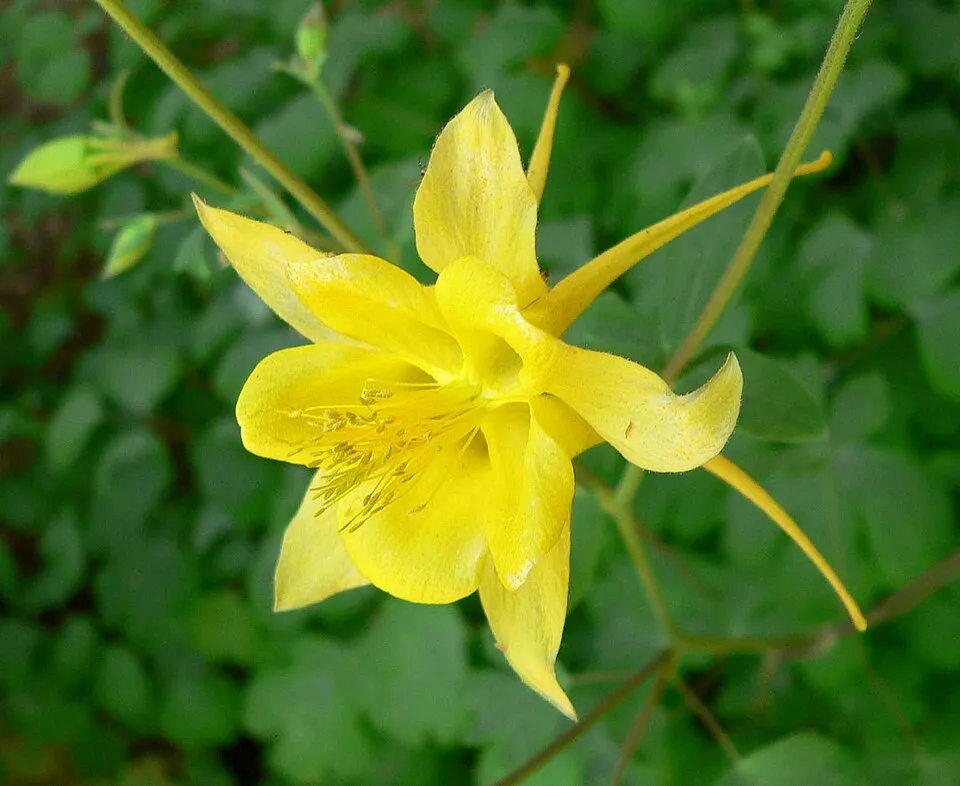
Aquilegia chrysantha, commonly known as Golden Columbine, Canary Columbine, or Southwestern Yellow Columbine, is a striking herbaceous perennial belonging to the Ranunculaceae family. Native to the southwestern United States and parts of Mexico, this species is renowned for its vibrant, golden-yellow flowers that can reach up to 3 inches in diameter. The blossoms feature distinctive backward-pointing spurs, a characteristic trait of the Aquilegia genus, and are held gracefully upright on stalks that extend well above the foliage.
Initially nodding in bud, the flowers orient upwards upon opening, optimizing visibility for pollinators such as hawk moths. Its delicate emerald green leaves are multiply divided into threes, forming a ternate pattern that adds to its ornamental appeal. Growing typically between 1 to 3 feet tall, Golden Columbine thrives in moist canyons and around spring seeps within mountainous regions, demonstrating a remarkable tolerance for both partial shade and considerable sun, even in hot summer temperatures exceeding 100 degrees in its native Sonoran Desert habitats.
While it shares characteristics with other yellow-flowered columbines of the Southwest, Aquilegia chrysantha is recognized as the most widespread among them, making it a prized ornamental plant for its showy, long-blooming flowers and attractive foliage.
Trusted Scientific References
1. Authoritative external sources for Aquilegia chrysantha
1.1 Wikipedia — Aquilegia chrysantha
1.2 Kew POWO (Plants of the World Online)
1.3 PubMed — peer-reviewed research
1.4 NCBI Taxonomy Browser
1.5 GBIF — Global Biodiversity
1.6Aquilegia Chrysantha should be interpreted through verified botanical identity, practical care, and responsible safety language. This recovery note adds the missing context needed for a complete profile: match light to the plant's habit, use well-drained soil, water according to season, and avoid unsupported medicinal or edible claims. For publishing, the plant can be presented as a source-backed garden plant with clear care guidance, common problem diagnosis, and conservative safety wording.
1.1.Aquilegia Chrysantha — Key Features
- ✓ <strong>Botanical Name</strong> — *Aquilegia chrysantha*.
- ✓ <strong>Common Names</strong> — Golden Columbine, Canary Columbine, Southwestern Yellow Columbine.
- ✓ <strong>Family</strong> — Ranunculaceae (Buttercup family).
- ✓ <strong>Native Range</strong> — Southwestern United States and parts of Mexico.
- ✓ <strong>Flower Description</strong> — Bright golden-yellow, up to 3 inches wide, with prominent backward-pointing spurs, held upright.
- ✓ <strong>Leaf Description</strong> — Multiply divided into threes (ternate), delicate emerald green leaflets.
- ✓ <strong>Height</strong> — Typically grows 1 to 3 feet tall.
- ✓ <strong>Habitat</strong> — Moist canyons, spring seeps, and mountainous regions.
- ✓ <strong>Medicinal Use</strong> — Traditional topical application for inflammation, pain, skin irritations, and wound healing.
- ✓ <strong>Key Constituents</strong> — Flavonoids, tannins, and alkaloids are among its notable phytochemicals.
1.2.Aquilegia Chrysantha — Quick Summary
- ✓ Golden Columbine (*Aquilegia chrysantha*) is a vibrant perennial native to the Southwestern USA and Mexico, known for its unique spurred yellow flowers.
- ✓ Traditionally recognized for its potential anti-inflammatory, analgesic, and antimicrobial properties, primarily through topical application.
- ✓ Phytochemically rich, containing flavonoids, tannins, and alkaloids that contribute to its bioactivity, alongside other plant compounds.
- ✓ Cultivated for ornamental value, it prefers partial shade and well-drained soil, readily reseeding itself in suitable conditions.
- ✓ Primarily used externally for soothing skin irritations, minor wounds, and localized discomfort.
- ✓ Strict caution is advised against internal use due to the potential presence of toxic compounds within the Aquilegia genus.
2.Aquilegia Chrysantha — Scientific Identity
3.Aquilegia Chrysantha — Quick Facts
4.Aquilegia Chrysantha — Appearance & Identification
5.Aquilegia Chrysantha — Native Habitat
6.Aquilegia Chrysantha — Water Requirements
- ✓ Soil Preference — Thrives in well-drained soil that is rich in organic matter. Amend heavy clay soils with sand or compost to ensure proper drainage and prevent root issues.
- ✓ Light Requirements — Prefers partial shade, especially in hotter climates, but can tolerate full sun if consistently provided with adequate moisture.
- ✓ Watering Schedule — Requires regular watering during its active growing season to keep the soil consistently moist. Avoid waterlogging, which can lead to crown rot.
- ✓ Fertilization — Benefits from an application of a balanced organic fertilizer in early spring to promote vigorous growth and abundant flowering throughout the season.
- ✓ Propagation — Easily grown from seed and will readily self-seed in favorable garden conditions. If natural reseeding is desired, avoid deadheading spent flowers.
- ✓ Pruning & Maintenance — When foliage begins to decline, typically by mid-summer, cut the plant back to the ground to maintain tidiness and encourage potential rebloom.
- ✓ Climate Adaptability — Best suited for temperate regions and may struggle in hot, humid summers. In such areas, consider growing it in cooler, shadier spots or opting for a more heat-tolerant alternative.
- ✓ Pest Resistance — Generally resistant to damage from common garden pests like deer and rabbits, making it a low-maintenance choice for many landscapes.
Reviewed by the Flora Medical Global Botanical Review Panel
Multi-disciplinary editorial group · Botany · Ethnobotany · Herbal-medicine literature
Who reviewed this: This page was checked by the Flora Medical Global Botanical Review Panel — an in-house editorial group of botany graduates, ethnobotany researchers, and horticulture practitioners who collectively maintain our 7,000+ plant encyclopedia. Meet the team.
Our 4-step verification process
1. Taxonomic verification
Scientific names and synonyms cross-checked against Kew POWO, World Flora Online, and The Plant List.
2. Phytochemical & medicinal cross-reference
Active compounds, traditional uses, and reported activities are cross-referenced with PubMed, USDA Dr. Duke's database, and peer-reviewed ethnobotanical literature.
3. Conservation & distribution check
Distribution, ecology, and conservation status confirmed against GBIF occurrence records and the IUCN Red List.
4. Editorial & safety review
Every entry passes an editorial pass for clarity, originality, and safety notices (toxicity, contraindications, dosage caveats) before publication.
Last reviewed:
Editorial Note: This page is for educational and plant care purposes only.
Written by: Flora Medical Global Editorial Team
Reviewed by: Flora Medical Global Botanical Review Panel
Last Updated: June 15, 2026







Aquilegia Chrysantha — Comments & Community Reviews
Rate this plant