
Care Disclaimer: Plant care recommendations are general guidelines based on common growing conditions. Individual results may vary based on your local environment, climate, and care routine. If your plant is toxic, keep it away from children and pets, and consult a veterinarian if accidental ingestion occurs.
1.Arctotis Fastuosa — Overview
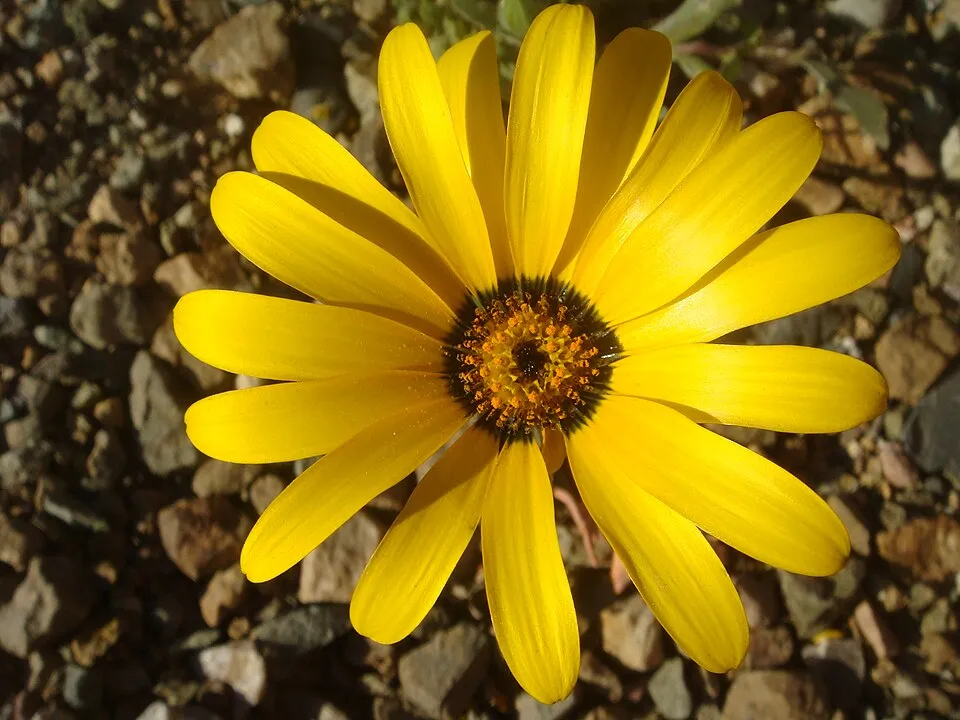
Arctotis fastuosa, commonly known as Monarch-of-the-veld, Namaqualand arctotis, or bittergousblom, is a captivating annual herbaceous plant belonging to the Asteraceae family. Native to the arid and semi-arid regions of Namibia and South Africa, particularly the Namaqualand, it has also naturalized in areas like southern California. This species typically grows as an erect, branched annual, reaching heights of 35 to 90 centimeters, with its size significantly influenced by water availability.
Its stems and leaves are covered in fine, webby white hairs, giving the plant a distinctive grey-green, woolly texture. The leaves are arranged in basal rosettes and alternately along the stem, often deeply lobed and up to 15 centimeters long, borne on flat petioles. The most striking feature of Arctotis fastuosa is its large, solitary flower heads, which can measure up to 10 centimeters in diameter.
These showy inflorescences feature a double row of brilliant ray florets, typically orange, reddish-orange, yellowish-orange, or cream, often with dark blotches at their base forming a conspicuous ring. The central disc florets can be brown, purple, or black when closed, turning yellow when open, attracting a variety of pollinators. It thrives in full sun and well-drained, sandy-loam soils, showcasing remarkable drought resistance and adaptability to nutrient-poor conditions, making it a resilient and visually appealing addition to diverse landscapes.
Trusted Scientific References
1. Authoritative external sources for Arctotis Fastuosa
1.1 Wikipedia — Arctotis Fastuosa
1.2 Kew POWO (Plants of the World Online)
1.3 PubMed — peer-reviewed research
1.4 NCBI Taxonomy Browser
1.5 GBIF — Global Biodiversity
1.6Arctotis Fastuosa should be interpreted through verified botanical identity, practical care, and responsible safety language. This recovery note adds the missing context needed for a complete profile: match light to the plant's habit, use well-drained soil, water according to season, and avoid unsupported medicinal or edible claims. For publishing, the plant can be presented as a source-backed garden plant with clear care guidance, common problem diagnosis, and conservative safety wording.
1.1.Arctotis Fastuosa — Key Features
- ✓ <strong>Striking Ornamental Flowers</strong> — Boasts large, showy flower heads up to 10 cm wide, featuring vibrant orange, yellow, or cream ray florets with distinctive dark centers.
- ✓ <strong>Drought</strong> — Tolerant — Highly adapted to dry conditions and low water availability, making it an excellent choice for xeriscaping and water-wise gardens.
- ✓ <strong>Fast</strong> — Growing Annual — Quickly establishes and produces abundant blooms within a single growing season, offering immediate visual impact.
- ✓ <strong>Indigenous to Southern Africa</strong> — Native to Namibia and South Africa, thriving in its natural arid and semi-arid habitats.
- ✓ <strong>Traditional Medicinal Uses</strong> — Historically employed for its anti-inflammatory, analgesic, and digestive properties in various traditional healing systems.
- ✓ <strong>Rich Phytochemistry</strong> — Contains a diverse array of beneficial plant compounds, including powerful flavonoids, alkaloids, and aromatic essential oils.
- ✓ <strong>Attracts Pollinators</strong> — Its bright, nectar-rich flowers are a strong draw for bees, butterflies, and other essential garden pollinators.
- ✓ <strong>Adaptable to Varied Soils</strong> — Capable of growing in a range of well-drained soils, including poorer, sandy, or disturbed sites.
- ✓ <strong>Low Maintenance</strong> — Requires minimal ongoing care once established, making it suitable for gardeners seeking beautiful yet undemanding plants.
- ✓ <strong>Aromatic Properties</strong> — The presence of essential oils contributes to its pleasant fragrance and traditional use in aromatherapy for mental well-being.
1.2.Arctotis Fastuosa — Quick Summary
- ✓ Arctotis fastuosa, the Monarch-of-the-veld, is a vibrant annual from Southern Africa, cherished for its striking ornamental flowers.
- ✓ Traditionally valued for its anti-inflammatory, analgesic, and digestive support properties, it offers diverse wellness benefits.
- ✓ Rich in beneficial phytochemicals including flavonoids, alkaloids, and essential oils like menthol and camphor.
- ✓ A drought-tolerant and fast-growing plant, it is easy to cultivate in sunny, well-drained gardens.
- ✓ Offers potential benefits for stress relief, mental clarity, and mild antimicrobial action, making it a versatile herb.
- ✓ Use with caution, especially for pregnant individuals, children, and those with Asteraceae allergies, always adhering to safety guidelines.
2.Arctotis Fastuosa — Scientific Identity
3.Arctotis Fastuosa — Quick Facts
4.Arctotis Fastuosa — Appearance & Identification
5.Arctotis Fastuosa — Native Habitat
6.Arctotis Fastuosa — Water Requirements
- ✓ Climate Preference — Arctotis fastuosa thrives in full sun and warm conditions, ideally suited for Mediterranean climates or regions with dry, sunny summers.
- ✓ Soil Requirements — Prefers well-drained, sandy-loam soils with a slightly acidic to neutral pH (6.0-7.0), demonstrating tolerance for poorer soil fertility.
- ✓ Watering Schedule — Requires moderate watering during its establishment phase and prolonged dry spells, but is highly drought-tolerant once mature.
- ✓ Fertilization — A light application of a balanced, slow-release granular fertilizer or well-rotted compost in early spring can enhance growth and flower production.
- ✓ Pruning and Deadheading — Regular deadheading of spent flowers is crucial to encourage continuous blooming and prevent the plant from going to seed prematurely.
- ✓ Propagation — Primarily propagated from seeds, which can be directly sown outdoors after the last frost or started indoors 6-8 weeks prior to the planting season.
- ✓ Pest and Disease Management — Generally robust, but monitor for common garden pests like aphids and powdery mildew; ensure good air circulation to mitigate fungal issues.
- ✓ Winter Care — As an annual in most temperate zones, it completes its life cycle in one season; seeds can be collected for subsequent planting or allowed to self-seed.
Reviewed by the Flora Medical Global Botanical Review Panel
Multi-disciplinary editorial group · Botany · Ethnobotany · Herbal-medicine literature
Who reviewed this: This page was checked by the Flora Medical Global Botanical Review Panel — an in-house editorial group of botany graduates, ethnobotany researchers, and horticulture practitioners who collectively maintain our 7,000+ plant encyclopedia. Meet the team.
Our 4-step verification process
1. Taxonomic verification
Scientific names and synonyms cross-checked against Kew POWO, World Flora Online, and The Plant List.
2. Phytochemical & medicinal cross-reference
Active compounds, traditional uses, and reported activities are cross-referenced with PubMed, USDA Dr. Duke's database, and peer-reviewed ethnobotanical literature.
3. Conservation & distribution check
Distribution, ecology, and conservation status confirmed against GBIF occurrence records and the IUCN Red List.
4. Editorial & safety review
Every entry passes an editorial pass for clarity, originality, and safety notices (toxicity, contraindications, dosage caveats) before publication.
Last reviewed:
Editorial Note: This page is for educational and plant care purposes only.
Written by: Flora Medical Global Editorial Team
Reviewed by: Flora Medical Global Botanical Review Panel
Last Updated: June 15, 2026







Arctotis Fastuosa — Comments & Community Reviews
Rate this plant