
Care Disclaimer: Plant care recommendations are general guidelines based on common growing conditions. Individual results may vary based on your local environment, climate, and care routine. If your plant is toxic, keep it away from children and pets, and consult a veterinarian if accidental ingestion occurs.
1.Aristea Ecklonii — Overview
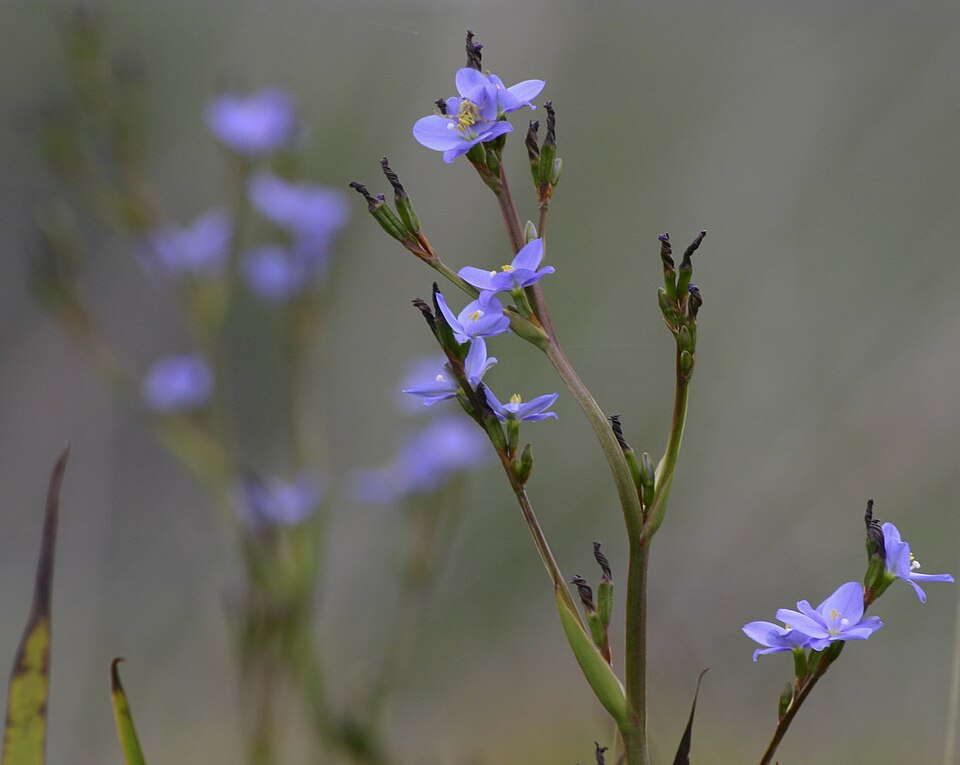
Aristea ecklonii, commonly known as blue stars, blue flies, blue-eyed iris, or blue corn-lily, and locally as blousterre or umhushuza, is an indigenous evergreen perennial belonging to the Iridaceae family. This charming plant forms attractive clumps, typically reaching heights of up to 50 cm. Its foliage is characterized by broad, sword-shaped leaves, generally 8-12 mm wide, which are soft to the touch and contribute to its lush appearance. From September to December, Aristea ecklonii produces striking deep blue, star-like flowers, each with six tepals about 8-10 mm long, and a distinctive three-lobed style.
While individual flowers last only a day, the profuse blooming creates a beautiful display, particularly in late spring and early summer. The plant develops a robust rhizomatous root system and bears an oblong, three-angled capsule as its fruit. Native to central and southern Africa, its distribution spans across South African provinces such as Eastern Cape, KwaZulu-Natal, Limpopo, and Mpumalanga, extending northwards into Tanzania and Cameroon. It thrives in diverse habitats including well-drained soils, shrublands, open and disturbed forests, streambanks, and rocky terrain.
Aristea ecklonii is noted for its frost-hardiness and adaptability, making it a resilient species in various climates. Historically, the genus name 'Aristea' is derived from the Latin 'arista,' referring to the rigid points of its leaves, while 'ecklonii' honors the Danish plant collector Christian Ecklon.
Trusted Scientific References
1. Authoritative external sources for Aristea Ecklonii
1.1 Wikipedia — Aristea Ecklonii
1.2 Kew POWO (Plants of the World Online)
1.3 PubMed — peer-reviewed research
1.4 NCBI Taxonomy Browser
1.5 GBIF — Global Biodiversity
1.6Aristea Ecklonii should be interpreted through verified botanical identity, practical care, and responsible safety language. This recovery note adds the missing context needed for a complete profile: match light to the plant's habit, use well-drained soil, water according to season, and avoid unsupported medicinal or edible claims. For publishing, the plant can be presented as a source-backed garden plant with clear care guidance, common problem diagnosis, and conservative safety wording.
1.1.Aristea Ecklonii — Key Features
- ✓ <strong>Evergreen Perennial</strong> — Maintains foliage year-round, offering continuous garden interest.
- ✓ <strong>Star</strong> — like Blue Flowers — Produces striking deep blue blooms with six tepals, creating a vibrant display.
- ✓ <strong>Clump</strong> — forming Habit — Grows in attractive clumps, ideal for borders, beds, or ground cover.
- ✓ <strong>Sword</strong> — shaped Leaves — Features broad, soft, sword-like foliage that adds textural appeal.
- ✓ <strong>Frost</strong> — hardy — Resilient to cold temperatures, tolerating conditions down to 12°C.
- ✓ <strong>Fast Growing</strong> — Establishes quickly in suitable conditions, reaching maturity in 2-3 years.
- ✓ <strong>Attracts Butterflies</strong> — Its vibrant flowers are a magnet for pollinators, enhancing garden biodiversity.
- ✓ <strong>Rhizomatous Roots</strong> — Possesses an underground rhizome system for robust growth and spread.
- ✓ <strong>Traditional Medicinal Uses</strong> — Valued in indigenous medicine for a range of health benefits.
- ✓ <strong>Adaptable Habitat</strong> — Thrives in diverse environments from shrubland to rocky slopes and streambanks.
1.2.Aristea Ecklonii — Quick Summary
- ✓ Aristea ecklonii is an evergreen perennial from the Iridaceae family, known for its vibrant blue, star-like flowers.
- ✓ Native to central and southern Africa, it is also called blue stars, blue flies, and umhushuza.
- ✓ Traditionally used for anti-inflammatory, analgesic, digestive, and wound-healing properties, as well as for fevers and coughs.
- ✓ Contains beneficial compounds like flavonoids, terpenoids, essential oils, and alkaloids.
- ✓ Cultivated for ornamental purposes, it thrives in well-drained, humus-rich soil with moderate watering and full sun to light shade.
- ✓ Caution is advised for pregnant/nursing individuals, those on medication, and persons with allergies.
2.Aristea Ecklonii — Scientific Identity
3.Aristea Ecklonii — Quick Facts
4.Aristea Ecklonii — Appearance & Identification
5.Aristea Ecklonii — Native Habitat
6.Aristea Ecklonii — Water Requirements
- ✓ Propagation — Best propagated from seeds, which are produced abundantly, or by division of rooted clumps, typically performed in autumn.
- ✓ Seed Sowing — Sow seeds onto a good soil-based compost, covering them with a fine layer of grit or compost equivalent to their size.
- ✓ Germination Conditions — Optimal germination occurs at temperatures between 15-20°C; seeds generally emerge in spring, regardless of sowing time.
- ✓ Soil Preference — Thrives in humus-rich, well-drained soil, ideally enriched with organic matter to support vigorous growth and flowering.
- ✓ Light Requirements — Prefers full sun to light shade, with adequate sunlight being crucial for prolific flowering and overall plant health.
- ✓ Watering — Requires medium levels of watering; ensure consistent moisture, especially during dry periods, but avoid waterlogging.
- ✓ Temperature Tolerance — This species is frost-hardy, capable of withstanding temperatures down to approximately 12°C, making it suitable for temperate climates.
- ✓ Flowering Stimulation — Fire can stimulate flowering, with plants producing more blooms in the spring following a fire event, mimicking natural habitat conditions.
Reviewed by the Flora Medical Global Botanical Review Panel
Multi-disciplinary editorial group · Botany · Ethnobotany · Herbal-medicine literature
Who reviewed this: This page was checked by the Flora Medical Global Botanical Review Panel — an in-house editorial group of botany graduates, ethnobotany researchers, and horticulture practitioners who collectively maintain our 7,000+ plant encyclopedia. Meet the team.
Our 4-step verification process
1. Taxonomic verification
Scientific names and synonyms cross-checked against Kew POWO, World Flora Online, and The Plant List.
2. Phytochemical & medicinal cross-reference
Active compounds, traditional uses, and reported activities are cross-referenced with PubMed, USDA Dr. Duke's database, and peer-reviewed ethnobotanical literature.
3. Conservation & distribution check
Distribution, ecology, and conservation status confirmed against GBIF occurrence records and the IUCN Red List.
4. Editorial & safety review
Every entry passes an editorial pass for clarity, originality, and safety notices (toxicity, contraindications, dosage caveats) before publication.
Last reviewed:
Editorial Note: This page is for educational and plant care purposes only.
Written by: Flora Medical Global Editorial Team
Reviewed by: Flora Medical Global Botanical Review Panel
Last Updated: June 15, 2026







Aristea Ecklonii — Comments & Community Reviews
Rate this plant