
Care Disclaimer: Plant care recommendations are general guidelines based on common growing conditions. Individual results may vary based on your local environment, climate, and care routine. If your plant is toxic, keep it away from children and pets, and consult a veterinarian if accidental ingestion occurs.
1.Armeria Joystick — Overview
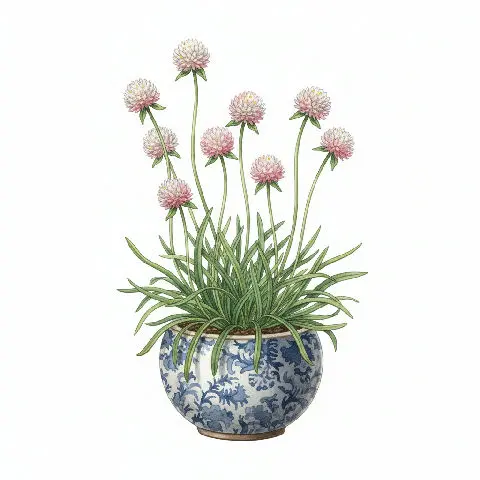
Armeria 'Joystick' is a captivating horticultural cultivar, primarily recognized for its exceptional ornamental qualities. This delightful evergreen perennial is a hybrid selection, often derived from species such as Armeria maritima or Armeria pseudoarmeria, commonly known as sea pink or thrift. It forms dense, compact mounds of linear, grass-like, light green foliage that provides continuous visual interest throughout the year.
From late spring through mid-summer, stiff, wiry stems emerge, each topped with vibrant, globe-shaped flower clusters resembling lollipops or drumsticks. These cheerful blooms are available in an array of colors including pink, red, and white, making Armeria 'Joystick' a popular choice for adding dynamic texture and color to various garden settings. Its robust nature makes it an ideal candidate for rock gardens, front-of-border plantings, container displays, and as an edging plant.
As a cultivated hybrid, its natural habitat is within garden environments globally, thriving particularly well in temperate zones. The species belongs to the Plumbaginaceae family, which includes other ornamental and some historically used plants, though Armeria 'Joystick's' primary distinction remains its aesthetic contribution to horticulture.
Trusted Scientific References
1. Authoritative external sources for Armeria Joystick
1.1 Wikipedia — Armeria Joystick
1.2 Kew POWO (Plants of the World Online)
1.3 PubMed — peer-reviewed research
1.4 NCBI Taxonomy Browser
1.5 GBIF — Global Biodiversity
1.6Armeria Joystick should be interpreted through verified botanical identity, practical care, and responsible safety language. This recovery note adds the missing context needed for a complete profile: match light to the plant's habit, use well-drained soil, water according to season, and avoid unsupported medicinal or edible claims. For publishing, the plant can be presented as a source-backed garden plant with clear care guidance, common problem diagnosis, and conservative safety wording.
1.1.Armeria Joystick — Key Features
- ✓ <strong>Botanical Name</strong> — Armeria 'Joystick'
- ✓ <strong>Family</strong> — Plumbaginaceae
- ✓ <strong>Common Names</strong> — Drumstick Thrift, Sea Pink (related to parent species)
- ✓ <strong>Plant Type</strong> — Evergreen Perennial
- ✓ <strong>Flower Color</strong> — Pink, Red, White (cultivar dependent)
- ✓ <strong>Bloom Time</strong> — Late Spring to Mid-Summer
- ✓ <strong>Sun Exposure</strong> — Full Sun
- ✓ <strong>Soil Preference</strong> — Well-drained, Normal, Sandy, or Clay
- ✓ <strong>Drought Tolerance</strong> — High
- ✓ <strong>Uses</strong> — Ornamental, Cut Flower, Dried Flower, Border, Container, Edging
1.2.Armeria Joystick — Quick Summary
- ✓ Ornamental Cultivar — Armeria 'Joystick' is a vibrant, evergreen ornamental perennial.
- ✓ No Medicinal Efficacy — Lacks documented evidence-based medicinal benefits for human health.
- ✓ Drought Tolerant — Thrives in full sun and well-drained soil, making it exceptionally low-maintenance.
- ✓ Aesthetic Appeal — Highly valued for its distinctive globe-shaped flowers and compact foliage in gardens.
- ✓ Cut & Dried Flowers — Excellent for both fresh bouquets and long-lasting dried floral arrangements.
- ✓ Minimal Toxicity — Generally considered safe for ornamental use with a very low toxicity risk.
2.Armeria Joystick — Scientific Identity
3.Armeria Joystick — Quick Facts
4.Armeria Joystick — Appearance & Identification
5.Armeria Joystick — Native Habitat
6.Armeria Joystick — Water Requirements
- ✓ Sun Exposure — Thrives in full sun conditions, requiring at least 6 hours of direct sunlight daily for optimal growth, prolific flowering, and compact form.
- ✓ Soil Requirements — Prefers normal, sandy, or clay soils that are well-drained; it tolerates a wide range of soil pH from neutral to alkaline or acidic.
- ✓ Soil Moisture — Adaptable to average to moist soil conditions, but excellent drainage is crucial to prevent root rot, particularly in heavier or poorly aerated soils.
- ✓ Care Level — Considered an easy-care plant, making it highly suitable for beginner gardeners and low-maintenance landscape designs.
- ✓ Propagation — Established clumps are easily divided in the fall or early spring, providing a straightforward method to propagate new plants or rejuvenate existing ones.
- ✓ Deadheading — Removing faded flowers (deadheading) is recommended to encourage continuous blooming throughout the season and maintain a tidy, attractive appearance.
- ✓ Watering — Highly drought-tolerant once established, requiring minimal supplemental watering except during extended periods of severe dryness.
- ✓ Fertilization — Generally requires little to no fertilization; an annual application of balanced, slow-release compost can suffice if soil nutrients are particularly poor.
Reviewed by the Flora Medical Global Botanical Review Panel
Multi-disciplinary editorial group · Botany · Ethnobotany · Herbal-medicine literature
Who reviewed this: This page was checked by the Flora Medical Global Botanical Review Panel — an in-house editorial group of botany graduates, ethnobotany researchers, and horticulture practitioners who collectively maintain our 7,000+ plant encyclopedia. Meet the team.
Our 4-step verification process
1. Taxonomic verification
Scientific names and synonyms cross-checked against Kew POWO, World Flora Online, and The Plant List.
2. Phytochemical & medicinal cross-reference
Active compounds, traditional uses, and reported activities are cross-referenced with PubMed, USDA Dr. Duke's database, and peer-reviewed ethnobotanical literature.
3. Conservation & distribution check
Distribution, ecology, and conservation status confirmed against GBIF occurrence records and the IUCN Red List.
4. Editorial & safety review
Every entry passes an editorial pass for clarity, originality, and safety notices (toxicity, contraindications, dosage caveats) before publication.
Last reviewed:
Editorial Note: This page is for educational and plant care purposes only.
Written by: Flora Medical Global Editorial Team
Reviewed by: Flora Medical Global Botanical Review Panel
Last Updated: June 15, 2026







Armeria Joystick — Comments & Community Reviews
Rate this plant