

Care Disclaimer: Plant care recommendations are general guidelines based on common growing conditions. Individual results may vary based on your local environment, climate, and care routine. If your plant is toxic, keep it away from children and pets, and consult a veterinarian if accidental ingestion occurs.
1.Arnica Montana — Overview
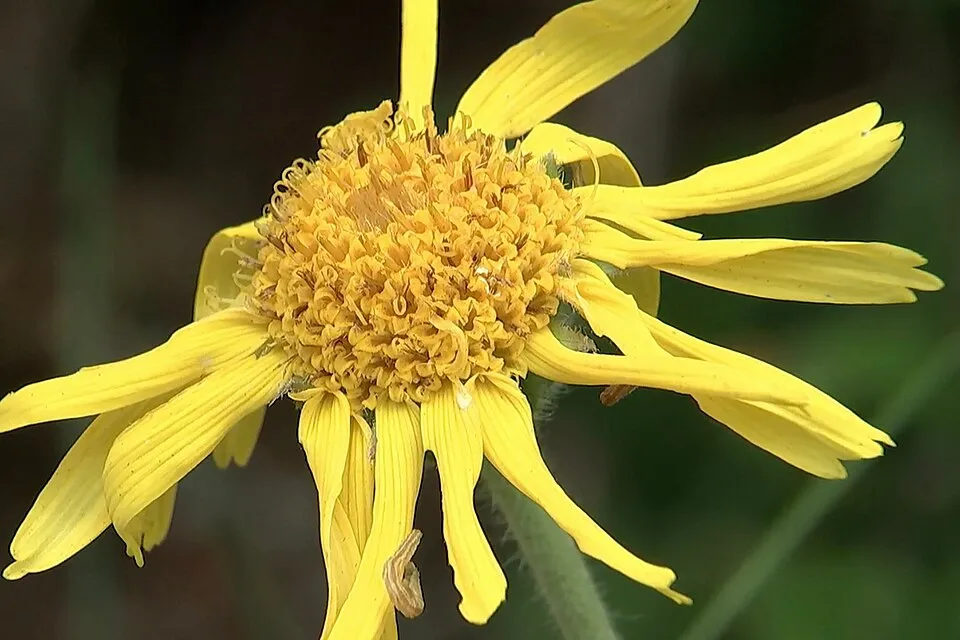
Arnica montana, commonly known as wolf's bane, leopard's bane, or mountain tobacco, is a striking perennial herb belonging to the Asteraceae (daisy) family. This resilient plant typically grows to a height of 20 to 60 cm, flourishing in the subalpine and alpine meadows, open woodlands, and acid grasslands of Central Europe, Siberia, and North America. Its morphology is characterized by a basal rosette of ovate to lanceolate leaves, from which arises an erect, hairy stem.
The stem bears one to three pairs of smaller, sessile leaves and culminates in solitary or few, large, bright yellow-orange flower heads, resembling sunflowers or large daisies. These vibrant flowers, appearing from late spring to mid-summer, are composed of numerous ray florets and central disc florets, making them easily identifiable. Arnica prefers well-drained, nutrient-poor, acidic to neutral soils and cool, moist climates, which are typical of its native mountainous habitats.
Its distribution is indicative of its hardiness and adaptability to challenging environmental conditions, though it is considered vulnerable or endangered in some parts of its European range due to habitat loss and over-harvesting.
Trusted Scientific References
1. Authoritative external sources for Arnica Montana
1.1 Wikipedia — Arnica Montana
1.2 Kew POWO (Plants of the World Online)
1.3 PubMed — peer-reviewed research
1.4 NCBI Taxonomy Browser
1.5 GBIF — Global Biodiversity
1.6Arnica Montana should be interpreted through verified botanical identity, practical care, and responsible safety language. This recovery note adds the missing context needed for a complete profile: match light to the plant's habit, use well-drained soil, water according to season, and avoid unsupported medicinal or edible claims. For publishing, the plant can be presented as a source-backed garden plant with clear care guidance, common problem diagnosis, and conservative safety wording.
1.7Arnica Montana (Arnica montana) is maintained in this recovery file as a complete garden profile with practical care, safety, and identification context. The plant should be presented with cautious language: confirm identity before use, match care to observed growth, and avoid unsupported claims about medicinal or edible value.
1.1.Arnica Montana — Key Features
- ✓ <strong>Botanical Name</strong> — Arnica montana
- ✓ <strong>Common Names</strong> — Wolf's Bane, Leopard's Bane, Mountain Tobacco
- ✓ <strong>Family</strong> — Asteraceae (Daisy Family)
- ✓ <strong>Primary Medicinal Use</strong> — Topical anti-inflammatory and analgesic
- ✓ <strong>Key Active Compounds</strong> — Helenalin (sesquiterpene lactone)
- ✓ <strong>Natural Habitat</strong> — European mountainous regions, alpine meadows
- ✓ <strong>Common Formulations</strong> — Gels, creams, infused oils, homeopathic pellets
- ✓ <strong>Safety Precaution</strong> — Strictly for external use on intact skin; toxic if ingested
- ✓ <strong>Traditional Systems</strong> — European folk medicine, Homeopathy
- ✓ <strong>Growth Habit</strong> — Perennial herb with bright yellow-orange, daisy-like flowers
1.2.Arnica Montana — Quick Summary
- ✓ Arnica montana is a perennial herb from the daisy family, primarily known for its external medicinal uses.
- ✓ It is traditionally used topically to alleviate pain, inflammation, bruising, and swelling.
- ✓ Key active compounds include sesquiterpene lactones (e.g., helenalin), flavonoids, and essential oils.
- ✓ Strict adherence to topical application on intact skin is crucial due to its inherent toxicity if ingested.
- ✓ Conventional oral ingestion is strongly contraindicated and considered unsafe by major health authorities.
- ✓ Available widely in topical gels, creams, and as highly diluted homeopathic preparations.
2.Arnica Montana — Scientific Identity
3.Arnica Montana — Quick Facts
4.Arnica Montana — Appearance & Identification
5.Arnica Montana — Native Habitat
6.Arnica Montana — Water Requirements
- ✓ Soil Preference — Thrives in well-drained, slightly acidic to neutral (pH 5.0-7.0) sandy or loamy soils, ideally enriched with moderate organic matter to mimic its native alpine habitats.
- ✓ Light Requirements — Prefers partial sun, requiring 4-6 hours of direct sunlight daily; in warmer climates, afternoon shade is beneficial to prevent scorching.
- ✓ Watering Regimen — Requires consistent moisture, ensuring the soil remains moist but never waterlogged, especially during dry periods.
- ✓ Temperature & Climate — Best suited for cool, temperate climates (USDA zones 3-8), intolerant of high heat and humidity, which can lead to fungal issues.
- ✓ Fertilization — Benefits from a light application of a balanced, slow-release organic fertilizer in early spring to support vigorous growth and abundant flowering.
- ✓ Propagation — Can be propagated by seed (requires cold stratification for germination), division of rhizomes in early spring, or root cuttings.
- ✓ Maintenance & Pruning — Deadhead spent flowers to encourage continuous blooming; prune back faded foliage after the main flowering period to maintain plant health and vigor.
Reviewed by the Flora Medical Global Botanical Review Panel
Multi-disciplinary editorial group · Botany · Ethnobotany · Herbal-medicine literature
Who reviewed this: This page was checked by the Flora Medical Global Botanical Review Panel — an in-house editorial group of botany graduates, ethnobotany researchers, and horticulture practitioners who collectively maintain our 7,000+ plant encyclopedia. Meet the team.
Our 4-step verification process
1. Taxonomic verification
Scientific names and synonyms cross-checked against Kew POWO, World Flora Online, and The Plant List.
2. Phytochemical & medicinal cross-reference
Active compounds, traditional uses, and reported activities are cross-referenced with PubMed, USDA Dr. Duke's database, and peer-reviewed ethnobotanical literature.
3. Conservation & distribution check
Distribution, ecology, and conservation status confirmed against GBIF occurrence records and the IUCN Red List.
4. Editorial & safety review
Every entry passes an editorial pass for clarity, originality, and safety notices (toxicity, contraindications, dosage caveats) before publication.
Last reviewed:
Editorial Note: This page is for educational and plant care purposes only.
Written by: Flora Medical Global Editorial Team
Reviewed by: Flora Medical Global Botanical Review Panel
Last Updated: June 15, 2026







Arnica Montana — Comments & Community Reviews
Rate this plant