

Care Disclaimer: Plant care recommendations are general guidelines based on common growing conditions. Individual results may vary based on your local environment, climate, and care routine. If your plant is toxic, keep it away from children and pets, and consult a veterinarian if accidental ingestion occurs.
1.Aster Novae-Angliae — Overview
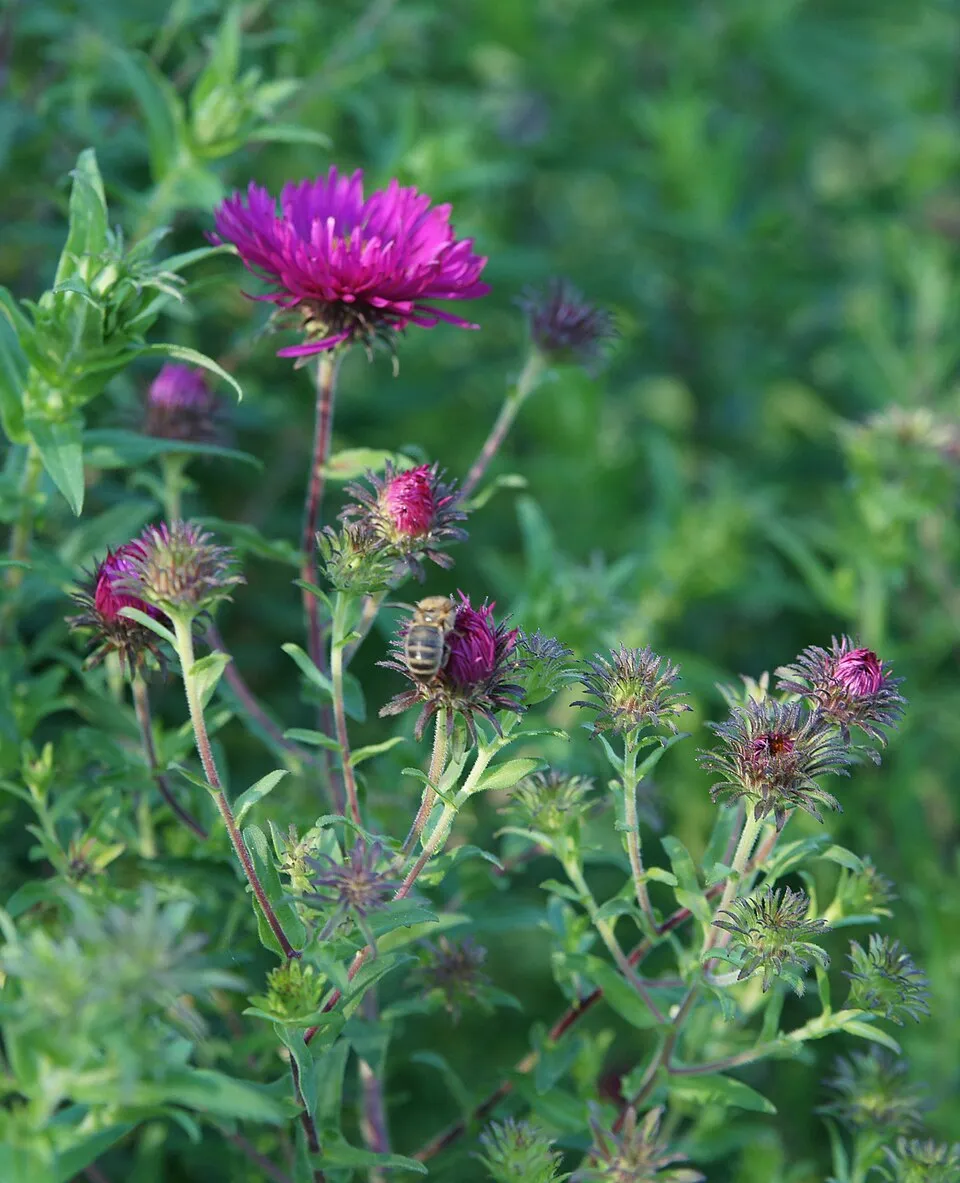
The New England Aster, botanically known as Symphyotrichum novae-angliae (formerly Aster novae-angliae), is a robust herbaceous perennial belonging to the Asteraceae family. This striking native North American plant typically grows to a height of 0.8 to 2 meters, characterized by multiple erect stems that form dense clumps. Its stems are densely covered with spreading pubescence, featuring numerous nodes below the inflorescence branches.
The leaves are lanceolate to elliptic-lanceolate, measuring between two to nine centimeters long and one to two centimeters wide, with a rough, hairy texture and smooth margins. From late summer through autumn, specifically August to October, Symphyotrichum novae-angliae produces an abundance of showy flowers. These large blossoms typically display deep pink-purple to violet ray florets surrounding a vibrant yellow center of disc florets, which are hermaphrodite and attract a wide array of pollinators.
The plant later develops dry, one-seeded fruits known as achenes.
Native across a vast range from Quebec to Alberta, extending south to North Carolina, Alabama, Arkansas, Kansas, Colorado, Wyoming, and New Mexico, the New England Aster thrives in diverse moist environments. It is commonly found flourishing in moist prairies, meadows, roadsides, and along streams. While adaptable to nutritionally poor soils, it exhibits optimal growth in rich, well-drained substrates, including sandy, loamy, and clay compositions.
This species prefers sunny locations but can also succeed in partial shade, showcasing its resilience and adaptability to various ecological niches. Its widespread distribution and ecological significance make it a cherished component of native North American flora.
Trusted Scientific References
1. Authoritative external sources for Aster Novae-Angliae
1.1 Wikipedia — Aster Novae-Angliae
1.2 Kew POWO (Plants of the World Online)
1.3 PubMed — peer-reviewed research
1.4 NCBI Taxonomy Browser
1.5 GBIF — Global Biodiversity
1.6Aster Novae-Angliae should be interpreted through verified botanical identity, practical care, and responsible safety language. This recovery note adds the missing context needed for a complete profile: match light to the plant's habit, use well-drained soil, water according to season, and avoid unsupported medicinal or edible claims. For publishing, the plant can be presented as a source-backed garden plant with clear care guidance, common problem diagnosis, and conservative safety wording.
1.1.Aster Novae-Angliae — Key Features
- ✓ <strong>Botanical Name</strong> — *Symphyotrichum novae-angliae* (formerly *Aster novae-angliae*).
- ✓ <strong>Common Name</strong> — New England Aster.
- ✓ <strong>Family</strong> — Asteraceae (Aster family).
- ✓ <strong>Growth Habit</strong> — Herbaceous perennial, typically growing 0.8 to 2 meters tall with erect, clumping stems.
- ✓ <strong>Flower Color</strong> — Showy deep pink-purple to violet ray florets with distinctive yellow centers.
- ✓ <strong>Bloom Time</strong> — Flowers abundantly from late summer through fall, typically August to October.
- ✓ <strong>Pollinator Magnet</strong> — Highly attractive to a wide range of pollinators, including bees, butterflies, and moths.
- ✓ <strong>Traditional Uses</strong> — Ethnobotanically used by Native Americans for skin issues, pain, fevers, and diarrhea.
- ✓ <strong>Key Compounds</strong> — Contains a rich profile of flavonoids, phenolic compounds, and essential oils.
- ✓ <strong>Habitat Preference</strong> — Prefers moist prairies, meadows, and roadsides, thriving in well-drained, rich to average soils.
1.2.Aster Novae-Angliae — Quick Summary
- ✓ *Symphyotrichum novae-angliae*, or New England Aster, is a robust perennial herb native to North America, celebrated for its vibrant late-season blooms.
- ✓ Traditionally used by Native Americans as a decoction for skin conditions and a poultice for pain, fevers, and diarrhea.
- ✓ Rich in beneficial compounds like flavonoids and phenolic acids, contributing to its antioxidant and anti-inflammatory potential.
- ✓ An important pollinator plant, attracting bees and butterflies, vital for ecological health and biodiversity.
- ✓ Cultivated for both ornamental beauty and its historical medicinal applications, thriving in well-drained soil and sunny locations.
- ✓ Generally considered safe for external use, but individuals with Asteraceae allergies should exercise caution.
2.Aster Novae-Angliae — Scientific Identity
3.Aster Novae-Angliae — Quick Facts
4.Aster Novae-Angliae — Appearance & Identification
5.Aster Novae-Angliae — Native Habitat
6.Aster Novae-Angliae — Water Requirements
- ✓ Soil Requirements — Thrives in rich, well-drained loamy, sandy, or clay soils, capable of growing in nutritionally poor conditions but preferring fertile ground.
- ✓ Sunlight Exposure — Requires full sun for optimal growth and abundant flowering, although it can successfully adapt to partial shade.
- ✓ Watering Schedule — Water regularly, allowing the soil surface to dry slightly between applications to prevent overwatering and potential root rot.
- ✓ Propagation by Seed — Sow fresh seeds in autumn or spring; spring-sown seeds benefit from a period of cold stratification (pre-chilling) to enhance germination rates.
- ✓ Vegetative Propagation — Divide established clumps in either spring or autumn every three years to maintain plant vigor, promote healthy growth, and encourage robust flowering.
- ✓ Post-Flowering Care — Cut back stems to the ground after blooming to stimulate strong new growth and improve overall plant health and appearance for the following season.
- ✓ Air Circulation — Ensure adequate spacing between plants to promote good air circulation, which is crucial for preventing common foliar diseases.
- ✓ Hardiness Zones — Generally hardy in USDA zones 3-8, demonstrating good resilience to a wide range of temperate climates.
Reviewed by the Flora Medical Global Botanical Review Panel
Multi-disciplinary editorial group · Botany · Ethnobotany · Herbal-medicine literature
Who reviewed this: This page was checked by the Flora Medical Global Botanical Review Panel — an in-house editorial group of botany graduates, ethnobotany researchers, and horticulture practitioners who collectively maintain our 7,000+ plant encyclopedia. Meet the team.
Our 4-step verification process
1. Taxonomic verification
Scientific names and synonyms cross-checked against Kew POWO, World Flora Online, and The Plant List.
2. Phytochemical & medicinal cross-reference
Active compounds, traditional uses, and reported activities are cross-referenced with PubMed, USDA Dr. Duke's database, and peer-reviewed ethnobotanical literature.
3. Conservation & distribution check
Distribution, ecology, and conservation status confirmed against GBIF occurrence records and the IUCN Red List.
4. Editorial & safety review
Every entry passes an editorial pass for clarity, originality, and safety notices (toxicity, contraindications, dosage caveats) before publication.
Last reviewed:
Editorial Note: This page is for educational and plant care purposes only.
Written by: Flora Medical Global Editorial Team
Reviewed by: Flora Medical Global Botanical Review Panel
Last Updated: June 15, 2026







Aster Novae-Angliae — Comments & Community Reviews
Rate this plant