
Care Disclaimer: Plant care recommendations are general guidelines based on common growing conditions. Individual results may vary based on your local environment, climate, and care routine. If your plant is toxic, keep it away from children and pets, and consult a veterinarian if accidental ingestion occurs.
1.Astilbe Thunbergii — Overview
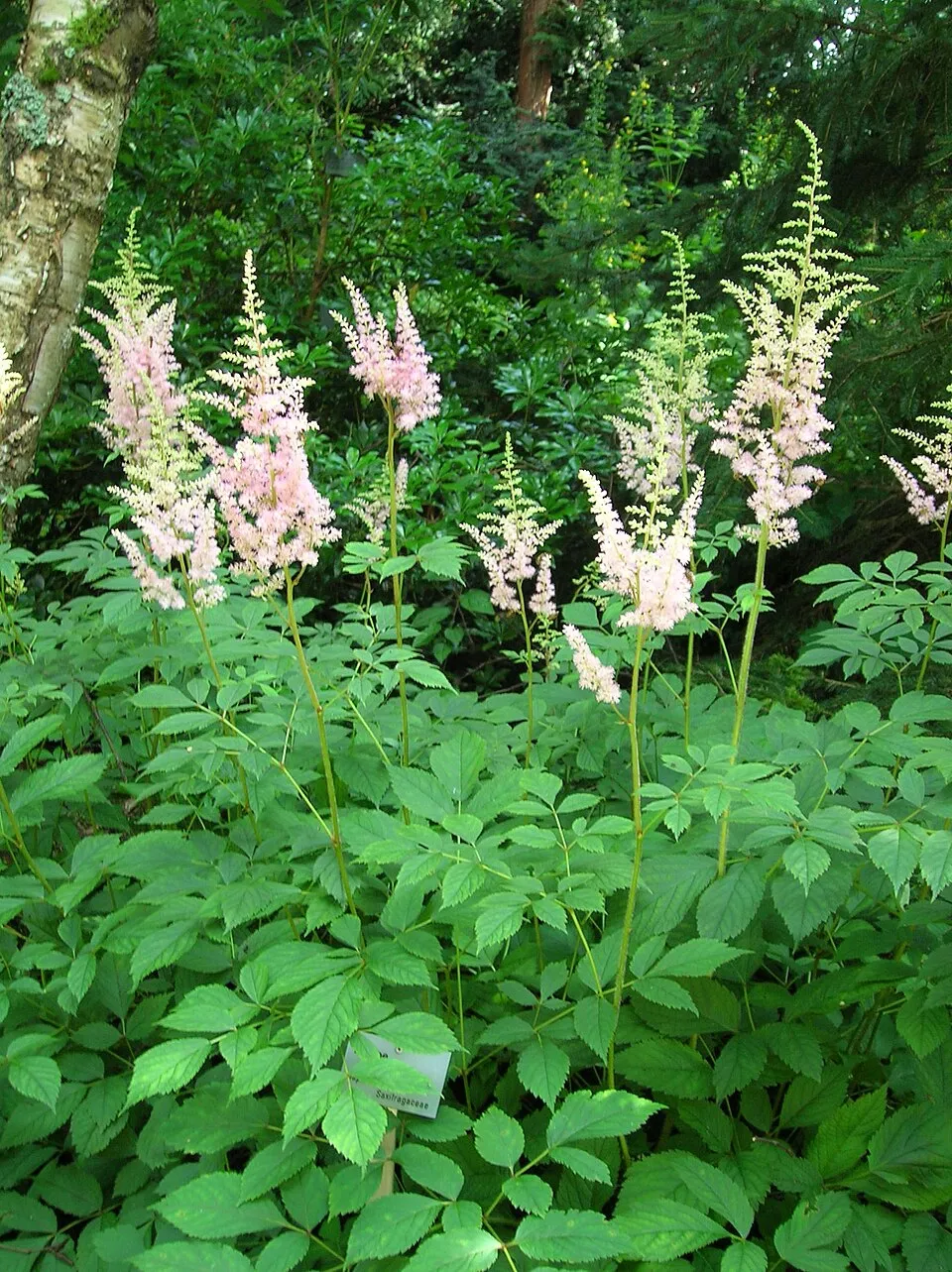
Astilbe thunbergii, commonly known as Thunberg's Astilbe or False Spirea, is an exquisite herbaceous perennial belonging to the Saxifragaceae family. This captivating plant is celebrated for its elegant plumes of flowers and lush foliage, making it a prized specimen in ornamental gardens.
Typically reaching a height of 60 to 90 cm (24 to 36 inches) with a similar spread, it forms a dense, bushy mound of deeply dissected, fern-like leaves. The foliage is a rich, dark green, often developing bronze tints in cooler temperatures or with more sun exposure, providing a striking backdrop to its vibrant blooms.
The plant's most notable feature is its inflorescence, which emerges in delicate, airy plumes from mid-summer through early autumn. These feathery flower clusters are typically white, cream, or pale pink, though cultivars may offer a broader spectrum of colors.
Each plume is composed of numerous tiny, individual flowers, creating a soft, misty appearance that is highly attractive to various pollinators, including bees and butterflies. The stems are sturdy and upright, supporting the weight of the floral display, while the root system is fibrous and rhizomatous, allowing the plant to spread gently over time and providing resilience in its native habitats.
Native to the moist, wooded slopes and stream banks of Japan, Astilbe thunbergii thrives in environments that mimic its ancestral home. It prefers consistently moist, well-drained soil rich in organic matter, indicative of its natural preference for humus-rich forest floor conditions.
Optimal growth and abundant flowering are achieved in partial to full shade, where the delicate foliage is protected from the harsh midday sun, which can scorch the leaves and diminish the plant's vigor. Its adaptability to cooler, shaded areas makes it an excellent choice for woodland gardens, shaded borders, and alongside water features.
Trusted Scientific References
1. Authoritative external sources for Astilbe Thunbergii
1.1 Wikipedia — Astilbe Thunbergii
1.2 Kew POWO (Plants of the World Online)
1.3 PubMed — peer-reviewed research
1.4 NCBI Taxonomy Browser
1.5 GBIF — Global Biodiversity
1.1.Astilbe Thunbergii — Key Features
- ✓ <strong>Botanical Name</strong> — Astilbe thunbergii (Sieb. et Zucc) Miq.
- ✓ <strong>Family</strong> — Saxifragaceae, known for ornamental and some medicinal species.
- ✓ <strong>Traditional Use</strong> — Documented use in Traditional Chinese Medicine for wounds, burns, and skin inflammation since the Tang period.
- ✓ <strong>Active Constituents</strong> — Rich in flavonoids (eucryphin, astilbin) and benzopyrans (bergenin) with confirmed pharmacological activity.
- ✓ <strong>Medicinal Action</strong> — Promotes burn wound healing, exhibits anti-inflammatory and potentially antimicrobial effects.
- ✓ <strong>Primary Application</strong> — Topical remedies for skin conditions, cuts, burns, frostbite, and dermatitis.
- ✓ <strong>Habitat</strong> — Native to moist, shaded woodlands and stream banks of Japan.
- ✓ <strong>Ornamental Value</strong> — Highly valued in gardens for its feathery plumes and fern-like foliage.
- ✓ <strong>Growth Habit</strong> — Herbaceous perennial reaching 60-90 cm, forming dense clumps.
- ✓ <strong>Root System</strong> — Fibrous and rhizomatous, enabling gentle spread and resilience.
1.2.Astilbe Thunbergii — Quick Summary
- ✓ Astilbe thunbergii is a Japanese herbaceous perennial known for its ornamental beauty.
- ✓ Traditionally used in China for centuries to treat various wounds and skin inflammatory conditions.
- ✓ Scientific studies confirm its efficacy in promoting burn wound healing, primarily due to eucryphin, bergenin, and astilbin.
- ✓ Key active compounds offer anti-inflammatory and tissue regenerative properties.
- ✓ Primarily used topically as extracts, ointments, or poultices for dermatological issues.
- ✓ Requires careful cultivation in partial shade with consistently moist, rich soil.
2.Astilbe Thunbergii — Scientific Identity
3.Astilbe Thunbergii — Quick Facts
4.Astilbe Thunbergii — Appearance & Identification
5.Astilbe Thunbergii — Native Habitat
6.Astilbe Thunbergii — Water Requirements
- ✓ Site Selection — Choose a location with partial to full shade to protect foliage from scorching, ideally receiving morning sun and afternoon shade.
- ✓ Soil Preparation — Ensure well-drained, consistently moist soil that is rich in organic matter; amend with compost or peat moss before planting.
- ✓ Watering Regime — Provide regular and consistent moisture, especially during dry periods; never allow the soil to dry out completely, particularly in hotter climates.
- ✓ Planting Depth and Spacing — Plant rhizomes just below the soil surface, spacing plants 30-60 cm (12-24 inches) apart to allow for mature growth.
- ✓ Fertilization — Apply a balanced, slow-release granular fertilizer or a layer of rich compost around the base of the plants annually in early spring.
- ✓ Pest and Disease Management — Generally resistant to most pests and diseases, but monitor for slugs, snails, and powdery mildew in humid conditions.
- ✓ Propagation — Easily propagated by dividing the rhizomes in early spring or fall every 3-4 years to maintain vigor and expand plantings.
- ✓ Winter Care — In colder zones, a layer of mulch can protect shallow rhizomes from frost heave, though most Astilbes are quite cold-hardy.
Reviewed by the Flora Medical Global Botanical Review Panel
Multi-disciplinary editorial group · Botany · Ethnobotany · Herbal-medicine literature
Who reviewed this: This page was checked by the Flora Medical Global Botanical Review Panel — an in-house editorial group of botany graduates, ethnobotany researchers, and horticulture practitioners who collectively maintain our 7,000+ plant encyclopedia. Meet the team.
Our 4-step verification process
1. Taxonomic verification
Scientific names and synonyms cross-checked against Kew POWO, World Flora Online, and The Plant List.
2. Phytochemical & medicinal cross-reference
Active compounds, traditional uses, and reported activities are cross-referenced with PubMed, USDA Dr. Duke's database, and peer-reviewed ethnobotanical literature.
3. Conservation & distribution check
Distribution, ecology, and conservation status confirmed against GBIF occurrence records and the IUCN Red List.
4. Editorial & safety review
Every entry passes an editorial pass for clarity, originality, and safety notices (toxicity, contraindications, dosage caveats) before publication.
Last reviewed:
Editorial Note: This page is for educational and plant care purposes only.
Written by: Flora Medical Global Editorial Team
Reviewed by: Flora Medical Global Botanical Review Panel
Last Updated: June 15, 2026







Astilbe Thunbergii — Comments & Community Reviews
Rate this plant