


Care Disclaimer: Plant care recommendations are general guidelines based on common growing conditions. Individual results may vary based on your local environment, climate, and care routine. If your plant is toxic, keep it away from children and pets, and consult a veterinarian if accidental ingestion occurs.
1.Bamboo Black — Overview
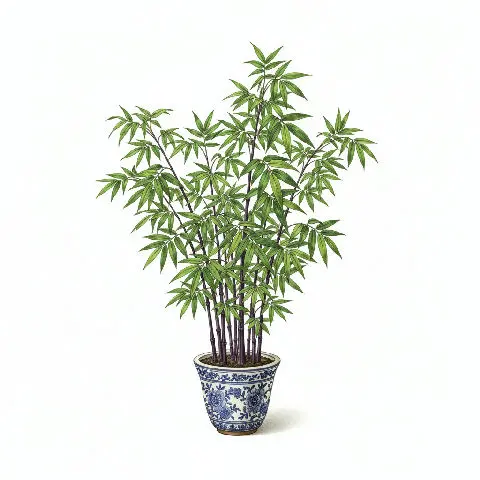
Phyllostachys nigra, widely recognized as Black Bamboo or Purple Bamboo, is a captivating and distinctive species within the grass family, Poaceae. Native to the Hunan Province of China, its defining characteristic is the remarkable transformation of its culms (stems) from an initial vibrant green to a striking, lustrous purplish-black as they mature over one to three years, a process influenced by sun exposure and age. This running bamboo species can reach impressive heights of up to 35 feet with culm diameters of 2 inches, forming graceful clumps of slender, arching canes.
Its abundant, lance-shaped leaves typically measure 4–13 cm in length. Beyond its significant ornamental value, Black Bamboo plays a crucial ecological role, effectively stabilizing soil and providing essential habitat for various small fauna. Cultivated for centuries across Asia and now popular in temperate gardens worldwide, its strong yet flexible culms have historically been a valuable resource for traditional crafts, basketry, and musical instruments.
Like many bamboo species, Phyllostachys nigra is monocarpic, undergoing synchronous flowering events typically every 40-120 years, after which the parent plants generally die back. This unique life cycle and the plant’s enduring presence in East Asian culture symbolize strength, resilience, and longevity.
Trusted Scientific References
1. Authoritative external sources for Phyllostachys nigra
1.1 Wikipedia — Phyllostachys nigra
1.2 Kew POWO (Plants of the World Online)
1.3 PubMed — peer-reviewed research
1.4 NCBI Taxonomy Browser
1.5 GBIF — Global Biodiversity
1.6Bamboo Black should be interpreted through verified botanical identity, practical care, and responsible safety language. This recovery note adds the missing context needed for a complete profile: match light to the plant's habit, use well-drained soil, water according to season, and avoid unsupported medicinal or edible claims. For publishing, the plant can be presented as a source-backed garden plant with clear care guidance, common problem diagnosis, and conservative safety wording.
1.1.Bamboo Black — Key Features
- ✓ <strong>Distinctive Black Culms</strong> — Stems mature from green to a striking, glossy purplish-black.
- ✓ <strong>Running Bamboo Species</strong> — Characterized by vigorous rhizome spread, requiring containment in gardens.
- ✓ <strong>Rich in Flavonoids</strong> — Contains potent antioxidant compounds like orientin, vitexin, and isovitexin.
- ✓ <strong>Ornamental Value</strong> — Highly prized for its unique aesthetic in temperate landscapes worldwide.
- ✓ <strong>Ecological Benefits</strong> — Acts as an effective soil stabilizer and provides habitat for wildlife.
- ✓ <strong>Traditional Craft Material</strong> — Strong, flexible culms used for basketry, instruments, and construction.
- ✓ <strong>Monocarpic Flowering</strong> — Flowers synchronously at long intervals (40-120 years), after which plants often die.
- ✓ <strong>Native to China</strong> — Originates from Hunan Province, widely cultivated globally.
- ✓ <strong>Anti</strong> — inflammatory Potential — Bioactive compounds contribute to its ability to reduce inflammation.
- ✓ <strong>Source of Silica</strong> — Provides a natural source of silica, beneficial for connective tissue health.
1.2.Bamboo Black — Quick Summary
- ✓ Black Bamboo (Phyllostachys nigra) is a distinctive grass known for its culms turning glossy black.
- ✓ Native to China, it's valued ornamentally, ecologically, and traditionally for crafts and medicine.
- ✓ Rich in flavone C-glycosides like orientin and vitexin, contributing to its antioxidant and anti-inflammatory properties.
- ✓ Traditional uses include supporting respiratory health, detoxification, and overall well-being.
- ✓ Requires proper cultivation management due to its running growth habit and specific care for optimal health.
- ✓ Caution is advised for pregnant/nursing individuals and those on specific medications; proper preparation is crucial for edible parts.
2.Bamboo Black — Scientific Identity
3.Bamboo Black — Quick Facts
4.Bamboo Black — Appearance & Identification
5.Bamboo Black — Native Habitat
6.Bamboo Black — Water Requirements
- ✓ Climate Preference — Black Bamboo thrives in temperate climates, tolerating mild winters and preferring areas with consistent moisture.
- ✓ Soil Requirements — It requires well-drained, fertile soil with a slightly acidic to neutral pH for optimal growth and culm development.
- ✓ Sunlight Exposure — Full sun to partial shade is ideal; ample sunlight encourages the striking black coloration of the culms.
- ✓ Watering Regime — Regular and consistent watering is crucial, especially during dry periods and for newly established plants.
- ✓ Propagation Techniques — Primarily propagated through rhizome division, best done in spring or early summer to allow establishment before winter.
- ✓ Containment and Management — As a running bamboo, it benefits from rhizome barriers or strategic planting to prevent aggressive spread in gardens.
- ✓ Pruning Practices — Annual pruning of older, less vigorous culms and selective thinning promotes air circulation and encourages new, healthy growth.
- ✓ Fertilization — A balanced, slow-release fertilizer in spring can support robust growth, particularly if soil nutrients are lacking.
Reviewed by the Flora Medical Global Botanical Review Panel
Multi-disciplinary editorial group · Botany · Ethnobotany · Herbal-medicine literature
Who reviewed this: This page was checked by the Flora Medical Global Botanical Review Panel — an in-house editorial group of botany graduates, ethnobotany researchers, and horticulture practitioners who collectively maintain our 7,000+ plant encyclopedia. Meet the team.
Our 4-step verification process
1. Taxonomic verification
Scientific names and synonyms cross-checked against Kew POWO, World Flora Online, and The Plant List.
2. Phytochemical & medicinal cross-reference
Active compounds, traditional uses, and reported activities are cross-referenced with PubMed, USDA Dr. Duke's database, and peer-reviewed ethnobotanical literature.
3. Conservation & distribution check
Distribution, ecology, and conservation status confirmed against GBIF occurrence records and the IUCN Red List.
4. Editorial & safety review
Every entry passes an editorial pass for clarity, originality, and safety notices (toxicity, contraindications, dosage caveats) before publication.
Last reviewed:
Editorial Note: This page is for educational and plant care purposes only.
Written by: Flora Medical Global Editorial Team
Reviewed by: Flora Medical Global Botanical Review Panel
Last Updated: June 15, 2026







Bamboo Black — Comments & Community Reviews
Rate this plant