


Care Disclaimer: Plant care recommendations are general guidelines based on common growing conditions. Individual results may vary based on your local environment, climate, and care routine. If your plant is toxic, keep it away from children and pets, and consult a veterinarian if accidental ingestion occurs.
1.Basil Sweet — Overview
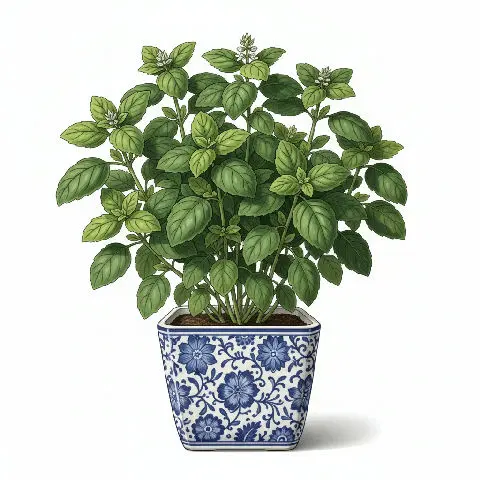
Ocimum basilicum, universally recognized as Sweet Basil, is a cherished aromatic annual herb indigenous to the Lamiaceae, or mint, family. Its native range spans the tropical belts from Central Africa all the way to Southeast Asia, with its historical cultivation tracing back over five millennia, firmly rooted in ancient India.
The very name 'basil' is thought to originate from the Greek 'basileus,' signifying 'king,' a fitting tribute to its noble fragrance and its esteemed role in royal medicinal preparations and luxurious perfumes throughout history.
This vibrant plant typically presents as a bushy specimen, commonly attaining heights of 30 to 60 centimeters. It is easily identified by its lush, bright green leaves, which are characteristically ovate to broadly ovate in shape, often displaying smooth or subtly toothed margins. These leaves are the source of its signature sweet, slightly peppery, and intensely fragrant aroma.
Sweet Basil produces small, delicate, bilabiate flowers, ranging in color from pristine white to soft pale pink, which are elegantly arranged in terminal spikes atop the plant's stems. Its adaptability has led to widespread cultivation globally, making it a staple in diverse culinary traditions and a significant herb in various traditional healing systems.
Trusted Scientific References
1. Authoritative external sources for Ocimum basilicum
1.1 Wikipedia — Ocimum basilicum
1.2 Kew POWO (Plants of the World Online)
1.3 PubMed — peer-reviewed research
1.4 NCBI Taxonomy Browser
1.5 GBIF — Global Biodiversity
1.6Basil Sweet should be interpreted through verified botanical identity, practical care, and responsible safety language. This recovery note adds the missing context needed for a complete profile: match light to the plant's habit, use well-drained soil, water according to season, and avoid unsupported medicinal or edible claims. For publishing, the plant can be presented as a source-backed garden plant with clear care guidance, common problem diagnosis, and conservative safety wording.
1.1.Basil Sweet — Key Features
- ✓ <strong>Distinctive Sweet</strong> — Peppery Aroma — Renowned for its unique, rich, and inviting fragrance.
- ✓ <strong>Member of Lamiaceae Family</strong> — Shares characteristics with other mints, including square stems and opposite leaves.
- ✓ <strong>Rich Phytochemical Profile</strong> — Contains a diverse array of essential oils, flavonoids, and phenolic acids.
- ✓ <strong>Extensive Traditional Medicine History</strong> — Utilized for millennia in Ayurveda, Unani, and TCM.
- ✓ <strong>Versatile Culinary Herb</strong> — A staple in Mediterranean, Asian, and other global cuisines.
- ✓ <strong>Potent Anti</strong> — inflammatory Properties — Helps alleviate pain and swelling through natural compounds.
- ✓ <strong>Significant Antimicrobial Activity</strong> — Effective against various bacteria, fungi, and some viruses.
- ✓ <strong>Powerful Antioxidant Source</strong> — Protects cells from damage caused by free radicals.
- ✓ <strong>Adaptogenic Potential</strong> — Supports the body's ability to cope with stress and maintain balance.
- ✓ <strong>Easy to Cultivate Annual Herb</strong> — Popular among home gardeners for its straightforward growing requirements.
1.2.Basil Sweet — Quick Summary
- ✓ Sweet Basil (Ocimum basilicum) is a versatile aromatic herb from the mint family.
- ✓ Historically valued in traditional medicine for its adaptogenic, anti-inflammatory, and antimicrobial properties.
- ✓ Modern research supports its antioxidant, antiviral, and neuroprotective benefits, driven by compounds like eugenol and linalool.
- ✓ Widely used in culinary applications and as a source of essential oil for aromatherapy and topical use.
- ✓ Requires careful consideration regarding dosage and potential interactions, especially in concentrated forms or for specific health conditions.
- ✓ A potent natural resource for both flavor enhancement and holistic well-being.
2.Basil Sweet — Scientific Identity
3.Basil Sweet — Quick Facts
4.Basil Sweet — Appearance & Identification
5.Basil Sweet — Native Habitat
6.Basil Sweet — Water Requirements
- ✓ Seed Sowing — Sow Sweet Basil seeds indoors 6-8 weeks before the last frost or directly outdoors after all danger of frost has passed.
- ✓ Sunlight Requirement — Ensure plants receive at least 6-8 hours of direct sunlight daily for optimal growth and essential oil production.
- ✓ Soil Preference — Plant in well-draining, fertile soil with a pH between 6.0 and 7.0, enriched with organic matter.
- ✓ Watering Regimen — Keep the soil consistently moist but not waterlogged; water deeply when the top inch of soil feels dry.
- ✓ Pruning and Pinching — Pinch off the central stem once the plant has 6-8 true leaves to encourage bushier growth and prevent premature flowering.
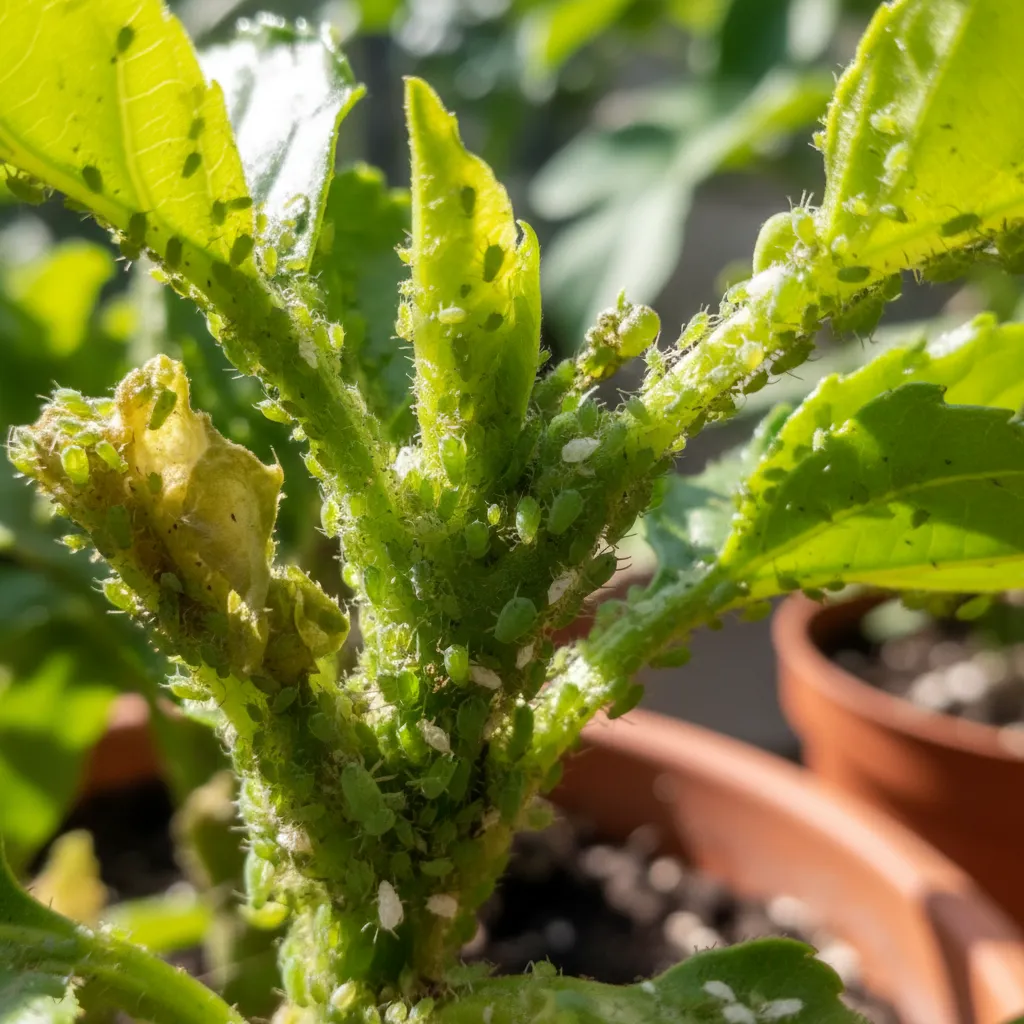
- ✓ Pest Management — Monitor for common pests like aphids and spider mites; use organic insecticidal soap or neem oil if necessary.
- ✓ Harvesting Technique — Harvest leaves regularly by pinching off the top sets of leaves to encourage continuous production throughout the growing season.
- ✓ Climate Consideration — Thrives in warm temperatures; protect from cold drafts and bring indoors or cover if temperatures drop below 10°C (50°F).
Reviewed by the Flora Medical Global Botanical Review Panel
Multi-disciplinary editorial group · Botany · Ethnobotany · Herbal-medicine literature
Who reviewed this: This page was checked by the Flora Medical Global Botanical Review Panel — an in-house editorial group of botany graduates, ethnobotany researchers, and horticulture practitioners who collectively maintain our 7,000+ plant encyclopedia. Meet the team.
Our 4-step verification process
1. Taxonomic verification
Scientific names and synonyms cross-checked against Kew POWO, World Flora Online, and The Plant List.
2. Phytochemical & medicinal cross-reference
Active compounds, traditional uses, and reported activities are cross-referenced with PubMed, USDA Dr. Duke's database, and peer-reviewed ethnobotanical literature.
3. Conservation & distribution check
Distribution, ecology, and conservation status confirmed against GBIF occurrence records and the IUCN Red List.
4. Editorial & safety review
Every entry passes an editorial pass for clarity, originality, and safety notices (toxicity, contraindications, dosage caveats) before publication.
Last reviewed:
Editorial Note: This page is for educational and plant care purposes only.
Written by: Flora Medical Global Editorial Team
Reviewed by: Flora Medical Global Botanical Review Panel
Last Updated: June 15, 2026







Basil Sweet — Comments & Community Reviews
Rate this plant