


Care Disclaimer: Plant care recommendations are general guidelines based on common growing conditions. Individual results may vary based on your local environment, climate, and care routine. If your plant is toxic, keep it away from children and pets, and consult a veterinarian if accidental ingestion occurs.
1.Bean Bush — Overview
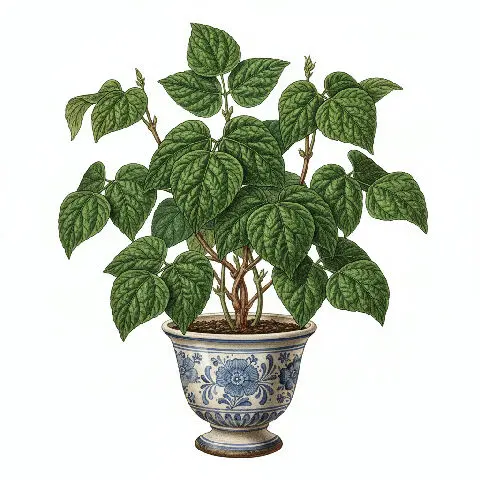
Phaseolus vulgaris, universally known as the common bean or bush bean, is a profoundly significant herbaceous annual plant within the Fabaceae family, cultivated globally for its versatile edible components, including dry seeds, green pods, and young leaves. Its origins trace back to Mesoamerica, with independent domestication events occurring in both Peru and Mexico approximately 5,000 to 8,000 years ago.
This ancient lineage underscores its role as a fundamental pillar of global agriculture and human nutrition. Following its introduction to Europe by Spanish explorers in the 15th and 16th centuries, the plant rapidly spread across Africa and Asia, solidifying its status as a dietary staple worldwide.
Botanically, Phaseolus vulgaris is characterized by its symbiotic relationship with Rhizobium bacteria, enabling nitrogen fixation in its root nodules and enriching soil fertility. Bush bean varieties typically exhibit a compact, determinate growth habit, producing their yield concurrently and eliminating the need for staking, a key distinction from indeterminate pole bean types. The plant features trifoliate leaves, composed of ovate leaflets, and self-pollinating flowers that range in color from white, pink, purple, to bicolored.
These flowers mature into pods, each housing several seeds. The genetic diversity within P. vulgaris is remarkable, leading to an extensive array of cultivars such as kidney, pinto, navy, black, and green (snap) beans, each varying in size, shape, and color.
Nutritionally, it is an exceptional source of protein, dietary fiber, complex carbohydrates, and vital micronutrients including folate, iron, magnesium, and potassium, making it an indispensable food source, especially in plant-based diets and for global food security.
Trusted Scientific References
1. Authoritative external sources for Phaseolus vulgaris
1.1 Wikipedia — Phaseolus vulgaris
1.2 Kew POWO (Plants of the World Online)
1.3 PubMed — peer-reviewed research
1.4 NCBI Taxonomy Browser
1.5 GBIF — Global Biodiversity
1.1.Bean Bush — Key Features
- ✓ <strong>Nitrogen</strong> — fixing legume, enriching soil fertility.
- ✓ <strong>High content of</strong> — High content of dietary fiber, promoting digestive health.
- ✓ <strong>Excellent source of plant</strong> — based protein and essential amino acids.
- ✓ <strong>Contains alpha</strong> — amylase inhibitors (phaseolamin) for starch blocking.
- ✓ <strong>Rich in vital</strong> — Rich in vital minerals like iron, magnesium, and potassium.
- ✓ <strong>Significant source of</strong> — Significant source of folate (Vitamin B9).
- ✓ <strong>Diverse range of</strong> — Diverse range of cultivars, including kidney, pinto, black, and navy beans.
- ✓ <strong>Requires thorough cooking</strong> — Requires thorough cooking to neutralize naturally occurring toxic lectins.
- ✓ <strong>Originates from Mesoamerica,</strong> — Originates from Mesoamerica, now cultivated worldwide.
- ✓ <strong>Contributes to blood</strong> — Contributes to blood sugar stability and cholesterol reduction.
1.2.Bean Bush — Quick Summary
- ✓ Global dietary staple, rich in protein, fiber, and micronutrients.
- ✓ Contains alpha-amylase inhibitors, beneficial for weight management and blood sugar control.
- ✓ Raw beans are toxic due to lectins; thorough cooking is critical for safety.
- ✓ Supports digestive health, cardiovascular function, and provides antioxidant protection.
- ✓ Caution advised for individuals on diabetes medication and during pregnancy/breastfeeding.
2.Bean Bush — Scientific Identity
3.Bean Bush — Quick Facts
4.Bean Bush — Appearance & Identification
5.Bean Bush — Native Habitat
6.Bean Bush — Water Requirements
- ✓ Climate and Soil — Phaseolus vulgaris thrives in warm climates as an annual, requiring well-drained, fertile soil with a pH range of 6.0 to 7.0 for optimal growth.
- ✓ Planting — Seeds are typically direct-sown after the last frost date, planted 1-2 inches deep and 3-6 inches apart, with rows spaced 18-24 inches apart.
- ✓ Watering — Consistent moisture is crucial, especially during flowering and pod development; avoid overwatering which can lead to root rot.
- ✓ Sunlight — Requires full sun exposure, meaning at least 6-8 hours of direct sunlight daily for robust growth and yield.
- ✓ Fertilization — Due to its nitrogen-fixing capabilities, P. vulgaris has a low nitrogen requirement; a balanced fertilizer can be applied at planting if soil fertility is poor.
- ✓ Pest and Disease Management — Implement crop rotation and monitor for common pests like aphids and bean beetles, and diseases such as rust and powdery mildew, using organic methods when possible.
- ✓ Harvest — Green beans are harvested young and tender, while dry beans are left on the plant until pods are dry, brittle, and the seeds rattle inside.
Reviewed by the Flora Medical Global Botanical Review Panel
Multi-disciplinary editorial group · Botany · Ethnobotany · Herbal-medicine literature
Who reviewed this: This page was checked by the Flora Medical Global Botanical Review Panel — an in-house editorial group of botany graduates, ethnobotany researchers, and horticulture practitioners who collectively maintain our 7,000+ plant encyclopedia. Meet the team.
Our 4-step verification process
1. Taxonomic verification
Scientific names and synonyms cross-checked against Kew POWO, World Flora Online, and The Plant List.
2. Phytochemical & medicinal cross-reference
Active compounds, traditional uses, and reported activities are cross-referenced with PubMed, USDA Dr. Duke's database, and peer-reviewed ethnobotanical literature.
3. Conservation & distribution check
Distribution, ecology, and conservation status confirmed against GBIF occurrence records and the IUCN Red List.
4. Editorial & safety review
Every entry passes an editorial pass for clarity, originality, and safety notices (toxicity, contraindications, dosage caveats) before publication.
Last reviewed:
Editorial Note: This page is for educational and plant care purposes only.
Written by: Flora Medical Global Editorial Team
Reviewed by: Flora Medical Global Botanical Review Panel
Last Updated: June 15, 2026







Bean Bush — Comments & Community Reviews
Rate this plant