


Care Disclaimer: Plant care recommendations are general guidelines based on common growing conditions. Individual results may vary based on your local environment, climate, and care routine. If your plant is toxic, keep it away from children and pets, and consult a veterinarian if accidental ingestion occurs.
1.Beet — Overview
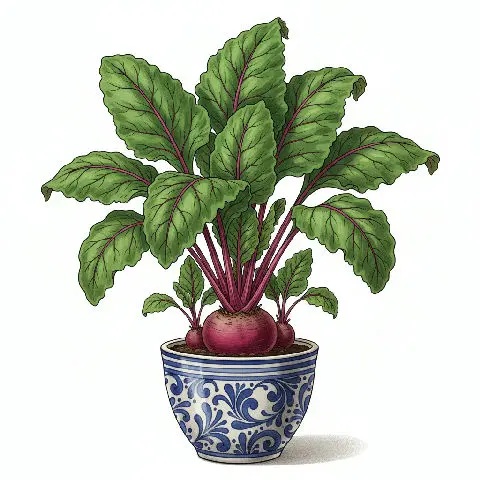
Beta vulgaris, commonly known as beet or beetroot, is a highly versatile biennial plant belonging to the Amaranthaceae family, previously classified under Chenopodiaceae. Its origins trace back to the Mediterranean region, where its wild progenitor, the sea beet (Beta vulgaris subsp. maritima), thrives in coastal, saline environments.
This evolutionary history accounts for the cultivated beet's remarkable tolerance to various soil conditions. Historically, the plant was initially cultivated primarily for its nutrient-rich leaves, with its fleshy taproot gaining culinary and medicinal prominence much later, around the Roman Empire era. By the 16th century, selective breeding led to the development of various distinct cultivars, including the iconic red-rooted garden beet.
Botanically, the garden beet (Beta vulgaris subsp. vulgaris) is characterized by its robust, often deep purple-red, globe-shaped or cylindrical taproot, which serves as a significant storage organ rich in carbohydrates. Its leaves emerge in a basal rosette, typically ovate to cordate in shape, with colors ranging from vibrant green to reddish-purple, often accentuated by prominent red veins.
In its second year of growth, the plant produces an erect, branching flower stalk bearing small, inconspicuous green flowers. These flowers mature into clusters of small, hard, dry fruits, each containing minute seeds, completing its biennial life cycle. Beyond the garden beet, Beta vulgaris encompasses other significant cultivar groups such as sugar beet (subsp.
vulgaris altissima), fodder beet (subsp. vulgaris crassa), and Swiss chard (subsp. vulgaris cicla), each selectively bred for specific agricultural purposes.
Trusted Scientific References
1. Authoritative external sources for Beta vulgaris
1.1 Wikipedia — Beta vulgaris
1.2 Kew POWO (Plants of the World Online)
1.3 PubMed — peer-reviewed research
1.4 NCBI Taxonomy Browser
1.5 GBIF — Global Biodiversity
1.6Beet should be interpreted through verified botanical identity, practical care, and responsible safety language. This recovery note adds the missing context needed for a complete profile: match light to the plant's habit, use well-drained soil, water according to season, and avoid unsupported medicinal or edible claims. For publishing, the plant can be presented as a source-backed garden plant with clear care guidance, common problem diagnosis, and conservative safety wording.
1.1.Beet — Key Features
- ✓ <strong>Scientific Name</strong> — Beta vulgaris
- ✓ <strong>Family</strong> — Amaranthaceae (formerly Chenopodiaceae)
- ✓ <strong>Edible Parts</strong> — Taproot (beetroot) and leaves (beet greens)
- ✓ <strong>Key Phytochemicals</strong> — Betalains, Dietary Nitrates, Flavonoids
- ✓ <strong>Primary Medicinal Benefits</strong> — Blood pressure regulation, antioxidant, anti-inflammatory, digestive support
- ✓ <strong>Cultivation</strong> — Biennial plant, prefers full sun and well-drained, fertile soil
- ✓ <strong>Historical Significance</strong> — Ancient origins in the Mediterranean, initially cultivated for leaves
- ✓ <strong>Distinctive Feature</strong> — Deep red-purple color derived from unique betalain pigments
- ✓ <strong>Common Names</strong> — Beet, Beetroot, Garden Beet, Red Beet
1.2.Beet — Quick Summary
- ✓ Nutrient-dense root and greens, packed with essential vitamins, minerals, and unique phytochemicals.
- ✓ Rich in betalains, responsible for its vibrant color, potent antioxidant, and anti-inflammatory properties.
- ✓ High dietary nitrate content supports cardiovascular health and enhances athletic performance.
- ✓ Traditionally used as a blood tonic, digestive aid, and diuretic in various folk medicine systems.
- ✓ Highly versatile in culinary applications, enjoyed raw, cooked, juiced, or as a powdered supplement.
- ✓ Important to be aware of potential side effects like beeturia and oxalate content, especially for susceptible individuals.
2.Beet — Scientific Identity
3.Beet — Quick Facts
4.Beet — Appearance & Identification
5.Beet — Native Habitat
6.Beet — Water Requirements
- ✓ Soil Preparation — Beta vulgaris thrives in well-drained, fertile, deep sandy loam or silty loam soils with a pH between 6.0 and 7.0, ideally enriched with compost or aged manure.
- ✓ Planting — Sow seeds directly 1/2 to 1 inch deep, 1-2 inches apart, in rows spaced 12-18 inches apart. Planting can occur in early spring for a summer harvest or late summer for an autumn harvest.
- ✓ Watering — Requires consistent and ample moisture, especially during dry periods, to ensure tender root development and prevent woodiness; avoid overhead watering to reduce disease risk.
- ✓ Sunlight — Prefers full sun exposure, meaning at least 6 hours of direct sunlight daily, though it can tolerate partial shade, which may result in smaller roots.
- ✓ Fertilization — Benefits from a balanced organic fertilizer applied at planting, with a side dressing of nitrogen-rich fertilizer for leaf growth or potassium/phosphorus for root development.
- ✓ Pests and Diseases — Monitor for common pests like leaf miners, aphids, and flea beetles, and diseases such as Cercospora leaf spot; practice good garden hygiene and crop rotation to prevent issues.
- ✓ Harvesting — Beet greens can be harvested when young and tender. Roots are typically ready for harvest 50-70 days after planting when they reach 2-4 inches in diameter; loosen soil around roots before pulling.
- ✓ Crop Rotation — Implement a 3-4 year crop rotation cycle to prevent the buildup of soil-borne pathogens and pests, avoiding planting beets in the same spot consecutively.
Reviewed by the Flora Medical Global Botanical Review Panel
Multi-disciplinary editorial group · Botany · Ethnobotany · Herbal-medicine literature
Who reviewed this: This page was checked by the Flora Medical Global Botanical Review Panel — an in-house editorial group of botany graduates, ethnobotany researchers, and horticulture practitioners who collectively maintain our 7,000+ plant encyclopedia. Meet the team.
Our 4-step verification process
1. Taxonomic verification
Scientific names and synonyms cross-checked against Kew POWO, World Flora Online, and The Plant List.
2. Phytochemical & medicinal cross-reference
Active compounds, traditional uses, and reported activities are cross-referenced with PubMed, USDA Dr. Duke's database, and peer-reviewed ethnobotanical literature.
3. Conservation & distribution check
Distribution, ecology, and conservation status confirmed against GBIF occurrence records and the IUCN Red List.
4. Editorial & safety review
Every entry passes an editorial pass for clarity, originality, and safety notices (toxicity, contraindications, dosage caveats) before publication.
Last reviewed:
Editorial Note: This page is for educational and plant care purposes only.
Written by: Flora Medical Global Editorial Team
Reviewed by: Flora Medical Global Botanical Review Panel
Last Updated: June 15, 2026







Beet — Comments & Community Reviews
Rate this plant