
Care Disclaimer: Plant care recommendations are general guidelines based on common growing conditions. Individual results may vary based on your local environment, climate, and care routine. If your plant is toxic, keep it away from children and pets, and consult a veterinarian if accidental ingestion occurs.
1.Berberis Julianae — Overview
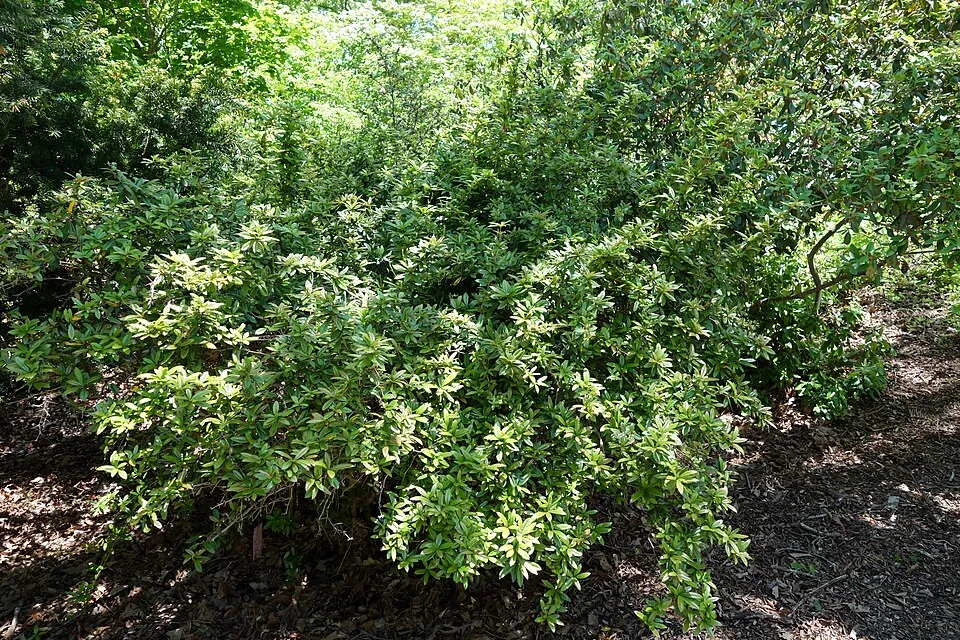
Berberis julianae, commonly known as Chinese Barberry, Juliana’s Barberry, or Wintergreen Barberry, is a robust, evergreen shrub native to the mountainous regions of central China. This resilient member of the Berberidaceae family typically reaches heights of 6 to 10 feet, forming dense, spiny thickets. Its distinctive foliage consists of large, coriaceous (leathery) leaves that are sharply serrated, concolorous (uniform in color), and arranged in clusters on short shoots. While primarily evergreen, the leaves may sometimes exhibit an attractive bronze tint in autumn, adding to its ornamental appeal.
The stems are heavily armed with prominent triple spines at each node, making it an effective barrier plant. In spring, Berberis julianae produces clusters of small, fragrant yellow flowers, which are later succeeded by purplish-black berries that persist into winter, providing a food source for wildlife. This adaptable shrub thrives in moist, well-drained, slightly acidic soils, tolerating both full sun and partial shade. It demonstrates remarkable resistance to drought, deer, and urban pollution, contributing to its widespread use in landscaping.
Introduced to cultivation in the United Kingdom in the early 20th century, Berberis julianae has since naturalized and is considered invasive in several eastern states of the United States, highlighting the importance of responsible planting. Its scientific name, Berberis julianae, was bestowed by Camillo Schneider in honor of his wife.
Trusted Scientific References
1. Authoritative external sources for Berberis julianae
1.1 Wikipedia — Berberis julianae
1.2 Kew POWO (Plants of the World Online)
1.3 PubMed — peer-reviewed research
1.4 NCBI Taxonomy Browser
1.5 GBIF — Global Biodiversity
1.6Berberis Julianae should be interpreted through verified botanical identity, practical care, and responsible safety language. This recovery note adds the missing context needed for a complete profile: match light to the plant's habit, use well-drained soil, water according to season, and avoid unsupported medicinal or edible claims. For publishing, the plant can be presented as a source-backed garden plant with clear care guidance, common problem diagnosis, and conservative safety wording.
1.1.Berberis Julianae — Key Features
- ✓ <strong>Botanical Name</strong> — Berberis julianae
- ✓ <strong>Common Names</strong> — Chinese Barberry, Juliana’s Barberry, Wintergreen Barberry
- ✓ <strong>Plant Family</strong> — Berberidaceae
- ✓ <strong>Key Bioactive Compound</strong> — Berberine (isoquinoline alkaloid)
- ✓ <strong>Growth Habit</strong> — Dense, evergreen shrub reaching 6-10 feet in height
- ✓ <strong>Distinctive Feature</strong> — Sharp, triple spines at nodes and sharply serrated, leathery leaves
- ✓ <strong>Environmental Tolerance</strong> — Highly tolerant of drought, deer, and urban conditions
- ✓ <strong>Traditional Uses</strong> — Primarily for antimicrobial, anti-inflammatory, and digestive support (based on genus)
- ✓ <strong>Invasive Potential</strong> — Considered invasive in some regions outside its native range due to its hardiness and spread.
- ✓ <strong>Medicinal Parts</strong> — Primarily the root and stem bark are utilized for their rich alkaloid content.
1.2.Berberis Julianae — Quick Summary
- ✓ Berberis julianae is an evergreen shrub native to central China, characterized by its spiny branches and yellow flowers.
- ✓ It is a source of potent isoquinoline alkaloids, most notably berberine, which confers significant medicinal benefits.
- ✓ Renowned for its antimicrobial, anti-inflammatory, antioxidant, and blood sugar regulating properties, impacting diverse health areas.
- ✓ Cultivation requires moist, well-drained, slightly acidic soil in full sun to partial shade, and it is notably cold and drought tolerant.
- ✓ Critical safety considerations include contraindications during pregnancy and lactation, and potential interactions with various pharmaceutical drugs.
2.Berberis Julianae — Scientific Identity
3.Berberis Julianae — Quick Facts
4.Berberis Julianae — Appearance & Identification
5.Berberis Julianae — Native Habitat
6.Berberis Julianae — Water Requirements
- ✓ Site Selection — Choose a location with full sun to partial shade; optimal light conditions encourage vigorous growth and flowering.
- ✓ Soil Requirements — Plant in moist, well-drained, slightly acidic soil that is rich in organic matter to support root development.
- ✓ Watering — Provide regular watering, especially during dry spells, to maintain consistent soil moisture, but ensure good drainage to prevent waterlogging.
- ✓ Fertilization — Apply a balanced, slow-release granular fertilizer in early spring to promote healthy growth and vibrant foliage.
- ✓ Pruning — Prune as needed after the spring flowering period to maintain the desired shape, remove any dead or damaged branches, and encourage denser growth.
- ✓ Propagation — Can be successfully propagated from semi-hardwood stem cuttings taken in late summer or by sowing seeds, though seed germination can be slow.
- ✓ Pest and Disease Management — Berberis julianae is generally robust and resistant to most pests and diseases; however, monitor for common shrub issues and address as necessary.
- ✓ Hardiness — This species is very cold-hardy and, once established, exhibits good drought tolerance, making it suitable for various climates.
Reviewed by the Flora Medical Global Botanical Review Panel
Multi-disciplinary editorial group · Botany · Ethnobotany · Herbal-medicine literature
Who reviewed this: This page was checked by the Flora Medical Global Botanical Review Panel — an in-house editorial group of botany graduates, ethnobotany researchers, and horticulture practitioners who collectively maintain our 7,000+ plant encyclopedia. Meet the team.
Our 4-step verification process
1. Taxonomic verification
Scientific names and synonyms cross-checked against Kew POWO, World Flora Online, and The Plant List.
2. Phytochemical & medicinal cross-reference
Active compounds, traditional uses, and reported activities are cross-referenced with PubMed, USDA Dr. Duke's database, and peer-reviewed ethnobotanical literature.
3. Conservation & distribution check
Distribution, ecology, and conservation status confirmed against GBIF occurrence records and the IUCN Red List.
4. Editorial & safety review
Every entry passes an editorial pass for clarity, originality, and safety notices (toxicity, contraindications, dosage caveats) before publication.
Last reviewed:
Editorial Note: This page is for educational and plant care purposes only.
Written by: Flora Medical Global Editorial Team
Reviewed by: Flora Medical Global Botanical Review Panel
Last Updated: June 15, 2026







Berberis Julianae — Comments & Community Reviews
Rate this plant