
Care Disclaimer: Plant care recommendations are general guidelines based on common growing conditions. Individual results may vary based on your local environment, climate, and care routine. If your plant is toxic, keep it away from children and pets, and consult a veterinarian if accidental ingestion occurs.
1.Betula Utilis — Overview
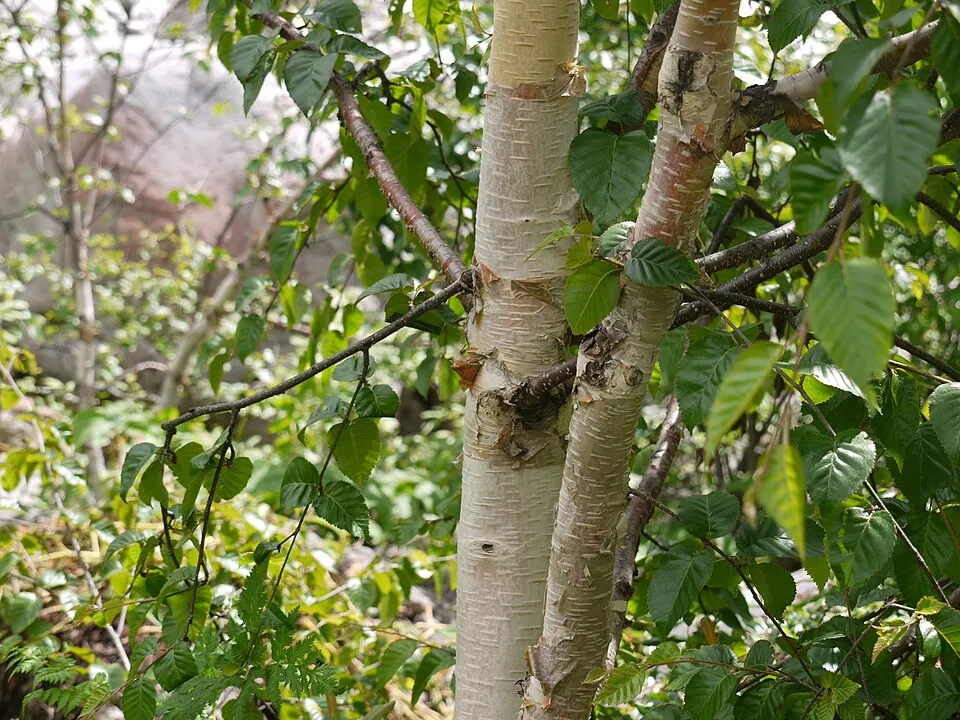
Betula utilis, commonly known as the Himalayan Birch, is a medium-sized deciduous tree native to the Himalayas, growing at elevations up to 4,500 meters. This elegant species is renowned for its distinctive, often papery, peeling bark, which varies in color from white to coppery-brown, providing significant ornamental appeal. The bark of Betula utilis is particularly notable for its resilience and historical use as paper in ancient India.
Morphologically, the tree features ovate to rhombic leaves with serrated margins, typically arranged alternately on slender branches. Its flowers are monoecious, appearing in catkins; male catkins are pendulous, while female catkins are erect. The fruit consists of small, winged nutlets dispersed by wind.
Adapted to cold, harsh mountain environments, Betula utilis thrives in well-drained, moist soils, often forming extensive stands. It plays a vital ecological role in its native habitat, stabilizing soil and supporting local wildlife. Taxonomically, it belongs to the Betulaceae family, which includes other economically and medicinally important trees.
Trusted Scientific References
1. Authoritative external sources for Betula utilis
1.1 Wikipedia — Betula utilis
1.2 Kew POWO (Plants of the World Online)
1.3 PubMed — peer-reviewed research
1.4 NCBI Taxonomy Browser
1.5 GBIF — Global Biodiversity
1.6Betula Utilis should be interpreted through verified botanical identity, practical care, and responsible safety language. This recovery note adds the missing context needed for a complete profile: match light to the plant's habit, use well-drained soil, water according to season, and avoid unsupported medicinal or edible claims. For publishing, the plant can be presented as a source-backed garden plant with clear care guidance, common problem diagnosis, and conservative safety wording.
1.7Betula Utilis (Betula utilis) is maintained in this recovery file as a complete garden profile with practical care, safety, and identification context. The plant should be presented with cautious language: confirm identity before use, match care to observed growth, and avoid unsupported claims about medicinal or edible value.
1.1.Betula Utilis — Key Features
- ✓ <strong>Traditional Ayurvedic Remedy</strong> — Long-standing use in Ayurvedic medicine for various ailments.
- ✓ <strong>Distinctive Peeling Bark</strong> — Highly recognizable and historically significant bark.
- ✓ <strong>Rich in Triterpenoids</strong> — Contains betulin and betulinic acid, key bioactive compounds.
- ✓ <strong>Potent Anti</strong> — inflammatory — Recognized for its strong inflammation-modulating properties.
- ✓ <strong>Powerful Antioxidant Source</strong> — High in compounds that combat oxidative stress.
- ✓ <strong>Broad Antimicrobial Activity</strong> — Effective against certain bacteria, fungi, and viruses.
- ✓ <strong>Supports Skin Health</strong> — Beneficial for inflammatory skin conditions and wound care.
- ✓ <strong>Potential Anticancer Agent</strong> — Subject of extensive preclinical research for its cytotoxic effects.
- ✓ <strong>Adaptable Mountain Species</strong> — Thrives in harsh high-altitude environments.
- ✓ <strong>Ecologically Important</strong> — Contributes to soil stability and biodiversity in its native range.
1.2.Betula Utilis — Quick Summary
- ✓ Betula utilis, or Himalayan Birch, is a medicinal tree cherished in traditional systems like Ayurveda.
- ✓ Its bark and leaves are rich in triterpenoids (betulin, betulinic acid), flavonoids, and phenolics.
- ✓ Valued for its anti-inflammatory, antioxidant, antimicrobial, and dermatological benefits.
- ✓ Traditionally used for digestive health, respiratory support, and skin conditions.
- ✓ Modern research explores its anti-arthritic and anticancer potential.
- ✓ Always consult a healthcare professional before use, especially during pregnancy or with existing conditions.
2.Betula Utilis — Scientific Identity
3.Betula Utilis — Quick Facts
4.Betula Utilis — Appearance & Identification
5.Betula Utilis — Native Habitat
6.Betula Utilis — Water Requirements
- ✓ Soil Preference — Plant Betula utilis in well-drained, loamy soil enriched with organic matter, ideally with a slightly acidic to neutral pH.
- ✓ Water Requirements — Water regularly, especially during dry periods and for young trees, but ensure excellent drainage to prevent waterlogging, which can be detrimental.
- ✓ Sunlight Exposure — Requires full sun to partial shade; at least 6 hours of direct sunlight per day is optimal for robust growth.
- ✓ Propagation — Can be propagated effectively from fresh seeds, which require a period of cold stratification, or from softwood cuttings taken in late spring to early summer.
- ✓ Planting Spacing — When planting multiple trees, maintain a spacing of at least 6-9 meters (20-30 feet) apart to allow for mature canopy development and root spread.
- ✓ Pruning — Prune in late summer or early fall when the tree is dormant to avoid excessive sap bleeding, focusing on removing dead, diseased, or crossing branches.
- ✓ Climate Hardiness — Betula utilis is highly tolerant of cold temperatures and is typically hardy in USDA zones 4-7, thriving in temperate and boreal climates.
- ✓ Pest and Disease Management — Generally resistant to major pests, but monitor for birch borer and fungal diseases, ensuring good air circulation and proper watering.
Reviewed by the Flora Medical Global Botanical Review Panel
Multi-disciplinary editorial group · Botany · Ethnobotany · Herbal-medicine literature
Who reviewed this: This page was checked by the Flora Medical Global Botanical Review Panel — an in-house editorial group of botany graduates, ethnobotany researchers, and horticulture practitioners who collectively maintain our 7,000+ plant encyclopedia. Meet the team.
Our 4-step verification process
1. Taxonomic verification
Scientific names and synonyms cross-checked against Kew POWO, World Flora Online, and The Plant List.
2. Phytochemical & medicinal cross-reference
Active compounds, traditional uses, and reported activities are cross-referenced with PubMed, USDA Dr. Duke's database, and peer-reviewed ethnobotanical literature.
3. Conservation & distribution check
Distribution, ecology, and conservation status confirmed against GBIF occurrence records and the IUCN Red List.
4. Editorial & safety review
Every entry passes an editorial pass for clarity, originality, and safety notices (toxicity, contraindications, dosage caveats) before publication.
Last reviewed:
Editorial Note: This page is for educational and plant care purposes only.
Written by: Flora Medical Global Editorial Team
Reviewed by: Flora Medical Global Botanical Review Panel
Last Updated: June 15, 2026







Betula Utilis — Comments & Community Reviews
Rate this plant