
Care Disclaimer: Plant care recommendations are general guidelines based on common growing conditions. Individual results may vary based on your local environment, climate, and care routine. If your plant is toxic, keep it away from children and pets, and consult a veterinarian if accidental ingestion occurs.
1.Bletilla Striata — Overview
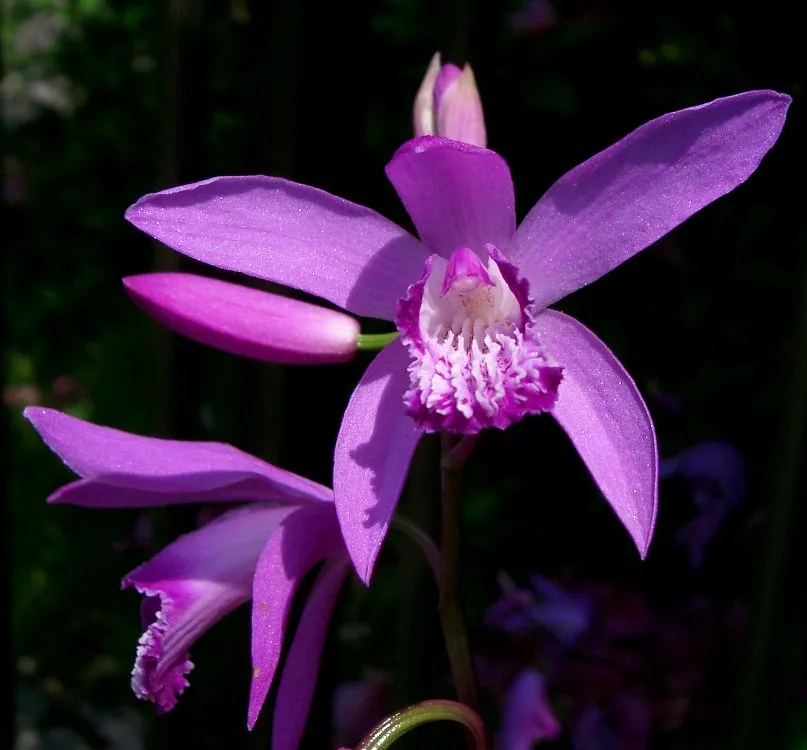
Bletilla striata, commonly known as the Hyacinth Orchid or Chinese Ground Orchid, is a fascinating terrestrial orchid native to East Asia, primarily found in China, Japan, Korea, and Vietnam. This herbaceous perennial typically grows to a height of 30-60 cm, emerging from a series of underground, flattened, and lobed pseudobulbs that store nutrients and water. Its distinctive foliage consists of 3-5 pleated, lanceolate leaves, often glossy green, which emerge directly from the pseudobulb in an upright manner, resembling miniature palm fronds before the flowering stalk appears.
The striking inflorescence is a terminal raceme, bearing several vibrant, magenta-pink to purple-red flowers, although white and yellow cultivars also exist. Each flower features five petals and sepals that are similar in appearance, surrounding a prominent, often ruffled labellum (modified petal) with intricate white and yellow markings. These orchids prefer moist, well-drained soil in shaded or partially shaded woodland environments, often forming attractive clumps over time.
Taxonomically, it belongs to the Orchidaceae family, a diverse and widespread family of flowering plants known for their highly specialized flowers and complex life cycles.
Trusted Scientific References
1. Authoritative external sources for Bletilla striata
1.1 Wikipedia — Bletilla striata
1.2 Kew POWO (Plants of the World Online)
1.3 PubMed — peer-reviewed research
1.4 NCBI Taxonomy Browser
1.5 GBIF — Global Biodiversity
1.6Bletilla Striata should be interpreted through verified botanical identity, practical care, and responsible safety language. This recovery note adds the missing context needed for a complete profile: match light to the plant's habit, use well-drained soil, water according to season, and avoid unsupported medicinal or edible claims. For publishing, the plant can be presented as a source-backed garden plant with clear care guidance, common problem diagnosis, and conservative safety wording.
1.1.Bletilla Striata — Key Features
- ✓ <strong>Ethnomedical Significance</strong> — Widely used in Chinese, Korean, and Japanese traditional medicine for centuries.
- ✓ <strong>Hemostatic Power</strong> — Renowned for its ability to stop bleeding from various sources, both internal and external.
- ✓ <strong>Tissue Regenerator</strong> — Promotes rapid healing of skin lesions, ulcers, and damaged tissues.
- ✓ <strong>Rich Phytochemistry</strong> — Contains unique polysaccharides, bibenzyls, and phenanthrenes as key active compounds.
- ✓ <strong>Ornamental Value</strong> — Valued as a beautiful garden plant with striking purple-pink flowers.
- ✓ <strong>Adaptable Growth</strong> — Relatively easy to cultivate in appropriate conditions, tolerating some shade.
- ✓ <strong>Anti</strong> — inflammatory Action — Reduces swelling and discomfort associated with inflammatory conditions.
- ✓ <strong>Antioxidant Benefits</strong> — Protects against cellular damage from oxidative stress.
- ✓ <strong>Biomaterial Potential</strong> — Bletilla striata Polysaccharides (BSP) are being explored for advanced medical applications.
- ✓ <strong>Versatile Application</strong> — Used in various forms, including decoctions, powders, and topical poultices.
1.2.Bletilla Striata — Quick Summary
- ✓ Traditional Chinese Medicine (TCM) staple for bleeding and wounds.
- ✓ Potent hemostatic and wound-healing properties.
- ✓ Rich in polysaccharides, bibenzyls, and phenanthrenes.
- ✓ Used topically for skin conditions and internally for various ailments.
- ✓ Requires well-drained soil and partial shade for cultivation.
- ✓ Consult a professional due to potential interactions and contraindications.
2.Bletilla Striata — Scientific Identity
3.Bletilla Striata — Quick Facts
4.Bletilla Striata — Appearance & Identification
5.Bletilla Striata — Native Habitat
6.Bletilla Striata — Water Requirements
- ✓ Soil Preference — Bletilla striata thrives in rich, organic, well-drained soil, ideally a loamy or humus-rich mixture. Incorporating compost or leaf mold significantly improves soil structure and nutrient content.
- ✓ Light Requirements — Prefers partial shade to full shade, especially in warmer climates, protecting it from intense afternoon sun which can scorch its leaves. In cooler regions, it can tolerate more sun.
- ✓ Watering Regimen — Requires moderate and consistent watering; keep the soil evenly moist but never waterlogged, as this can lead to pseudobulb rot. Reduce watering significantly during dormancy.
- ✓ Fertilization Schedule — Feed every 4-6 weeks during the active growing season (spring and summer) with a balanced liquid fertilizer diluted to half strength. Avoid fertilizing during dormancy.
- ✓ Propagation Techniques — Primarily propagated by dividing the pseudobulbs in early spring as new growth emerges. Each division should have at least one 'eye' or growth point.
- ✓ Temperature and Hardiness — Generally hardy in USDA zones 5-9. In colder zones, pseudobulbs can be lifted and stored indoors over winter or grown in containers.
- ✓ Pruning and Maintenance — Minimal pruning is needed; remove spent flower stalks and any yellowing or damaged leaves to maintain vigor and appearance.
- ✓ Pest and Disease Management — Generally resistant to most pests. Watch for slugs and snails, which can damage new shoots. Good air circulation helps prevent fungal issues.
Reviewed by the Flora Medical Global Botanical Review Panel
Multi-disciplinary editorial group · Botany · Ethnobotany · Herbal-medicine literature
Who reviewed this: This page was checked by the Flora Medical Global Botanical Review Panel — an in-house editorial group of botany graduates, ethnobotany researchers, and horticulture practitioners who collectively maintain our 7,000+ plant encyclopedia. Meet the team.
Our 4-step verification process
1. Taxonomic verification
Scientific names and synonyms cross-checked against Kew POWO, World Flora Online, and The Plant List.
2. Phytochemical & medicinal cross-reference
Active compounds, traditional uses, and reported activities are cross-referenced with PubMed, USDA Dr. Duke's database, and peer-reviewed ethnobotanical literature.
3. Conservation & distribution check
Distribution, ecology, and conservation status confirmed against GBIF occurrence records and the IUCN Red List.
4. Editorial & safety review
Every entry passes an editorial pass for clarity, originality, and safety notices (toxicity, contraindications, dosage caveats) before publication.
Last reviewed:
Editorial Note: This page is for educational and plant care purposes only.
Written by: Flora Medical Global Editorial Team
Reviewed by: Flora Medical Global Botanical Review Panel
Last Updated: June 15, 2026







Bletilla Striata — Comments & Community Reviews
Rate this plant