

Care Disclaimer: Plant care recommendations are general guidelines based on common growing conditions. Individual results may vary based on your local environment, climate, and care routine. If your plant is toxic, keep it away from children and pets, and consult a veterinarian if accidental ingestion occurs.
1.Buddleja Davidii — Overview
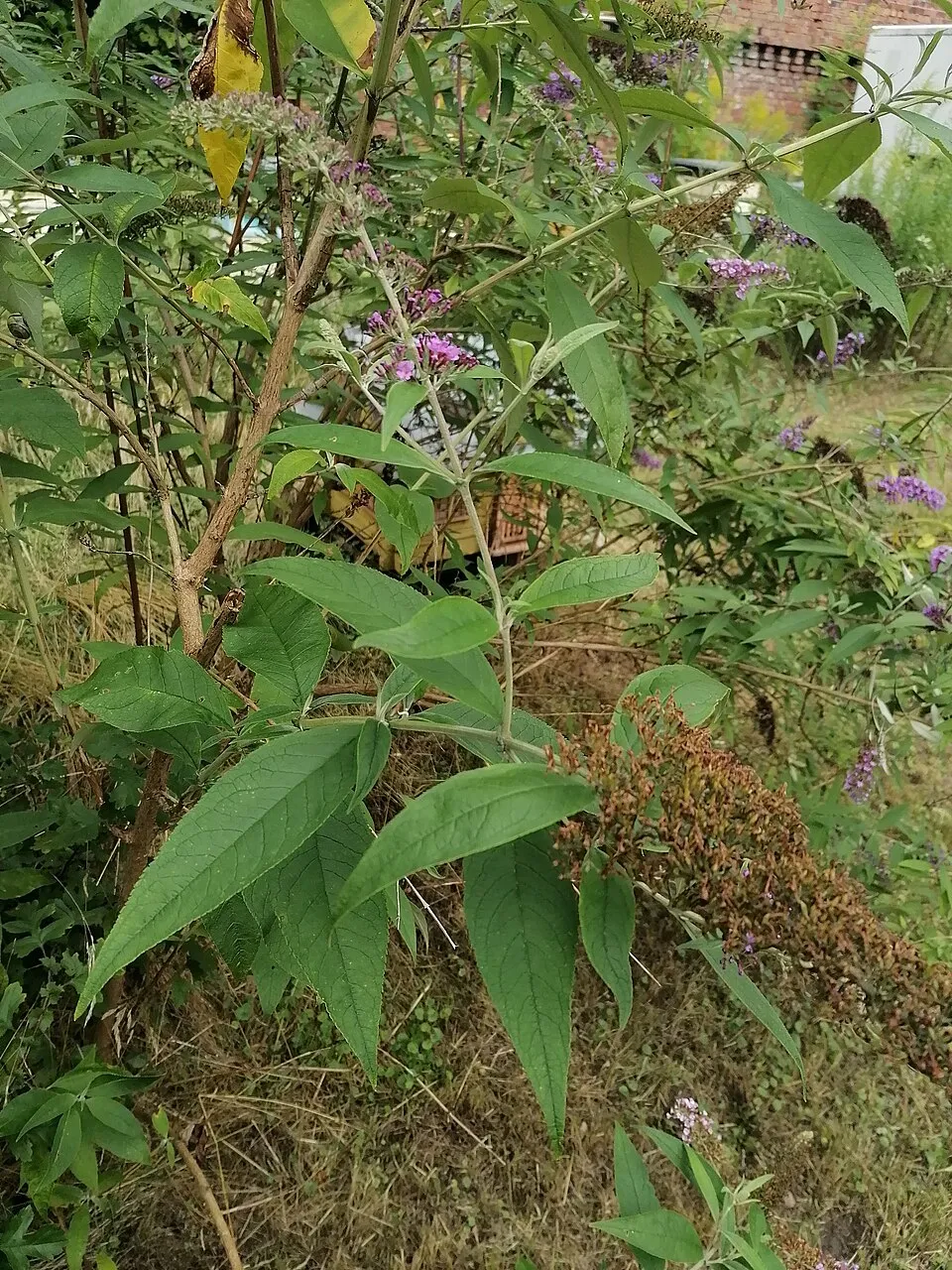
Buddleja davidii, commonly known as Butterfly Bush, Orange Eye Butterfly Bush, or Summer Lilac, is a vigorous, deciduous perennial shrub belonging to the family Scrophulariaceae. Native to the mountainous regions of Tibet and Central and South China, this plant is admired for its showy, fragrant flowers that attract a multitude of pollinators, especially butterflies. The shrub typically grows to a height of 6 to 12 feet and can spread 4 to 15 feet wide, characterized by its bushy habit and gracefully arching stems.
Its leaves are simple, opposite, ovate to lanceolate, with distinctly serrated margins; the upper surface is grayish-green to dark green, while the underside is covered in short, woolly hairs, giving it a soft, felt-like texture. During the summer, Buddleja davidii produces abundant, small, lilac-colored flowers with a prominent orange throat, clustered into striking, elongated spike-like panicles that can measure 4 to 10 inches in length. These inflorescences are not only visually appealing but also emit a sweet fragrance.
The plant's reproductive strategy is highly effective, producing winged, lightweight seeds in vast quantities (up to 40,000 per panicle), which are easily dispersed by wind and water, contributing to its naturalization and invasive potential in certain non-native environments. Its resilience to various environmental stressors, including drought, heat, humidity, and even salt, has contributed to its widespread ornamental cultivation, though this adaptability also underscores its capacity to outcompete native flora in some ecosystems.
Trusted Scientific References
1. Authoritative external sources for Buddleja davidii
1.1 Wikipedia — Buddleja davidii
1.2 Kew POWO (Plants of the World Online)
1.3 PubMed — peer-reviewed research
1.4 NCBI Taxonomy Browser
1.5 GBIF — Global Biodiversity
1.6Buddleja Davidii should be interpreted through verified botanical identity, practical care, and responsible safety language. This recovery note adds the missing context needed for a complete profile: match light to the plant's habit, use well-drained soil, water according to season, and avoid unsupported medicinal or edible claims. For publishing, the plant can be presented as a source-backed garden plant with clear care guidance, common problem diagnosis, and conservative safety wording.
1.1.Buddleja Davidii — Key Features
- ✓ <strong>Botanical Identity</strong> — Deciduous shrub, Buddleja davidii, also known as Butterfly Bush or Summer Lilac.
- ✓ <strong>Floral Display</strong> — Produces abundant, fragrant, spike-like panicles of lilac-colored flowers with orange throats, highly attractive to butterflies.
- ✓ <strong>Traditional Use</strong> — Employed in various traditional medicine systems for anti-inflammatory, antioxidant, and wound-healing benefits.
- ✓ <strong>Phytochemical Richness</strong> — Contains a diverse array of bioactive compounds, notably phenylethanoid glycosides (e.g., verbascoside), flavonoids, and iridoids.
- ✓ <strong>Adaptable Cultivation</strong> — Easy to grow in full sun with well-drained soil, exhibiting tolerance to drought, heat, and poor soils.
- ✓ <strong>Invasive Potential</strong> — Recognized as an invasive species in many non-native habitats, capable of outcompeting native flora.
- ✓ <strong>Topical Applications</strong> — Historically used in poultices and washes for skin irritations, wounds, and minor infections.
- ✓ <strong>Internal Use Potential</strong> — Traditional applications include infusions for digestive discomfort, though modern internal use requires caution and professional guidance.
- ✓ <strong>Deer Resistant</strong> — Generally not favored by deer, making it a suitable choice for gardens prone to browsing.
1.2.Buddleja Davidii — Quick Summary
- ✓ Buddleja davidii, or Butterfly Bush, is a vibrant shrub native to Asia, known for its showy, fragrant flowers.
- ✓ It possesses significant anti-inflammatory, antioxidant, and wound-healing properties, supported by traditional uses.
- ✓ Key chemical constituents include verbascoside, flavonoids, and iridoids, driving its medicinal actions.
- ✓ Cultivation is straightforward, preferring full sun and well-drained soil, but it is known to be an invasive species in many regions.
- ✓ Traditional applications include poultices for skin issues and infusions for digestive support.
- ✓ Safety precautions include avoiding use during pregnancy and lactation, and consulting a professional for internal use.
2.Buddleja Davidii — Scientific Identity
3.Buddleja Davidii — Quick Facts
4.Buddleja Davidii — Appearance & Identification
5.Buddleja Davidii — Native Habitat
6.Buddleja Davidii — Water Requirements
- ✓ Soil Preference — Buddleja davidii thrives in well-draining, fertile soil rich in organic matter, though it adapts well to most soil types; clay soils should be amended to prevent waterlogging.
- ✓ Light Requirements — Prefers full sun exposure for optimal flowering, but can tolerate partial shade, which may result in fewer blooms.
- ✓ Watering Regimen — Requires regular watering to maintain consistently moist soil, especially during dry periods, but avoid overwatering to prevent root rot.
- ✓ Nutrient Amendments — Benefits from light amendments with compost or well-rotted manure, and occasional balanced fertilization during the active growing season to support robust growth.
- ✓ Pruning Techniques — Prune heavily in early spring to control size, encourage vigorous new growth, and promote larger, more abundant flower production, as flowers appear on new wood.
- ✓ Winter Hardiness — Winter hardy in USDA Zones 5 through 9; in colder zones (5-6), the shrub typically dies back to the ground but will regrow vigorously from the roots in spring.
- ✓ Propagation — Easily propagated by softwood cuttings taken in summer or by seed, though self-seeding can lead to invasive spread in suitable climates.
- ✓ Pest and Disease Management — Generally resistant to most common pests and diseases, though spider mites can become problematic during prolonged drought conditions.
Reviewed by the Flora Medical Global Botanical Review Panel
Multi-disciplinary editorial group · Botany · Ethnobotany · Herbal-medicine literature
Who reviewed this: This page was checked by the Flora Medical Global Botanical Review Panel — an in-house editorial group of botany graduates, ethnobotany researchers, and horticulture practitioners who collectively maintain our 7,000+ plant encyclopedia. Meet the team.
Our 4-step verification process
1. Taxonomic verification
Scientific names and synonyms cross-checked against Kew POWO, World Flora Online, and The Plant List.
2. Phytochemical & medicinal cross-reference
Active compounds, traditional uses, and reported activities are cross-referenced with PubMed, USDA Dr. Duke's database, and peer-reviewed ethnobotanical literature.
3. Conservation & distribution check
Distribution, ecology, and conservation status confirmed against GBIF occurrence records and the IUCN Red List.
4. Editorial & safety review
Every entry passes an editorial pass for clarity, originality, and safety notices (toxicity, contraindications, dosage caveats) before publication.
Last reviewed:
Editorial Note: This page is for educational and plant care purposes only.
Written by: Flora Medical Global Editorial Team
Reviewed by: Flora Medical Global Botanical Review Panel
Last Updated: June 15, 2026







Buddleja Davidii — Comments & Community Reviews
Rate this plant