
Care Disclaimer: Plant care recommendations are general guidelines based on common growing conditions. Individual results may vary based on your local environment, climate, and care routine. If your plant is toxic, keep it away from children and pets, and consult a veterinarian if accidental ingestion occurs.
1.Bulbinella Hookeri — Overview
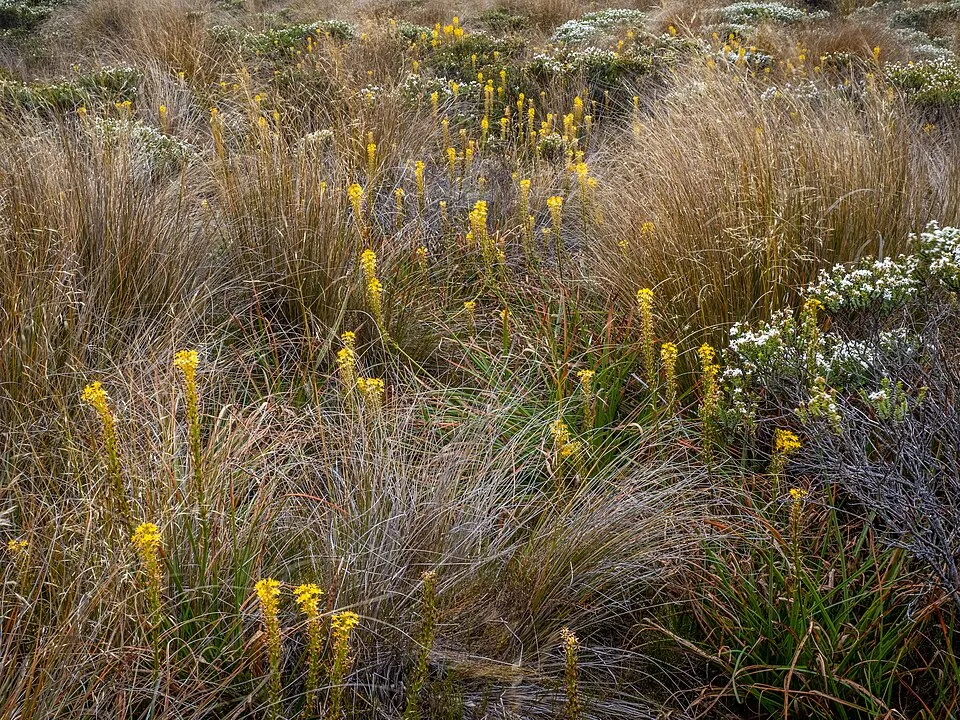
Bulbinella hookeri, commonly known as Maori Onion, is a distinctive perennial herb belonging to the Asphodelaceae family. This bulbous plant typically grows to a height of up to 0.7 meters (2 feet 4 inches) and spreads approximately 0.3 meters (1 foot) wide. It features a basal rosette of narrow, grass-like leaves that emerge from a fleshy underground bulb.
The foliage is generally green, often with a somewhat onion-like appearance, giving rise to its common name. In summer, it produces erect flower stalks bearing clusters of small, star-shaped flowers, typically yellow or sometimes orange, which add visual interest to its native landscapes.
Endemic to New Zealand, Bulbinella hookeri thrives across both the North and South Islands. Its natural habitats range from lowland to sub-alpine pastures, preferring northern slopes and damp, well-drained locations. While it can tolerate a variety of soil conditions, it particularly flourishes in moist, peaty, neutral to slightly acidic soils.
This adaptability also allows it to succeed on drier hillsides, showcasing its resilience. The plant is hardy to USDA zones 7-10, capable of withstanding temperatures down to approximately -5°C and tolerating light, short-lived frosts. Its robust nature and attractive appearance make it a valued component of native New Zealand flora and an interesting specimen for specialized gardens.
Trusted Scientific References
1. Authoritative external sources for Bulbinella Hookeri
1.1 Wikipedia — Bulbinella Hookeri
1.2 Kew POWO (Plants of the World Online)
1.3 PubMed — peer-reviewed research
1.4 NCBI Taxonomy Browser
1.5 GBIF — Global Biodiversity
1.6Bulbinella Hookeri should be interpreted through verified botanical identity, practical care, and responsible safety language. This recovery note adds the missing context needed for a complete profile: match light to the plant's habit, use well-drained soil, water according to season, and avoid unsupported medicinal or edible claims. For publishing, the plant can be presented as a source-backed garden plant with clear care guidance, common problem diagnosis, and conservative safety wording.
1.1.Bulbinella Hookeri — Key Features
- ✓ <strong>Botanical Name</strong> — Bulbinella hookeri (Hook.f.) Cheesem.
- ✓ <strong>Common Name</strong> — Maori Onion.
- ✓ <strong>Family</strong> — Asphodelaceae.
- ✓ <strong>Native Range</strong> — Endemic to New Zealand (North and South Islands).
- ✓ <strong>Growth Habit</strong> — Bulbous perennial, growing up to 0.7 meters tall.
- ✓ <strong>Edible Part</strong> — Fleshy roots are edible.
- ✓ <strong>Medicinal Status</strong> — No known medicinal uses documented.
- ✓ <strong>Habitat</strong> — Found in northern slopes and damp places from lowland to sub-alpine pastures.
- ✓ <strong>Hardiness</strong> — USDA zones 7-10, tolerates light frosts.
- ✓ <strong>Horticultural Use</strong> — Valued as an ornamental plant for its attractive form and flowers.
1.2.Bulbinella Hookeri — Quick Summary
- ✓ Maori Onion (Bulbinella hookeri) is a perennial herb native to New Zealand.
- ✓ Known for its fleshy, edible roots, historically used as a food source.
- ✓ Primarily valued as an ornamental garden plant due to its attractive foliage and flowers.
- ✓ No documented traditional or modern medicinal uses or known hazards.
- ✓ Thrives in moist, well-drained soils and tolerates semi-shade to full sun.
2.Bulbinella Hookeri — Scientific Identity
3.Bulbinella Hookeri — Quick Facts
4.Bulbinella Hookeri — Appearance & Identification
5.Bulbinella Hookeri — Native Habitat
6.Bulbinella Hookeri — Water Requirements
- ✓ Soil Preference — Thrives in moist, well-drained, peaty, neutral to slightly acidic soils, but can adapt to dry hillsides.
- ✓ Light Requirements — Tolerates semi-shade (light woodland conditions) to full sun exposure for optimal growth.
- ✓ Hardiness Zone — Suitable for USDA hardiness zones 7-10, with resilience to temperatures down to -5°C.
- ✓ Propagation by Seed — Best sown in a cold frame immediately after ripening; stored seeds can be sown in a greenhouse early in the year.
- ✓ Seed Germination — Seeds typically germinate within 1-3 months at around 13°C; prick out seedlings into individual pots once large enough.
- ✓ Division — Established clumps can be divided in spring as new growth emerges, then potted and grown in a cold frame before planting out in summer.
Reviewed by the Flora Medical Global Botanical Review Panel
Multi-disciplinary editorial group · Botany · Ethnobotany · Herbal-medicine literature
Who reviewed this: This page was checked by the Flora Medical Global Botanical Review Panel — an in-house editorial group of botany graduates, ethnobotany researchers, and horticulture practitioners who collectively maintain our 7,000+ plant encyclopedia. Meet the team.
Our 4-step verification process
1. Taxonomic verification
Scientific names and synonyms cross-checked against Kew POWO, World Flora Online, and The Plant List.
2. Phytochemical & medicinal cross-reference
Active compounds, traditional uses, and reported activities are cross-referenced with PubMed, USDA Dr. Duke's database, and peer-reviewed ethnobotanical literature.
3. Conservation & distribution check
Distribution, ecology, and conservation status confirmed against GBIF occurrence records and the IUCN Red List.
4. Editorial & safety review
Every entry passes an editorial pass for clarity, originality, and safety notices (toxicity, contraindications, dosage caveats) before publication.
Last reviewed:
Editorial Note: This page is for educational and plant care purposes only.
Written by: Flora Medical Global Editorial Team
Reviewed by: Flora Medical Global Botanical Review Panel
Last Updated: June 15, 2026







Bulbinella Hookeri — Comments & Community Reviews
Rate this plant