


Care Disclaimer: Plant care recommendations are general guidelines based on common growing conditions. Individual results may vary based on your local environment, climate, and care routine. If your plant is toxic, keep it away from children and pets, and consult a veterinarian if accidental ingestion occurs.
1.Buphthalmum Salicifolium — Overview
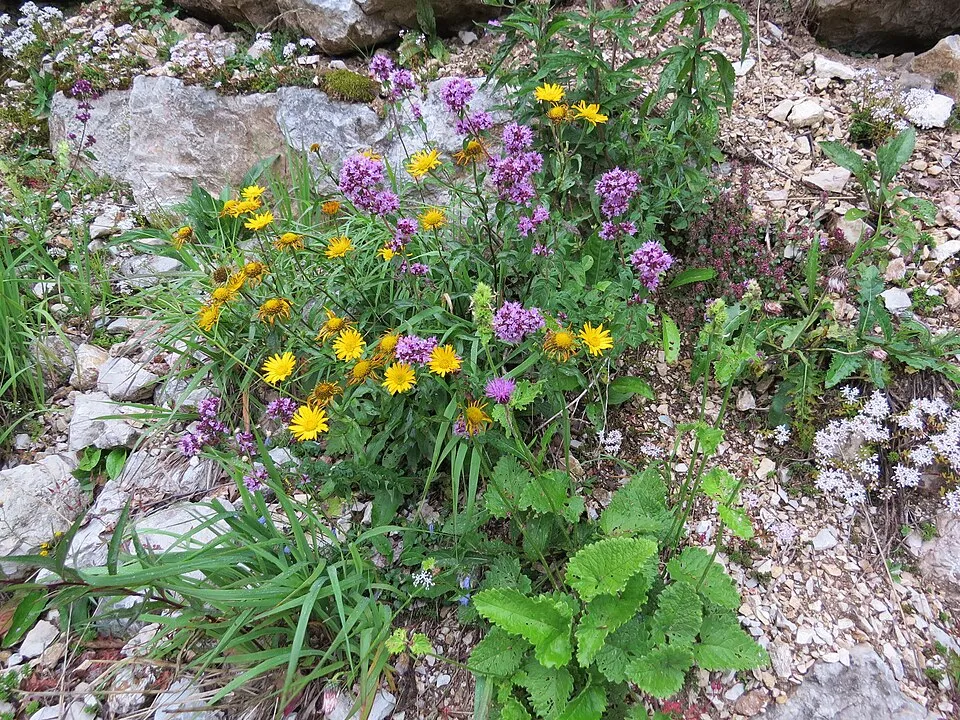
Buphthalmum salicifolium, commonly known as Ox-eye, is a captivating perennial herbaceous plant belonging to the Asteraceae family. Native to various regions of Europe, this species is characterized by its robust and upright growth habit, typically reaching a mature height of 50 to 70 centimeters.
Its erect stems often display a distinctive reddish-purple hue and can be moderately branched, contributing to its attractive garden presence.
The leaves of Buphthalmum salicifolium are alternately arranged along the stem, exhibiting variability in shape and size. Lower leaves are generally broader and are supported by distinct petioles, while the upper leaves become progressively narrower and sessile.
The leaf margins are typically serrated, and the texture can range from smooth to slightly hairy, offering a subtle gloss.
Flowering occurs predominantly in late spring through early summer, presenting solitary, vibrant yellow flower heads atop the main stem and at the ends of its branches. These striking blooms are classic daisy-like structures, featuring numerous bright yellow ray florets, often with 2 to 4 subtle teeth at their tips, surrounding a dense cluster of tubular yellow disc florets at the center.
These flowers are highly attractive to a diverse array of pollinators, including various bee species and butterflies, thereby playing a vital role in local biodiversity.
Buphthalmum salicifolium demonstrates remarkable adaptability, thriving in well-drained, fertile soils across temperate to subtropical climates. It is frequently encountered in disturbed sites, open meadows, and cultivated gardens, showcasing its resilience and ease of establishment.
The plant's ability to self-seed and spread naturally makes it a favored choice for naturalized plantings, ground cover, or as a vibrant filler in perennial borders, enriching landscapes with its cheerful golden blossoms.
Trusted Scientific References
1. Authoritative external sources for Buphthalmum Salicifolium
1.1 Wikipedia — Buphthalmum Salicifolium
1.2 Kew POWO (Plants of the World Online)
1.3 PubMed — peer-reviewed research
1.4 NCBI Taxonomy Browser
1.5 GBIF — Global Biodiversity
1.1.Buphthalmum Salicifolium — Key Features
- ✓ <strong>Botanical Name</strong> — Buphthalmum salicifolium, commonly known as Ox-eye or Willow-leaved Ox-eye.
- ✓ <strong>Family Affiliation</strong> — Member of the Asteraceae (Daisy) family, known for its composite flower heads.
- ✓ <strong>Ornamental Value</strong> — Prized in gardens for its cheerful, bright yellow, daisy-like blooms and robust foliage.
- ✓ <strong>Pollinator Magnet</strong> — Attracts bees, butterflies, and other beneficial pollinators, enhancing garden biodiversity.
- ✓ <strong>Traditional Medicinal Uses</strong> — Employed in Ayurveda for digestive health and in TCM for anti-inflammatory purposes.
- ✓ <strong>Rich Phytochemistry</strong> — Contains beneficial compounds such as flavonoids, phenolic acids, and essential oils.
- ✓ <strong>Antioxidant Power</strong> — Recognized for its potent antioxidant properties, contributing to cellular protection.
- ✓ <strong>Adaptability</strong> — Tolerant of various well-drained soil types and thrives in full sun to partial shade conditions.
- ✓ <strong>Perennial Growth Habit</strong> — A resilient plant that returns year after year, offering long-lasting beauty and benefits.
- ✓ <strong>Ethnobotanical Significance</strong> — Historically valued in European traditional medicine and modern herbal practices.
1.2.Buphthalmum Salicifolium — Quick Summary
- ✓ Buphthalmum salicifolium, or Ox-eye, is a European perennial from the Asteraceae family.
- ✓ Known for its vibrant yellow, daisy-like flowers and ornamental appeal.
- ✓ Traditionally used in Ayurveda for digestion and TCM for inflammation and skin issues.
- ✓ Modern herbalism highlights its significant antioxidant properties.
- ✓ Key chemical constituents include flavonoids, phenolic compounds, and essential oils.
- ✓ Requires well-drained soil, full sun, and moderate watering for optimal growth.
2.Buphthalmum Salicifolium — Scientific Identity
3.Buphthalmum Salicifolium — Quick Facts
4.Buphthalmum Salicifolium — Appearance & Identification
5.Buphthalmum Salicifolium — Native Habitat
6.Buphthalmum Salicifolium — Water Requirements
- ✓ Soil Preference — Buphthalmum salicifolium thrives in well-drained, moderately fertile soil with a neutral to slightly alkaline pH range of 6.0 to 7.5.
- ✓ Light Requirements — Prefers full sun exposure but can tolerate partial shade, particularly in hotter climates, for optimal flowering and growth.
- ✓ Watering Regimen — Requires moderate watering; ensure the soil remains consistently moist but never waterlogged to prevent root rot.
- ✓ Propagation — Can be propagated effectively from seeds sown in spring or by division of mature clumps in early spring or fall.
- ✓ Fertilization — Benefits from a balanced, slow-release fertilizer application in spring, or compost amendment, to support vigorous growth.
- ✓ Pruning — Regular deadheading of spent flowers encourages continuous blooming and prevents excessive self-seeding; cut back foliage after flowering to maintain shape.
- ✓ Pest and Disease Management — Generally resistant to most common pests and diseases, but watch for slugs, snails, or powdery mildew in overly humid conditions.
- ✓ Spacing — Plant individual specimens about 30-45 cm apart to allow for mature spread and good air circulation, which is crucial for plant health.
Reviewed by the Flora Medical Global Botanical Review Panel
Multi-disciplinary editorial group · Botany · Ethnobotany · Herbal-medicine literature
Who reviewed this: This page was checked by the Flora Medical Global Botanical Review Panel — an in-house editorial group of botany graduates, ethnobotany researchers, and horticulture practitioners who collectively maintain our 7,000+ plant encyclopedia. Meet the team.
Our 4-step verification process
1. Taxonomic verification
Scientific names and synonyms cross-checked against Kew POWO, World Flora Online, and The Plant List.
2. Phytochemical & medicinal cross-reference
Active compounds, traditional uses, and reported activities are cross-referenced with PubMed, USDA Dr. Duke's database, and peer-reviewed ethnobotanical literature.
3. Conservation & distribution check
Distribution, ecology, and conservation status confirmed against GBIF occurrence records and the IUCN Red List.
4. Editorial & safety review
Every entry passes an editorial pass for clarity, originality, and safety notices (toxicity, contraindications, dosage caveats) before publication.
Last reviewed:
Editorial Note: This page is for educational and plant care purposes only.
Written by: Flora Medical Global Editorial Team
Reviewed by: Flora Medical Global Botanical Review Panel
Last Updated: June 15, 2026







Buphthalmum Salicifolium — Comments & Community Reviews
Rate this plant