
Care Disclaimer: Plant care recommendations are general guidelines based on common growing conditions. Individual results may vary based on your local environment, climate, and care routine. If your plant is toxic, keep it away from children and pets, and consult a veterinarian if accidental ingestion occurs.
1.Butomus Umbellatus — Overview
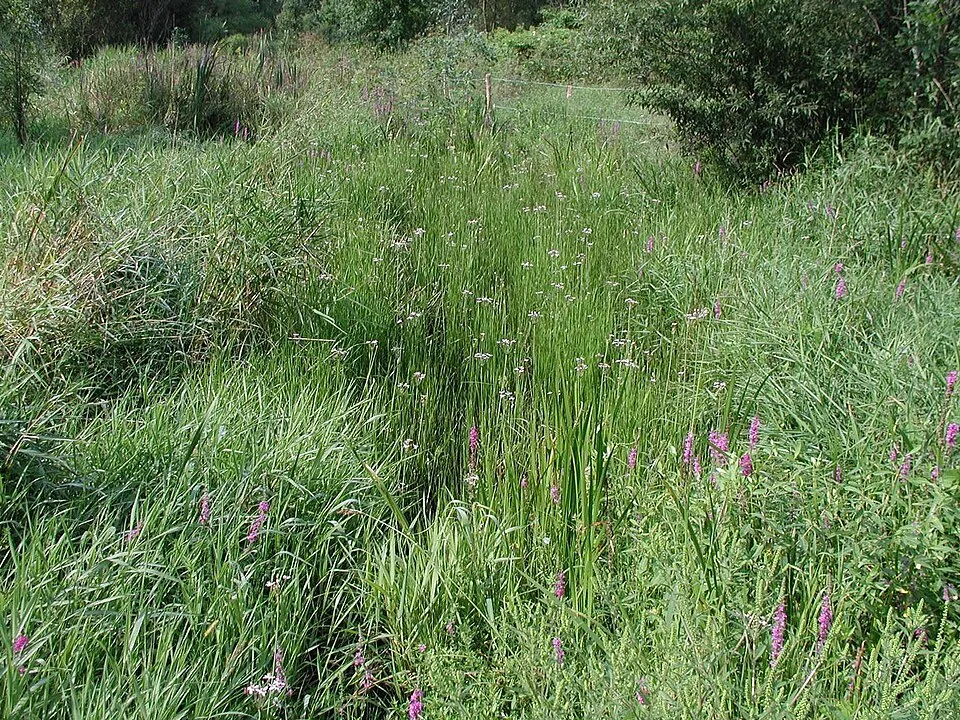
Butomus umbellatus, commonly known as Flowering Rush or Water Gladiolus, is a distinctive, rush-like perennial aquatic herb belonging to the monotypic family Butomaceae. This stemless plant originates from a robust rhizomatous rootstock, producing basal leaves that are notably stiff and erect when submerged, or lax and floating in deeper waters. A key identification feature is the triangular cross-section of its leaves and the naked scape (stalk) that supports the inflorescence. It can reach heights of up to 1.5 meters.
The inflorescence is a conspicuous, many-flowered umbel, bearing delicate, perfect, and regular pink flowers, typically 2-3 cm across. Each flower features three petaloid sepals and three true petals, along with nine stamens and six simple, whorled pistils united at the base. The fruit is an indehiscent, many-seeded follicle. Native to Africa, Asia, and Eurasia, Butomus umbellatus has become a widespread non-indigenous species in North America, particularly in the Great Lakes region.
It thrives in shallow, slow-moving freshwater environments such as ditches, shorelines, and wetlands, adapting readily to varying water depths and soil types, preferring muddy or silty substrates. Its prolific reproductive capacity, through seeds, rhizome fragments, and bulbils, contributes significantly to its invasive success.
Trusted Scientific References
1. Authoritative external sources for Butomus Umbellatus
1.1 Wikipedia — Butomus Umbellatus
1.2 Kew POWO (Plants of the World Online)
1.3 PubMed — peer-reviewed research
1.4 NCBI Taxonomy Browser
1.5 GBIF — Global Biodiversity
1.6Butomus Umbellatus should be interpreted through verified botanical identity, practical care, and responsible safety language. This recovery note adds the missing context needed for a complete profile: match light to the plant's habit, use well-drained soil, water according to season, and avoid unsupported medicinal or edible claims. For publishing, the plant can be presented as a source-backed garden plant with clear care guidance, common problem diagnosis, and conservative safety wording.
1.1.Butomus Umbellatus — Key Features
- ✓ <strong>Rush</strong> — like Aquatic Perennial — Distinctive growth habit in freshwater environments.
- ✓ <strong>Triangular Leaf Cross</strong> — Section — A primary botanical identification characteristic.
- ✓ <strong>Umbellate Pink Flowers</strong> — Conspicuous and attractive flower arrangement on a naked scape.
- ✓ <strong>Rhizomatous and Bulbil Propagation</strong> — Highly effective methods for vegetative spread and colonization.
- ✓ <strong>Invasive in North America</strong> — A significant ecological concern, especially in the Great Lakes region.
- ✓ <strong>Forms Dense Monocultures</strong> — Outcompetes and displaces native aquatic vegetation.
- ✓ <strong>Edible Starchy Rhizomes</strong> — Historical use as a survival food source.
- ✓ <strong>Adaptable to Various Water Depths</strong> — Grows submerged, emergent, or with floating leaves.
- ✓ <strong>Rapid Growth and Spread</strong> — Contributes to its success as an aggressive invasive species.
- ✓ <strong>Lack of Documented Medicinal Uses</strong> — Primarily an ecological subject of study and management.
1.2.Butomus Umbellatus — Quick Summary
- ✓ Flowering Rush (Butomus umbellatus) is a perennial aquatic plant.
- ✓ Native to Africa, Asia, and Eurasia, it is a significant invasive species in North America.
- ✓ Characterized by rush-like leaves with a triangular cross-section and attractive pink, umbellate flowers.
- ✓ Primarily known for its detrimental ecological impact as a rapidly spreading invasive species.
- ✓ Its rhizomes are historically consumed as a starchy food source, not for medicinal properties.
- ✓ Lacks documented traditional or modern medicinal applications and should not be used therapeutically.
2.Butomus Umbellatus — Scientific Identity
3.Butomus Umbellatus — Quick Facts
4.Butomus Umbellatus — Appearance & Identification
5.Butomus Umbellatus — Native Habitat
6.Butomus Umbellatus — Water Requirements
- ✓ Habitat Preference — Thrives in shallow, slow-moving fresh water bodies, including ditches, shorelines, and wetlands.
- ✓ Soil Requirements — Prefers muddy or silty substrates, rich in organic matter, for optimal rhizome establishment and robust growth.
- ✓ Propagation — Primarily spreads through rhizome fragments and bulbils, which are highly effective for vegetative reproduction and invasive dispersal.
- ✓ Seed Dispersal — Produces numerous small seeds that can be widely dispersed by water currents, wind, and animals, contributing to its rapid spread.
- ✓ Light Conditions — Prefers full sun exposure for optimal growth, but demonstrates tolerance for partial shade, allowing it to colonize diverse environments.
- ✓ Water Depth — Grows submerged, emergent, or with floating leaves, adapting flexibly to varying water depths in its aquatic habitats.
- ✓ Climate Resilience — Exhibits significant resilience to fluctuating water levels, temperature extremes, and nutrient availability, aiding its invasive success.
- ✓ Growth Rate — Displays a rapid growth rate, forming dense, competitive stands that can outcompete and displace native aquatic vegetation.
Reviewed by the Flora Medical Global Botanical Review Panel
Multi-disciplinary editorial group · Botany · Ethnobotany · Herbal-medicine literature
Who reviewed this: This page was checked by the Flora Medical Global Botanical Review Panel — an in-house editorial group of botany graduates, ethnobotany researchers, and horticulture practitioners who collectively maintain our 7,000+ plant encyclopedia. Meet the team.
Our 4-step verification process
1. Taxonomic verification
Scientific names and synonyms cross-checked against Kew POWO, World Flora Online, and The Plant List.
2. Phytochemical & medicinal cross-reference
Active compounds, traditional uses, and reported activities are cross-referenced with PubMed, USDA Dr. Duke's database, and peer-reviewed ethnobotanical literature.
3. Conservation & distribution check
Distribution, ecology, and conservation status confirmed against GBIF occurrence records and the IUCN Red List.
4. Editorial & safety review
Every entry passes an editorial pass for clarity, originality, and safety notices (toxicity, contraindications, dosage caveats) before publication.
Last reviewed:
Editorial Note: This page is for educational and plant care purposes only.
Written by: Flora Medical Global Editorial Team
Reviewed by: Flora Medical Global Botanical Review Panel
Last Updated: June 15, 2026







Butomus Umbellatus — Comments & Community Reviews
Rate this plant