


Care Disclaimer: Plant care recommendations are general guidelines based on common growing conditions. Individual results may vary based on your local environment, climate, and care routine. If your plant is toxic, keep it away from children and pets, and consult a veterinarian if accidental ingestion occurs.
1.Calendula — Overview
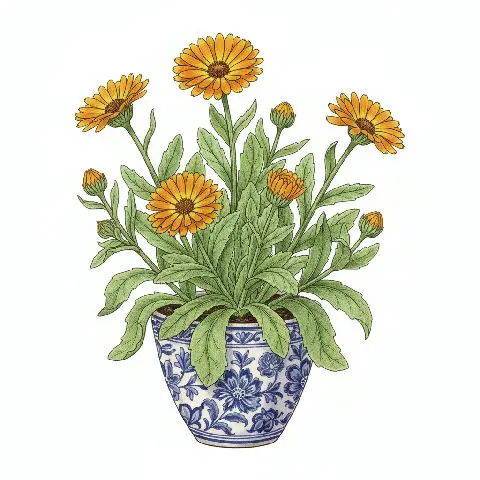
Calendula officinalis, commonly known as Pot Marigold, is a cherished annual herbaceous plant belonging to the Asteraceae family. Its botanical lineage traces back through centuries, with ancient Roman, Greek, Arab, and Indian cultures recognizing its value in both culinary and medicinal realms. The genus name 'Calendula' derives from the Latin 'calendae,' meaning 'little calendar' or 'first day of the month,' aptly describing its characteristic prolonged blooming cycle throughout the year in favorable climates.
The specific epithet 'officinalis' further reinforces its long-established use in traditional medicine. Native to southwestern Asia, western Europe, Macaronesia, and the Mediterranean basin, Calendula has successfully naturalized across diverse temperate and subtropical regions globally, evolving into a beloved garden ornamental and a powerful medicinal herb.
Morphologically, Calendula typically grows to a height of 30-60 cm, presenting an erect, multi-branching stem often covered with fine, glandular hairs that give it a slightly sticky feel. Its alternate leaves are oblong-lanceolate, exhibiting a pale green hue, and can be either entire-margined or subtly toothed. The plant's most striking features are its vibrant, daisy-like flower heads, scientifically termed capitula, which display a spectrum of colors ranging from bright yellow to deep orange.
These showy inflorescences are composed of numerous strap-shaped ray florets encircling a central disc of smaller, tubular florets. Blooming profusely from late spring through autumn, and continuously in warmer locales, these flower heads are the primary part utilized in herbal medicine. Following successful pollination, the plant produces distinctive curved or boat-shaped achenes, with surface textures varying based on their position within the capitulum, aiding in their dispersal.
Trusted Scientific References
1. Authoritative external sources for Calendula officinalis
1.1 Wikipedia — Calendula officinalis
1.2 Kew POWO (Plants of the World Online)
1.3 PubMed — peer-reviewed research
1.4 NCBI Taxonomy Browser
1.5 GBIF — Global Biodiversity
1.1.Calendula — Key Features
- ✓ <strong>Vibrant orange</strong> — yellow daisy-like flower heads (capitula).
- ✓ <strong>Long blooming period,</strong> — Long blooming period, often throughout the year in suitable climates.
- ✓ <strong>Glandular, slightly sticky</strong> — Glandular, slightly sticky leaves and stems.
- ✓ <strong>Distinctive curved or boat</strong> — shaped achene fruits.
- ✓ <strong>Historically valued in</strong> — Historically valued in ancient Roman, Greek, Arab, and Indian medicine.
- ✓ <strong>Member of the</strong> — Member of the Asteraceae (daisy) family.
- ✓ <strong>Easy to cultivate</strong> — Easy to cultivate as a garden ornamental and medicinal herb.
- ✓ <strong>Primary medicinal part</strong> — Primary medicinal part is the flower head.
- ✓ <strong>Latin name 'Calendula</strong> — Latin name 'Calendula officinalis' signifies its medicinal history.
- ✓ <strong>Naturalized globally across</strong> — Naturalized globally across temperate and subtropical regions.
1.2.Calendula — Quick Summary
- ✓ Calendula officinalis, or Pot Marigold, is an annual herb from the Asteraceae family.
- ✓ Renowned for its vibrant orange-yellow flowers, primarily used in herbal medicine.
- ✓ Potent anti-inflammatory, wound-healing, and antimicrobial properties.
- ✓ Rich in triterpenoids, flavonoids, and carotenoids, offering antioxidant benefits.
- ✓ Widely applied topically for skin conditions, burns, and wounds.
- ✓ Traditionally used for digestive issues and immune support; internal use requires caution.
2.Calendula — Scientific Identity
3.Calendula — Quick Facts
4.Calendula — Appearance & Identification
5.Calendula — Native Habitat
6.Calendula — Water Requirements
- ✓ Soil Preparation — Calendula thrives in well-draining soil, preferably sandy loam, with a pH between 6.0 and 7.0. Amend with compost for fertility.
- ✓ Sunlight Requirements — Plant in full sun (at least 6 hours direct sunlight daily) for optimal flowering and medicinal potency.
- ✓ Watering Schedule — Water regularly to keep the soil consistently moist, especially during dry periods, but avoid waterlogging.
- ✓ Propagation Techniques — Easily propagated from seeds sown directly in the garden in spring after the last frost or in late summer for fall blooms.
- ✓ Fertilization Needs — Generally low-maintenance; a balanced organic fertilizer can be applied lightly once or twice during the growing season.
- ✓ Harvesting — Harvest flower heads when fully open, preferably in the morning after dew has dried. Deadhead regularly to encourage continuous blooming.
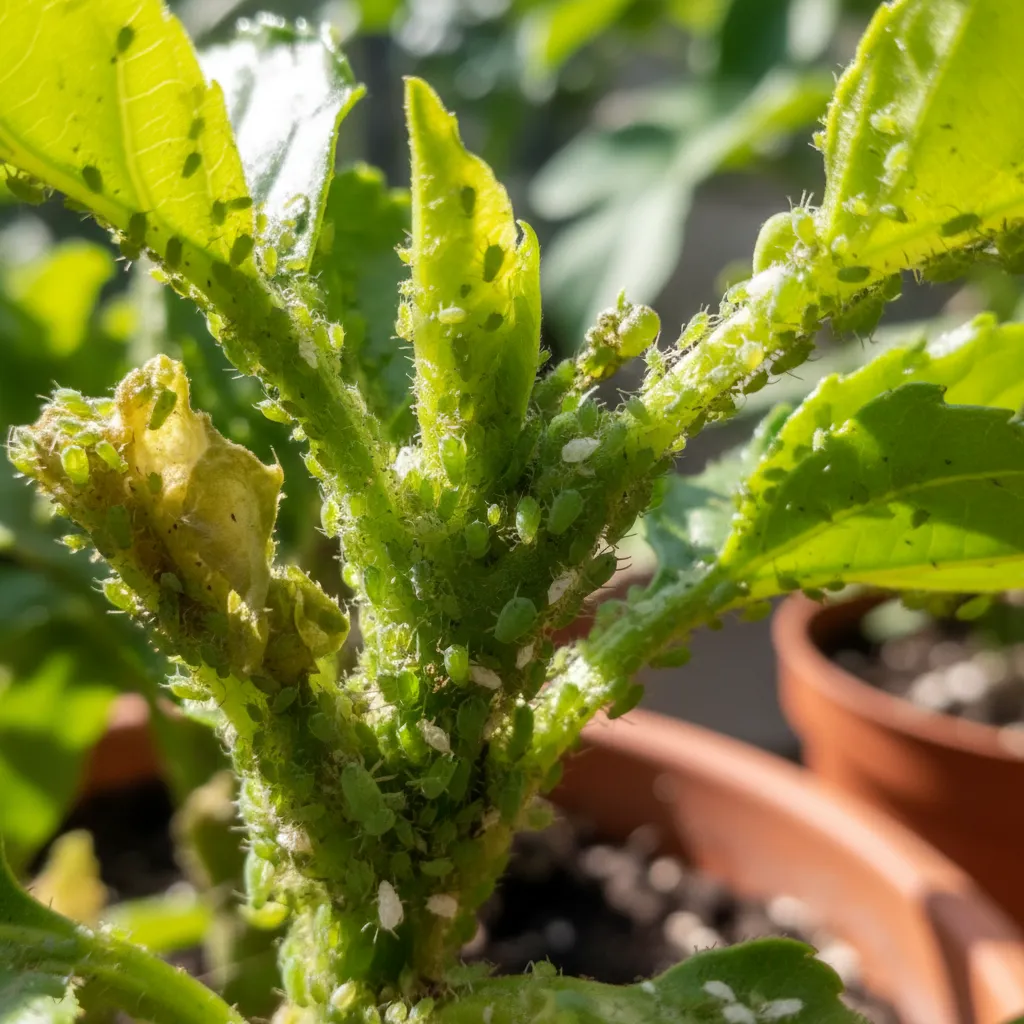
- ✓ Pest and Disease Management — Generally resistant, but watch for aphids or powdery mildew; treat with organic insecticidal soap or neem oil if necessary.
- ✓ Climate Adaptation — Best suited for temperate climates; can be grown as an annual in most regions or a short-lived perennial in warmer zones.
Reviewed by the Flora Medical Global Botanical Review Panel
Multi-disciplinary editorial group · Botany · Ethnobotany · Herbal-medicine literature
Who reviewed this: This page was checked by the Flora Medical Global Botanical Review Panel — an in-house editorial group of botany graduates, ethnobotany researchers, and horticulture practitioners who collectively maintain our 7,000+ plant encyclopedia. Meet the team.
Our 4-step verification process
1. Taxonomic verification
Scientific names and synonyms cross-checked against Kew POWO, World Flora Online, and The Plant List.
2. Phytochemical & medicinal cross-reference
Active compounds, traditional uses, and reported activities are cross-referenced with PubMed, USDA Dr. Duke's database, and peer-reviewed ethnobotanical literature.
3. Conservation & distribution check
Distribution, ecology, and conservation status confirmed against GBIF occurrence records and the IUCN Red List.
4. Editorial & safety review
Every entry passes an editorial pass for clarity, originality, and safety notices (toxicity, contraindications, dosage caveats) before publication.
Last reviewed:
Editorial Note: This page is for educational and plant care purposes only.
Written by: Flora Medical Global Editorial Team
Reviewed by: Flora Medical Global Botanical Review Panel
Last Updated: June 15, 2026







Calendula — Comments & Community Reviews
Rate this plant