

Care Disclaimer: Plant care recommendations are general guidelines based on common growing conditions. Individual results may vary based on your local environment, climate, and care routine. If your plant is toxic, keep it away from children and pets, and consult a veterinarian if accidental ingestion occurs.
1.Callistephus Chinensis — Overview
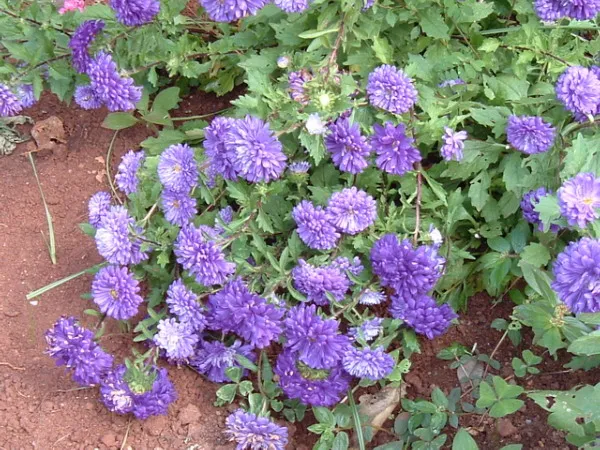
Callistephus chinensis, commonly known as the China Aster or Annual Aster, is a captivating annual flowering plant belonging to the Asteraceae family, which is also known as the daisy family. Native to China and Southern Russia, this cool-weather annual is widely cultivated globally for its ornamental value and, historically, for its potential medicinal properties. The plant typically grows as an erect, herbaceous annual, reaching heights of 1 to 3 feet, with a spread of about 1 to 1.5 feet.
Its leaves are simple, alternate, ovate to spatulate in shape, and possess dentate margins, ranging from 2 to 4 inches in length. The basal leaves often senesce before the plant fully flowers.
The most striking feature of Callistephus chinensis is its showy blooms, which can measure between 3 and 5 inches in diameter. These flowers exhibit a remarkable diversity in form, from single, daisy-like heads with prominent yellow centers to fully double, shaggy, or pompom-shaped flower heads.
The color palette is extensive, encompassing shades of white, pink, red, blue, violet, purple, and yellow, providing vibrant displays from early summer through fall. The genus name 'Callistephus' is derived from Greek, meaning 'beautiful crown,' a fitting description for its magnificent flowers, while 'chinensis' denotes its Chinese origin.
Ecologically, the China Aster thrives in rich, consistently moist, and well-drained soils, preferring locations with full sun to partial shade. Its cultivation is straightforward, making it a popular choice for garden beds, borders, and cutting gardens.
The plant’s fruit is a rough-textured, glandular cypsela, typically purple-mottled when young and turning gray upon maturity. Beyond its aesthetic appeal, Callistephus chinensis plays a role in attracting pollinators, particularly bees, contributing to local biodiversity.
Trusted Scientific References
1. Authoritative external sources for Callistephus chinensis
1.1 Wikipedia — Callistephus chinensis
1.2 Kew POWO (Plants of the World Online)
1.3 PubMed — peer-reviewed research
1.4 NCBI Taxonomy Browser
1.5 GBIF — Global Biodiversity
1.1.Callistephus Chinensis — Key Features
- ✓ <strong>Botanical Name</strong> — Callistephus chinensis, commonly known as China Aster or Annual Aster.
- ✓ <strong>Family</strong> — Asteraceae (Daisy Family).
- ✓ <strong>Origin</strong> — Native to China and Southern Russia.
- ✓ <strong>Morphology</strong> — Erect annual growing 1-3 feet tall with ovate-spatulate leaves and showy, diverse flowers.
- ✓ <strong>Flower Characteristics</strong> — Large (3-5 inch) blooms in various forms and colors (white, pink, red, blue, violet, purple, yellow).
- ✓ <strong>Bloom Time</strong> — Flowers abundantly from early summer through fall.
- ✓ <strong>Traditional Uses</strong> — Employed in Ayurveda and TCM for digestive, respiratory, and skin ailments.
- ✓ <strong>Chemical Profile</strong> — Rich in flavonoids, phenolic acids, and triterpenes with antioxidant and anti-inflammatory properties.
- ✓ <strong>Cultivation</strong> — Prefers rich, moist, well-drained soil and full sun to partial shade.
- ✓ <strong>Pollinator Friendly</strong> — Attracts bees and other beneficial pollinators.
1.2.Callistephus Chinensis — Quick Summary
- ✓ China Aster (Callistephus chinensis) is an ornamental annual with traditional medicinal uses.
- ✓ Historically valued in Ayurvedic and TCM practices for digestion, respiration, and skin health.
- ✓ Contains beneficial compounds like flavonoids and phenolic acids, contributing to its anti-inflammatory and antioxidant potential.
- ✓ Cultivated for its vibrant, showy flowers, attracting pollinators.
- ✓ Requires rich, moist, well-drained soil and full sun to partial shade for optimal growth.
- ✓ Users should be aware of potential allergic reactions, especially those sensitive to the Asteraceae family.
2.Callistephus Chinensis — Scientific Identity
3.Callistephus Chinensis — Quick Facts
4.Callistephus Chinensis — Appearance & Identification
5.Callistephus Chinensis — Native Habitat
6.Callistephus Chinensis — Water Requirements
- ✓ Soil Preparation — China Aster thrives in rich, consistently moist, well-drained soils with a neutral to slightly acidic pH, ideally amended with organic matter.
- ✓ Light Requirements — Plant in full sun (at least 6 hours of direct sunlight) to partial shade; adequate light promotes abundant flowering.
- ✓ Sowing Seeds — Seeds can be started indoors 6-8 weeks before the last frost or directly sown into the garden after all danger of frost has passed.
- ✓ Watering — Maintain consistent soil moisture, especially during dry periods, but avoid waterlogging to prevent root rot.
- ✓ Air Circulation — Ensure good air circulation around plants to minimize fungal diseases; avoid overcrowding.
- ✓ Support for Tall Varieties — Taller cultivars may require staking or other forms of support to prevent lodging as they grow and bloom.
- ✓ Disease Prevention — Practice crop rotation by planting China Asters in different locations each year to reduce the buildup of soil-borne diseases like wilt and stem rot.
- ✓ Pest Management — Monitor regularly for common pests such as aphids, spider mites, and leafhoppers, and address infestations promptly with appropriate organic or chemical controls.
Reviewed by the Flora Medical Global Botanical Review Panel
Multi-disciplinary editorial group · Botany · Ethnobotany · Herbal-medicine literature
Who reviewed this: This page was checked by the Flora Medical Global Botanical Review Panel — an in-house editorial group of botany graduates, ethnobotany researchers, and horticulture practitioners who collectively maintain our 7,000+ plant encyclopedia. Meet the team.
Our 4-step verification process
1. Taxonomic verification
Scientific names and synonyms cross-checked against Kew POWO, World Flora Online, and The Plant List.
2. Phytochemical & medicinal cross-reference
Active compounds, traditional uses, and reported activities are cross-referenced with PubMed, USDA Dr. Duke's database, and peer-reviewed ethnobotanical literature.
3. Conservation & distribution check
Distribution, ecology, and conservation status confirmed against GBIF occurrence records and the IUCN Red List.
4. Editorial & safety review
Every entry passes an editorial pass for clarity, originality, and safety notices (toxicity, contraindications, dosage caveats) before publication.
Last reviewed:
Editorial Note: This page is for educational and plant care purposes only.
Written by: Flora Medical Global Editorial Team
Reviewed by: Flora Medical Global Botanical Review Panel
Last Updated: June 15, 2026







Callistephus Chinensis — Comments & Community Reviews
Rate this plant