
Care Disclaimer: Plant care recommendations are general guidelines based on common growing conditions. Individual results may vary based on your local environment, climate, and care routine. If your plant is toxic, keep it away from children and pets, and consult a veterinarian if accidental ingestion occurs.
1.Caltha Palustris — Overview
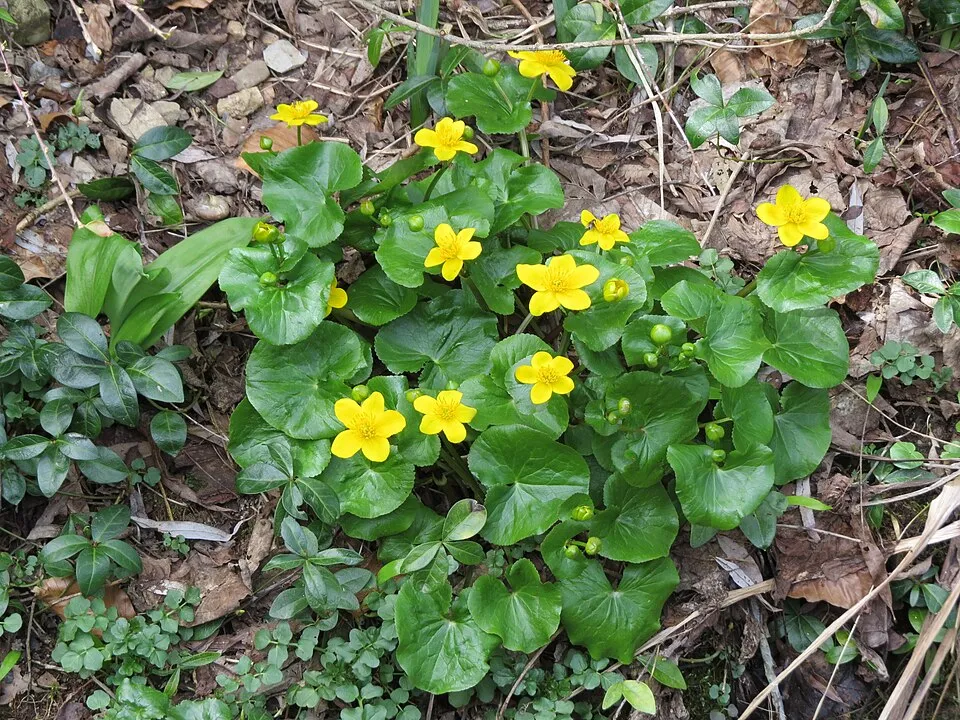
Caltha palustris, commonly known as Marsh Marigold, Kingcup, or Cowslip, is a vibrant perennial herbaceous plant belonging to the Ranunculaceae family, which also includes buttercups and hellebores. This species typically grows to a height of 20 to 40 centimeters, characterized by its glossy, deeply cordate (heart-shaped) to reniform (kidney-shaped) basal leaves that emerge from a fibrous root system. Its most striking feature is the clusters of bright yellow, cup-shaped flowers, each possessing five to nine petal-like sepals, which bloom profusely in early spring.
Marsh Marigold thrives in a variety of damp, marshy habitats, including wet meadows, swamps, fens, along stream banks, and in ditches, indicating its preference for saturated soils. Its natural distribution spans across the temperate regions of the Northern Hemisphere, encompassing Europe, Asia, and North America, where it often forms dense, eye-catching carpets of yellow in its preferred moist environments. The botanical classification places it within the Kingdom Plantae, Clade Angiosperms, Order Ranunculales, and Genus Caltha, solidifying its identity within the diverse plant kingdom.
Trusted Scientific References
1. Authoritative external sources for Caltha palustris
1.1 Wikipedia — Caltha palustris
1.2 Kew POWO (Plants of the World Online)
1.3 PubMed — peer-reviewed research
1.4 NCBI Taxonomy Browser
1.5 GBIF — Global Biodiversity
1.6Caltha Palustris should be interpreted through verified botanical identity, practical care, and responsible safety language. This recovery note adds the missing context needed for a complete profile: match light to the plant's habit, use well-drained soil, water according to season, and avoid unsupported medicinal or edible claims. For publishing, the plant can be presented as a source-backed garden plant with clear care guidance, common problem diagnosis, and conservative safety wording.
1.7Caltha Palustris (Caltha palustris) is maintained in this recovery file as a complete garden profile with practical care, safety, and identification context. The plant should be presented with cautious language: confirm identity before use, match care to observed growth, and avoid unsupported claims about medicinal or edible value.
1.1.Caltha Palustris — Key Features
- ✓ <strong>Wetland Perennial</strong> — Thrives in moist to saturated soil conditions.
- ✓ <strong>Bright Yellow Flowers</strong> — Distinctive cup-shaped blooms in early spring.
- ✓ <strong>Heart</strong> — Shaped Leaves — Glossy, dark green foliage.
- ✓ <strong>Ranunculaceae Family</strong> — Shares characteristics with buttercups and hellebores.
- ✓ <strong>Rich in Flavonoids</strong> — Contains potent antioxidants like quercetin and kaempferol.
- ✓ <strong>Contains Protoanemonin</strong> — A toxic compound in its raw state, requiring detoxification.
- ✓ <strong>Anti</strong> — inflammatory Properties — Supports relief for joint pain and swelling.
- ✓ <strong>Antimicrobial Effects</strong> — Inhibits certain bacterial growth when processed.
- ✓ <strong>Traditional Digestive Aid</strong> — Used for mild dyspepsia and bloating in Ayurveda.
- ✓ <strong>Topical Skin Applications</strong> — Historically used for eczema, bedsores, and irritations.
1.2.Caltha Palustris — Quick Summary
- ✓ Caltha palustris, or Marsh Marigold, is a wetland perennial from the Ranunculaceae family.
- ✓ Traditionally used for its anti-inflammatory, antimicrobial, and digestive benefits.
- ✓ Contains protoanemonin, flavonoids (quercetin, kaempferol), and saponins.
- ✓ The raw plant is toxic due to protoanemonin and requires careful processing before medicinal use.
- ✓ Modern research supports some traditional claims, especially for inflammation and microbial inhibition.
- ✓ Strict safety precautions and professional guidance are essential for its safe application.
2.Caltha Palustris — Scientific Identity
3.Caltha Palustris — Quick Facts
4.Caltha Palustris — Appearance & Identification
5.Caltha Palustris — Native Habitat
6.Caltha Palustris — Water Requirements
- ✓ Soil Preference — Thrives in well-drained, loamy soil with a neutral to slightly acidic pH, ideally between 6.0 and 7.0.
- ✓ Water Requirements — Requires consistent moisture and regular watering, especially during dry periods, as it naturally inhabits wet environments.
- ✓ Light Conditions — Prefers full sun exposure but can tolerate partial shade, particularly in hotter climates where some afternoon shade can prevent scorching.
- ✓ Temperature and Hardiness — A cold-hardy perennial, it flourishes in cool, temperate wetlands and is resilient to freezing temperatures, often being one of the first plants to bloom in spring.
- ✓ Fertilization — Benefits from a balanced, organic fertilizer application during the growing season to support robust growth and abundant flowering.
- ✓ Propagation — Can be propagated effectively from seeds sown in late autumn or early spring, or by division of its root clumps in early spring or after flowering.
- ✓ Habitat Mimicry — For successful cultivation, it's crucial to mimic its natural wetland habitat, ensuring consistently moist to wet soil conditions.
Reviewed by the Flora Medical Global Botanical Review Panel
Multi-disciplinary editorial group · Botany · Ethnobotany · Herbal-medicine literature
Who reviewed this: This page was checked by the Flora Medical Global Botanical Review Panel — an in-house editorial group of botany graduates, ethnobotany researchers, and horticulture practitioners who collectively maintain our 7,000+ plant encyclopedia. Meet the team.
Our 4-step verification process
1. Taxonomic verification
Scientific names and synonyms cross-checked against Kew POWO, World Flora Online, and The Plant List.
2. Phytochemical & medicinal cross-reference
Active compounds, traditional uses, and reported activities are cross-referenced with PubMed, USDA Dr. Duke's database, and peer-reviewed ethnobotanical literature.
3. Conservation & distribution check
Distribution, ecology, and conservation status confirmed against GBIF occurrence records and the IUCN Red List.
4. Editorial & safety review
Every entry passes an editorial pass for clarity, originality, and safety notices (toxicity, contraindications, dosage caveats) before publication.
Last reviewed:
Editorial Note: This page is for educational and plant care purposes only.
Written by: Flora Medical Global Editorial Team
Reviewed by: Flora Medical Global Botanical Review Panel
Last Updated: June 15, 2026







Caltha Palustris — Comments & Community Reviews
Rate this plant