


Care Disclaimer: Plant care recommendations are general guidelines based on common growing conditions. Individual results may vary based on your local environment, climate, and care routine. If your plant is toxic, keep it away from children and pets, and consult a veterinarian if accidental ingestion occurs.
1.Camellia Sasanqua — Overview
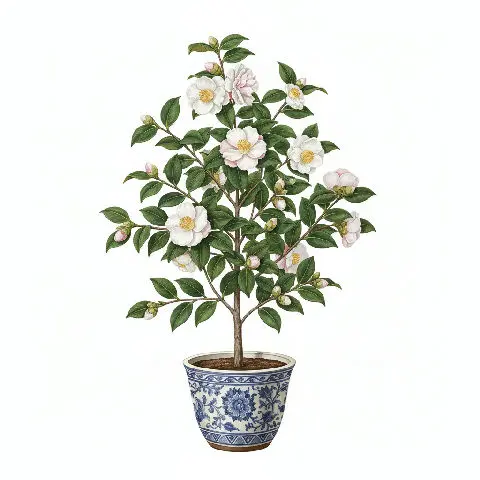
Camellia sasanqua, commonly known as Sasanqua Camellia, is an elegant evergreen shrub or small tree indigenous to the southern regions of Japan, including Shikoku, Kyushu, and Okinawa. This captivating member of the Theaceae family, which also includes the ubiquitous tea plant (Camellia sinensis), is cherished globally for its ornamental beauty and practical utility. Unlike its more widely recognized relative, Camellia japonica, C.
sasanqua exhibits a more graceful, open growth habit, typically reaching heights of 3 to 6 meters. Its foliage consists of smaller, thinner leaves that are often finely serrated, displaying a distinct glossy sheen. The plant's most striking feature is its profusion of delicate, often fragrant flowers, which grace gardens from autumn through early winter, typically October to January.
These blooms range in color from pristine white to various shades of pink and red, providing vital color when many other plants have receded.
Historically, the seeds of Camellia sasanqua have been a significant source of 'sasanqua oil' or 'tsubaki oil' in Japan. This prized oil, rich in oleic acid, has been extensively utilized for centuries in traditional Japanese cosmetics as a potent hair conditioner and skin moisturizer, as well as for culinary purposes and as lamp oil.
Botanically, it thrives in well-drained, acidic soils and prefers conditions ranging from dappled shade to full sun, provided it receives adequate moisture. Modern scientific inquiry has begun to unravel the complex phytochemistry of Camellia sasanqua, identifying a diverse array of compounds, including flavonoids, triterpenes, and polyphenols, which underpin its traditional applications and hint at a spectrum of potential pharmacological activities, particularly antioxidant and anti-inflammatory properties.
Trusted Scientific References
1. Authoritative external sources for Camellia sasanqua
1.1 Wikipedia — Camellia sasanqua
1.2 Kew POWO (Plants of the World Online)
1.3 PubMed — peer-reviewed research
1.4 NCBI Taxonomy Browser
1.5 GBIF — Global Biodiversity
1.1.Camellia Sasanqua — Key Features
- ✓ <strong>Botanical Name</strong> — Camellia sasanqua.
- ✓ <strong>Family</strong> — Theaceae.
- ✓ <strong>Native Region</strong> — Southern Japan (Shikoku, Kyushu, Okinawa).
- ✓ <strong>Bloom Season</strong> — Autumn to early winter (October-January).
- ✓ <strong>Flower Colors</strong> — White, pink, and various shades of red.
- ✓ <strong>Key Product</strong> — Sasanqua seed oil, also known as Japanese Tsubaki oil.
- ✓ <strong>Primary Constituents</strong> — High in oleic acid, flavonoids, and polyphenols.
- ✓ <strong>Main Applications</strong> — Cosmetics (skin and hair care), traditional cooking, and ornamental gardening.
- ✓ <strong>Growth Habit</strong> — Evergreen shrub or small tree with a graceful, open form.
- ✓ <strong>Soil Preference</strong> — Acidic, well-drained, and rich in organic matter.
1.2.Camellia Sasanqua — Quick Summary
- ✓ Sasanqua Camellia: An elegant evergreen shrub native to Japan, celebrated for its vibrant autumn and winter blooms.
- ✓ Traditional Uses: Its seed oil, known as tsubaki oil, has been historically valued for cosmetics, culinary applications, and as lamp oil.
- ✓ Rich Phytochemistry: Contains a beneficial array of compounds including oleic acid, flavonoids, triterpenes, and polyphenols.
- ✓ Key Benefits: Offers significant antioxidant, anti-inflammatory, and moisturizing properties, particularly for skin and hair health.
- ✓ Cultivation: Thrives in well-drained, acidic soils with dappled shade, requiring consistent moisture.
- ✓ Safety Profile: Seed oil is generally safe for external and culinary use; internal medicinal use of extracts warrants professional consultation.
2.Camellia Sasanqua — Scientific Identity
3.Camellia Sasanqua — Quick Facts
4.Camellia Sasanqua — Appearance & Identification
5.Camellia Sasanqua — Native Habitat
6.Camellia Sasanqua — Water Requirements
- ✓ Climate — Camellia sasanqua thrives in temperate to subtropical climates, typically hardy in USDA Zones 7-9, requiring protection from harsh freezes.
- ✓ Soil — Prefers well-drained, consistently moist, and acidic soil with a pH between 5.5 and 6.5, enriched with ample organic matter.
- ✓ Light — Ideal conditions include dappled shade to full sun; morning sun with afternoon shade is particularly beneficial to prevent leaf scorch in hot climates.
- ✓ Watering — Requires regular and consistent watering, especially during dry spells and establishment, but avoid waterlogging which can lead to root rot.
- ✓ Fertilization — Apply a slow-release, acid-forming fertilizer specifically formulated for camellias in early spring, following package instructions.
- ✓ Pruning — Minimal pruning is generally needed; focus on removing dead, damaged, or crossing branches after the plant finishes flowering to maintain shape and health.
- ✓ Propagation — Can be propagated from semi-hardwood cuttings taken in summer or by seed, though seed germination can be slow and variable.
- ✓ Pests and Diseases — Generally robust, but monitor for common camellia pests like scale insects and aphids, and fungal issues such as petal blight in humid conditions.
Reviewed by the Flora Medical Global Botanical Review Panel
Multi-disciplinary editorial group · Botany · Ethnobotany · Herbal-medicine literature
Who reviewed this: This page was checked by the Flora Medical Global Botanical Review Panel — an in-house editorial group of botany graduates, ethnobotany researchers, and horticulture practitioners who collectively maintain our 7,000+ plant encyclopedia. Meet the team.
Our 4-step verification process
1. Taxonomic verification
Scientific names and synonyms cross-checked against Kew POWO, World Flora Online, and The Plant List.
2. Phytochemical & medicinal cross-reference
Active compounds, traditional uses, and reported activities are cross-referenced with PubMed, USDA Dr. Duke's database, and peer-reviewed ethnobotanical literature.
3. Conservation & distribution check
Distribution, ecology, and conservation status confirmed against GBIF occurrence records and the IUCN Red List.
4. Editorial & safety review
Every entry passes an editorial pass for clarity, originality, and safety notices (toxicity, contraindications, dosage caveats) before publication.
Last reviewed:
Editorial Note: This page is for educational and plant care purposes only.
Written by: Flora Medical Global Editorial Team
Reviewed by: Flora Medical Global Botanical Review Panel
Last Updated: June 15, 2026







Camellia Sasanqua — Comments & Community Reviews
Rate this plant