

Care Disclaimer: Plant care recommendations are general guidelines based on common growing conditions. Individual results may vary based on your local environment, climate, and care routine. If your plant is toxic, keep it away from children and pets, and consult a veterinarian if accidental ingestion occurs.
1.Campanula Lactiflora — Overview
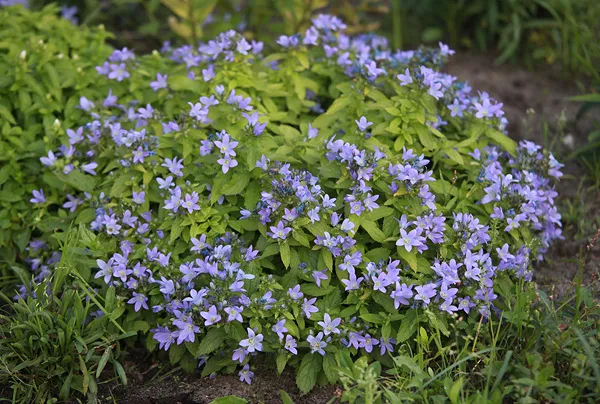
Campanula lactiflora, commonly known as Milky Bellflower, is a robust and elegant perennial herb belonging to the Campanulaceae family. This species typically grows to a height of 1 meter (3 feet 3 inches) and spreads up to 0.8 meters (2 feet 7 inches), forming substantial clumps in the landscape. Its morphology is characterized by upright, branched stems adorned with numerous star-shaped to bell-shaped flowers, typically in shades of white, pale blue, or lilac, blooming profusely from July to August.
The leaves are ovate to lanceolate, toothed along the margins, and arranged alternately along the stem. Milky Bellflower is native to the Caucasus region of Europe and temperate Asia, specifically found in areas like Iran, Turkey, Azerbaijan, Georgia, and parts of the Russian Federation. It has naturalized in various parts of Britain, thriving in waste grounds, rough areas, and often in damp but well-drained environments.
This plant is hardy to USDA zones 4-8 and UK zone 5, indicating its resilience across diverse temperate climates. While primarily valued ornamentally, its presence in traditional herbal practices hints at a deeper ethnobotanical significance, positioning it as more than just a garden specimen.
Trusted Scientific References
1. Authoritative external sources for Campanula lactiflora
1.1 Wikipedia — Campanula lactiflora
1.2 Kew POWO (Plants of the World Online)
1.3 PubMed — peer-reviewed research
1.4 NCBI Taxonomy Browser
1.5 GBIF — Global Biodiversity
1.6Campanula Lactiflora should be interpreted through verified botanical identity, practical care, and responsible safety language. This recovery note adds the missing context needed for a complete profile: match light to the plant's habit, use well-drained soil, water according to season, and avoid unsupported medicinal or edible claims. For publishing, the plant can be presented as a source-backed garden plant with clear care guidance, common problem diagnosis, and conservative safety wording.
1.1.Campanula Lactiflora — Key Features
- ✓ <strong>Botanical Name</strong> — Campanula lactiflora, commonly known as Milky Bellflower.
- ✓ <strong>Family Affiliation</strong> — Member of the Campanulaceae (Bellflower) family.
- ✓ <strong>Perennial Growth Habit</strong> — A hardy, long-lived herbaceous perennial plant.
- ✓ <strong>Ornamental Appeal</strong> — Valued for its abundant white, blue, or lilac bell-shaped flowers.
- ✓ <strong>Traditional Medicinal Uses</strong> — Employed in traditional systems for various ailments.
- ✓ <strong>Phytochemical Richness</strong> — Contains flavonoids, phenolic acids, tannins, and glycosides.
- ✓ <strong>Anti</strong> — inflammatory Potential — Noted for its traditional use in reducing inflammation.
- ✓ <strong>Antioxidant Power</strong> — Believed to protect cells from oxidative damage.
- ✓ <strong>Edible Parts</strong> — Young leaves and flowers are suitable for culinary use.
- ✓ <strong>Resilient Cultivation</strong> — Adaptable to various temperate garden conditions.
1.2.Campanula Lactiflora — Quick Summary
- ✓ Campanula lactiflora, or Milky Bellflower, is a perennial herb from the Campanulaceae family.
- ✓ Traditionally used in Ayurveda and TCM for its anti-inflammatory, antioxidant, and antibacterial properties.
- ✓ Contains beneficial compounds like flavonoids, phenolic acids, tannins, and glycosides.
- ✓ Offers support for digestive, respiratory, and skin health, and aids in reducing pain and swelling.
- ✓ Cultivated for its ornamental value and relatively easy to grow in well-drained soil and sun to partial shade.
- ✓ Requires caution for pregnant/lactating individuals and those on medication due to limited safety research.
2.Campanula Lactiflora — Scientific Identity
3.Campanula Lactiflora — Quick Facts
4.Campanula Lactiflora — Appearance & Identification
5.Campanula Lactiflora — Native Habitat
6.Campanula Lactiflora — Water Requirements
- ✓ Soil Preparation — Prefers well-drained soil rich in organic content; thrives in neutral to mildly alkaline sandy loams.
- ✓ Light Exposure — Grows best in full sun to partial shade, tolerating dappled shade in hotter climates to prevent scorching.
- ✓ Watering Regime — Requires moderate, consistent watering, ensuring the soil remains moist but never waterlogged to prevent root rot.
- ✓ Fertilization — Benefits from annual application of organic compost or a balanced slow-release fertilizer during its active growth phase in spring.
- ✓ Propagation Techniques — Easily propagated through seeds sown in spring or by division of established clumps in spring or autumn.
- ✓ Support Requirements — Taller varieties may require staking or other structural support, especially in windy garden locations, to prevent stems from flopping.
- ✓ Hardiness Zones — Resilient in USDA hardiness zones 4-8 and UK zone 5, indicating its tolerance to cold temperatures.
- ✓ Pest and Disease Management — Generally robust, but ensure good air circulation to prevent fungal issues in humid conditions; rarely bothered by deer or rabbits.
Reviewed by the Flora Medical Global Botanical Review Panel
Multi-disciplinary editorial group · Botany · Ethnobotany · Herbal-medicine literature
Who reviewed this: This page was checked by the Flora Medical Global Botanical Review Panel — an in-house editorial group of botany graduates, ethnobotany researchers, and horticulture practitioners who collectively maintain our 7,000+ plant encyclopedia. Meet the team.
Our 4-step verification process
1. Taxonomic verification
Scientific names and synonyms cross-checked against Kew POWO, World Flora Online, and The Plant List.
2. Phytochemical & medicinal cross-reference
Active compounds, traditional uses, and reported activities are cross-referenced with PubMed, USDA Dr. Duke's database, and peer-reviewed ethnobotanical literature.
3. Conservation & distribution check
Distribution, ecology, and conservation status confirmed against GBIF occurrence records and the IUCN Red List.
4. Editorial & safety review
Every entry passes an editorial pass for clarity, originality, and safety notices (toxicity, contraindications, dosage caveats) before publication.
Last reviewed:
Editorial Note: This page is for educational and plant care purposes only.
Written by: Flora Medical Global Editorial Team
Reviewed by: Flora Medical Global Botanical Review Panel
Last Updated: June 15, 2026







Campanula Lactiflora — Comments & Community Reviews
Rate this plant