

Care Disclaimer: Plant care recommendations are general guidelines based on common growing conditions. Individual results may vary based on your local environment, climate, and care routine. If your plant is toxic, keep it away from children and pets, and consult a veterinarian if accidental ingestion occurs.
1.Campanula Persicifolia — Overview
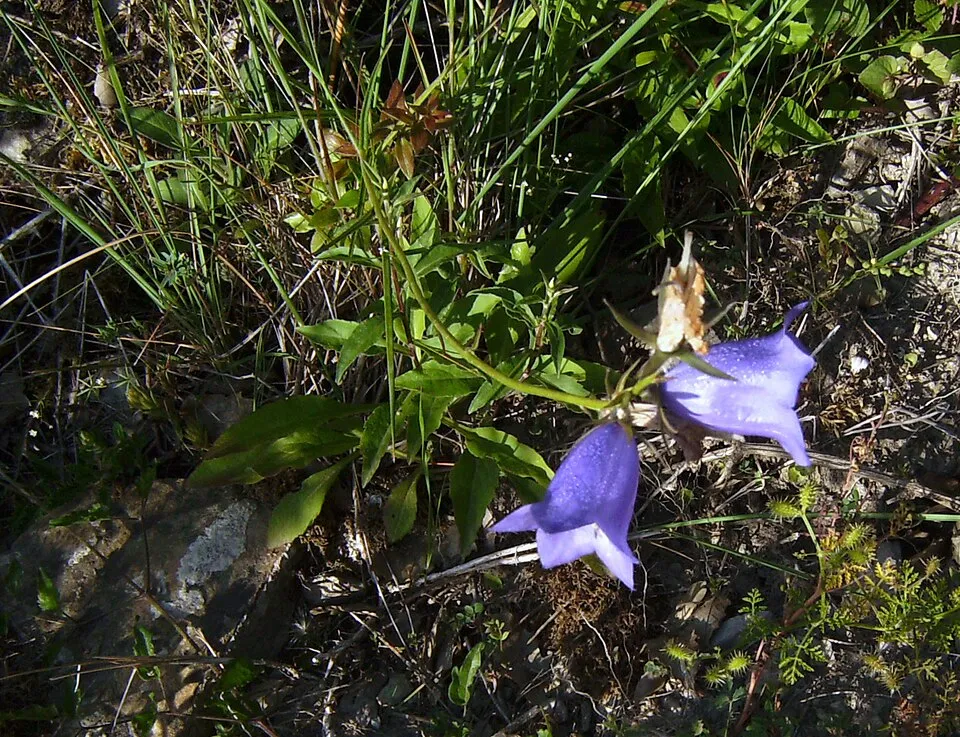
Campanula persicifolia, commonly known as Peachleaf Bellflower, Fairy Bellflower, or Petticoat Bellflower, is an elegant herbaceous perennial belonging to the Campanulaceae family. Native to Europe and Western Asia, this species thrives in diverse habitats such as mountain meadows, open woodlands, and shrubby slopes, and has naturalized in parts of the northeastern United States and eastern Canada due to its ornamental appeal. The plant forms striking clumps, sending up tall, rigid, and unbranched stems that typically reach heights of 1.5 to 3 feet (45-90 cm).
These sturdy stems are adorned with vibrant green leaves that are notably narrow and leathery, resembling those of a peach tree, which gives the plant its specific epithet, 'persicifolia'. From early to mid-summer, generally June to July, Peachleaf Bellflower produces a spectacular display of large, broadly bell-shaped flowers. These exquisite blooms are arranged terminally in racemes and can vary in color from pure white to various shades of violet-blue, facing outwards to showcase their delicate beauty.
The genus name, Campanula, is derived from the Latin word 'campana,' meaning 'bell,' a direct reference to the distinctive shape of its flowers. This plant is valued not only for its aesthetic qualities but also for its resilience and ability to attract pollinators, making it a cherished addition to many gardens and naturalized landscapes. Its robust nature allows it to flourish in cool-weather climates, requiring minimal care once established.
Trusted Scientific References
1. Authoritative external sources for Campanula persicifolia
1.1 Wikipedia — Campanula persicifolia
1.2 Kew POWO (Plants of the World Online)
1.3 PubMed — peer-reviewed research
1.4 NCBI Taxonomy Browser
1.5 GBIF — Global Biodiversity
1.6Campanula Persicifolia should be interpreted through verified botanical identity, practical care, and responsible safety language. This recovery note adds the missing context needed for a complete profile: match light to the plant's habit, use well-drained soil, water according to season, and avoid unsupported medicinal or edible claims. For publishing, the plant can be presented as a source-backed garden plant with clear care guidance, common problem diagnosis, and conservative safety wording.
1.1.Campanula Persicifolia — Key Features
- ✓ <strong>Botanical Name</strong> — Campanula persicifolia.
- ✓ <strong>Common Names</strong> — Peachleaf Bellflower, Fairy Bellflower, Petticoat Bellflower.
- ✓ <strong>Family</strong> — Campanulaceae.
- ✓ <strong>Habitat</strong> — Native to Europe and Western Asia, naturalized in parts of North America.
- ✓ <strong>Distinctive Flowers</strong> — Large, bell-shaped, white to violet-blue blooms.
- ✓ <strong>Medicinal Properties</strong> — Anti-inflammatory, antioxidant, digestive aid, wound healing.
- ✓ <strong>Key Constituents</strong> — Flavonoids, phenolic acids, sesquiterpene lactones, triterpenes.
- ✓ <strong>Traditional Uses</strong> — Ayurveda, TCM, Unani, Siddha for inflammation, digestion, skin.
- ✓ <strong>Cultivation</strong> — Easy to grow in cool climates, full sun to part shade, well-drained soil.
- ✓ <strong>Pollinator Friendly</strong> — Attracts hummingbirds, bees, and butterflies.
1.2.Campanula Persicifolia — Quick Summary
- ✓ Peachleaf Bellflower is an herbaceous perennial from Europe and Asia.
- ✓ Valued for its anti-inflammatory, antioxidant, and digestive properties.
- ✓ Traditionally used in Ayurveda, TCM, Unani, and Siddha for various ailments.
- ✓ Contains beneficial flavonoids, phenolic acids, and triterpenes.
- ✓ Supports wound healing, skin health, and immune modulation.
- ✓ Requires caution during pregnancy, lactation, and for individuals with allergies.
2.Campanula Persicifolia — Scientific Identity
3.Campanula Persicifolia — Quick Facts
4.Campanula Persicifolia — Appearance & Identification
5.Campanula Persicifolia — Native Habitat
6.Campanula Persicifolia — Water Requirements
- ✓ Soil Preparation — Prefers average, medium moisture, well-drained soils; amend heavy clay with organic matter for optimal growth.
- ✓ Light Requirements — Thrives in full sun to part shade; in hotter climates (e.g., USDA Zone 7 and above), provide afternoon shade to prevent stress.
- ✓ Watering Regimen — Requires consistent moisture, especially during dry spells; additional watering may be necessary in warmer zones.
- ✓ Deadheading — Remove spent blooms promptly to encourage continuous flowering and prevent unwanted self-seeding, which can occur readily in optimal conditions.
- ✓ Fertilization — Generally low maintenance; a light application of balanced slow-release fertilizer in spring can promote vigorous growth.
- ✓ Division — Clumps can be divided every 2-4 years in early spring or fall to maintain plant vigor and manage spread.
- ✓ Pest and Disease Management — Generally robust, but monitor for common garden pests like slugs, snails, and aphids; no significant disease problems are typically observed.
Reviewed by the Flora Medical Global Botanical Review Panel
Multi-disciplinary editorial group · Botany · Ethnobotany · Herbal-medicine literature
Who reviewed this: This page was checked by the Flora Medical Global Botanical Review Panel — an in-house editorial group of botany graduates, ethnobotany researchers, and horticulture practitioners who collectively maintain our 7,000+ plant encyclopedia. Meet the team.
Our 4-step verification process
1. Taxonomic verification
Scientific names and synonyms cross-checked against Kew POWO, World Flora Online, and The Plant List.
2. Phytochemical & medicinal cross-reference
Active compounds, traditional uses, and reported activities are cross-referenced with PubMed, USDA Dr. Duke's database, and peer-reviewed ethnobotanical literature.
3. Conservation & distribution check
Distribution, ecology, and conservation status confirmed against GBIF occurrence records and the IUCN Red List.
4. Editorial & safety review
Every entry passes an editorial pass for clarity, originality, and safety notices (toxicity, contraindications, dosage caveats) before publication.
Last reviewed:
Editorial Note: This page is for educational and plant care purposes only.
Written by: Flora Medical Global Editorial Team
Reviewed by: Flora Medical Global Botanical Review Panel
Last Updated: June 15, 2026







Campanula Persicifolia — Comments & Community Reviews
Rate this plant