
Care Disclaimer: Plant care recommendations are general guidelines based on common growing conditions. Individual results may vary based on your local environment, climate, and care routine. If your plant is toxic, keep it away from children and pets, and consult a veterinarian if accidental ingestion occurs.
1.Carex Morrowii — Overview
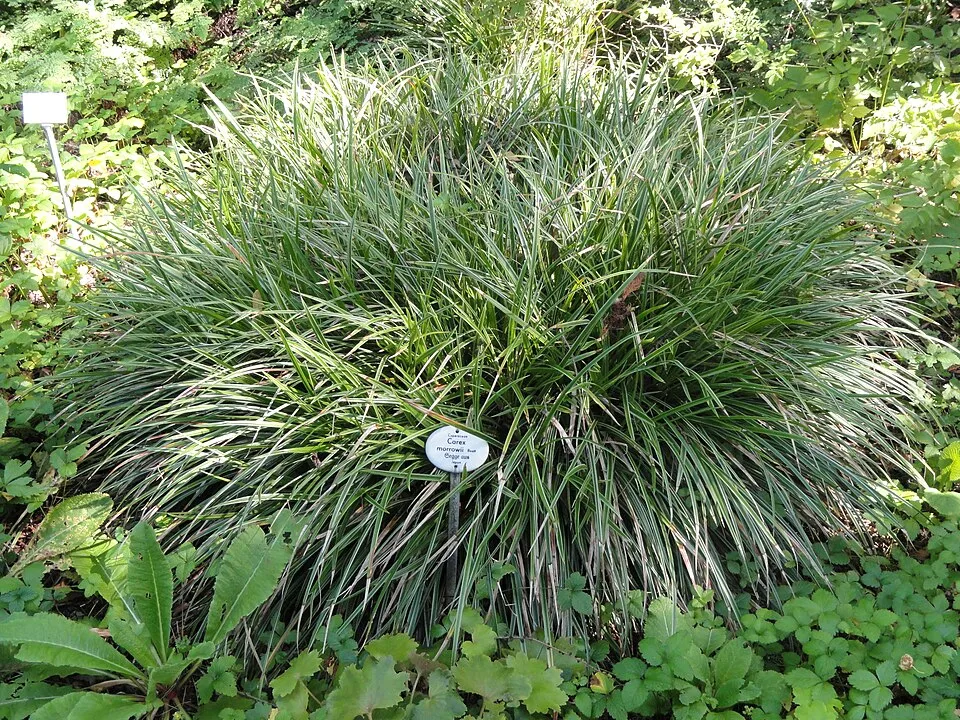
Carex morrowii, commonly known as Japanese Sedge, Morrow's Sedge, or Everglow Sedge, is an elegant, grass-like herbaceous perennial belonging to the Cyperaceae family. Native to Japan, this evergreen sedge is primarily celebrated for its ornamental value, forming attractive, dense clumps of arching foliage that provide year-round interest in temperate gardens.
Its leaves are typically fine and thread-like, often featuring striking variegation with green centers and cream, white, or golden margins, as seen in popular cultivars like 'Ice Dance' or 'Everglow'. Morphologically, it presents characteristic sedge features, including triangular stems (though less pronounced than some relatives) and small, inconspicuous flower spikes that appear in spring, separating male and female flowers.
Carex morrowii thrives in moist, acidic, and well-drained soils rich in organic matter, demonstrating remarkable adaptability to various light conditions. While it can tolerate full sun if kept consistently moist, it truly excels in partial to full shade, where its vibrant foliage contrasts beautifully with darker backgrounds. This species is an easy-to-grow, low-maintenance plant, known for its resilience against common pests and diseases, making it a favored choice for groundcover, border plantings, rock gardens, and container cultivation.
Its name honors Dr. James Morrow, a botanist integral to Commodore Matthew C. Perry's expeditions to Japan.
Trusted Scientific References
1. Authoritative external sources for Carex morrowii
1.1 Wikipedia — Carex morrowii
1.2 Kew POWO (Plants of the World Online)
1.3 PubMed — peer-reviewed research
1.4 NCBI Taxonomy Browser
1.5 GBIF — Global Biodiversity
1.6Carex Morrowii should be interpreted through verified botanical identity, practical care, and responsible safety language. This recovery note adds the missing context needed for a complete profile: match light to the plant's habit, use well-drained soil, water according to season, and avoid unsupported medicinal or edible claims. For publishing, the plant can be presented as a source-backed garden plant with clear care guidance, common problem diagnosis, and conservative safety wording.
1.1.Carex Morrowii — Key Features
- ✓ <strong>Evergreen Foliage</strong> — Provides year-round interest with its attractive, grass-like, often variegated leaves.
- ✓ <strong>Shade Tolerant</strong> — Thrives in shaded garden areas, making it a versatile choice for underplanting and dark borders.
- ✓ <strong>Low Maintenance</strong> — An easy-to-grow sedge with minimal pest or disease issues, requiring little intervention.
- ✓ <strong>Groundcover Potential</strong> — Excellent for mass planting, erosion control, borders, and rock gardens due to its spreading habit.
- ✓ <strong>Digestive Aid (Traditional)</strong> — Historically linked to supporting healthy digestion and potentially alleviating indigestion, based on broader genus uses.
- ✓ <strong>Anti</strong> — inflammatory Properties (Potential) — May help reduce inflammation, attributed to general Carex genus properties and phytochemical content.
- ✓ <strong>Respiratory Support (Traditional)</strong> — Used in some traditional systems for easing respiratory discomfort and promoting clear airways.
- ✓ <strong>Mild Diuretic (Potential)</strong> — May assist in fluid balance, acting as a gentle diuretic to aid the body's natural processes.
- ✓ <strong>Anxiolytic Effects (Preliminary)</strong> — Suggested to have calming properties, potentially aiding in anxiety reduction and promoting relaxation.
- ✓ <strong>Rich in Flavonoids</strong> — Contains beneficial plant compounds known for their antioxidant and protective cellular activities.
1.2.Carex Morrowii — Quick Summary
- ✓ Ornamental Sedge — Carex morrowii is primarily cultivated as an evergreen ornamental plant, valued for its variegated foliage.
- ✓ Traditional Attributions — Historically, some Carex species have been associated with digestive and anti-inflammatory properties, though specific to C. morrowii requires further study.
- ✓ Potential Therapeutic Uses — May offer benefits for respiratory issues, act as a mild diuretic, and provide anxiety relief based on traditional claims.
- ✓ Key Phytochemicals — Contains flavonoids, alkaloids, and essential oils, contributing to its potential bioactivity.
- ✓ Limited Scientific Research — Specific medicinal efficacy and safety for Carex morrowii are not extensively studied in modern contexts.
- ✓ Cultivation — An easy-to-grow, low-maintenance plant thriving in moist, acidic soils and various light conditions.
2.Carex Morrowii — Scientific Identity
3.Carex Morrowii — Quick Facts
4.Carex Morrowii — Appearance & Identification
5.Carex Morrowii — Native Habitat
6.Carex Morrowii — Water Requirements
- ✓ Soil Preparation — Carex morrowii thrives in fertile, well-drained, moist, and acidic soils, ideally enriched with ample organic matter to retain moisture.
- ✓ Light Requirements — Prefers partial to full shade; in full sun, consistent and abundant moisture is critical to prevent foliage scorch.
- ✓ Watering Regimen — Maintain consistent soil moisture, especially during dry spells, but ensure good drainage to prevent waterlogging, which can lead to root rot.
- ✓ Fertilization — Apply a balanced, slow-release granular fertilizer or organic compost annually in spring to promote vigorous growth and healthy foliage.
- ✓ Pruning — Remove any dead or damaged foliage as needed to maintain a tidy appearance and encourage fresh growth, though extensive pruning is rarely required.
- ✓ Pest and Disease Management — Generally a trouble-free plant with no serious pest or disease issues; monitor for occasional aphids or fungal spots in overly wet conditions.
- ✓ Propagation — Can be propagated by division in spring or early autumn, separating clumps to create new plants and rejuvenate older ones.
Reviewed by the Flora Medical Global Botanical Review Panel
Multi-disciplinary editorial group · Botany · Ethnobotany · Herbal-medicine literature
Who reviewed this: This page was checked by the Flora Medical Global Botanical Review Panel — an in-house editorial group of botany graduates, ethnobotany researchers, and horticulture practitioners who collectively maintain our 7,000+ plant encyclopedia. Meet the team.
Our 4-step verification process
1. Taxonomic verification
Scientific names and synonyms cross-checked against Kew POWO, World Flora Online, and The Plant List.
2. Phytochemical & medicinal cross-reference
Active compounds, traditional uses, and reported activities are cross-referenced with PubMed, USDA Dr. Duke's database, and peer-reviewed ethnobotanical literature.
3. Conservation & distribution check
Distribution, ecology, and conservation status confirmed against GBIF occurrence records and the IUCN Red List.
4. Editorial & safety review
Every entry passes an editorial pass for clarity, originality, and safety notices (toxicity, contraindications, dosage caveats) before publication.
Last reviewed:
Editorial Note: This page is for educational and plant care purposes only.
Written by: Flora Medical Global Editorial Team
Reviewed by: Flora Medical Global Botanical Review Panel
Last Updated: June 15, 2026







Carex Morrowii — Comments & Community Reviews
Rate this plant